
Property Management & Operations
Platuni vs TenantCloud | Which Property Tool Is Better?
by Platuni | 15 Feb, 2026 | 10 mins read
Platuni
15 February, 2026
10 mins read
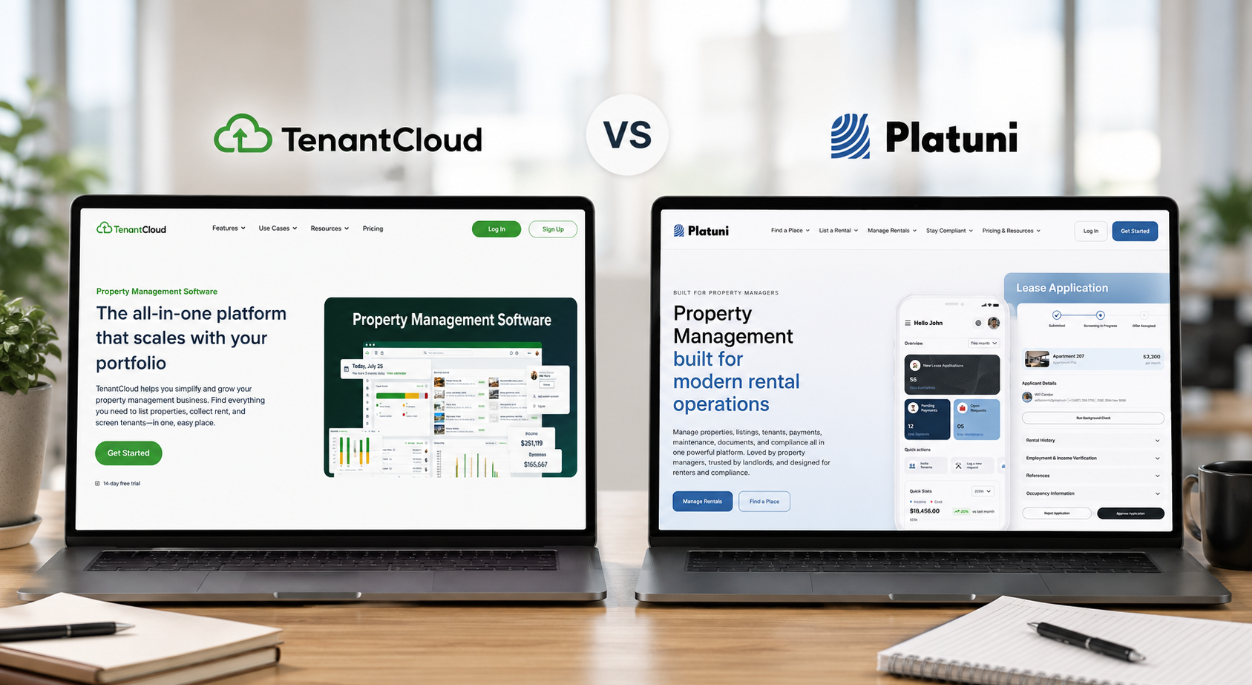
Managing rental properties today feels harder than ever. Landlords and property managers juggle rent payments, maintenance requests, lease documents, tenant communication, and compliance all at once. Tools like TenantCloud promise to help, but many users still struggle with fragmented workflows, hidden fees, and limited automation that slow operations and eat into profits. According to industry research, poor operational systems cost property managers up to 30% more time on manual tasks than those using modern, centralized platforms. Pain grows when systems don’t talk to each other, when shared-living workflows break down, or when teams can’t scale without chaos.
This comparison raises important questions landlords and teams ask before choosing the right tool:
- What features does TenantCloud offer that help with daily property tasks?
- Where does Platuni deliver better automation, communication, and compliance?
- Which platform fits small-to-mid-sized portfolios, and which suits growth?
- Are there hidden costs or limitations that make one tool harder to adopt?
- Which system improves tenant experience and reduces operational friction?
This guide answers all those questions clearly and simply, so you can choose with confidence. It compares Platuni and TenantCloud across key areas such as workflow automation, tenant engagement, cost, scalability, and shared-living support. Platuni was built for property operators who want clarity, efficiency, and growth without confusion or high barriers to entry. As you read on, you’ll see how each platform performs and which one aligns better with your goals, helping you make the best choice for your business and tenants.
Also See: Renters Insurance | What It Covers and When It’s Required
Platuni vs TenantCloud: Quick Overview of Both Platforms
Platuni and TenantCloud help landlords and property managers run rental operations online, but they serve slightly different needs. TenantCloud offers solid basics like online rent collection, tenant screening, and simple listings, making it a good starting tool for very small portfolios. Platuni goes further with strong workflow automation, centralized communication, compliance management, and tools designed for shared living or co-living situations.
Many property operations today struggle with scattered tools, manual tasks, and communication gaps. Research from McKinsey shows that teams using connected systems and automation can improve productivity by 20–30%, because less time is spent repeating routine work and more time goes to planning and growth.
Platuni focuses on reducing manual effort across the full rental lifecycle. This helps small landlords and growing teams work smarter, not harder. TenantCloud is useful for basic rental needs, but teams that want solid growth support, fewer apps to juggle, and better tenant experiences will find Platuni more complete and easier to use as operations scale.
Also See: Property Management SOPs: Templates and Examples
Core Differences Between Platuni and TenantCloud
| Feature / Focus | Platuni | TenantCloud |
|---|---|---|
| Best For | Small to mid-sized landlords, shared living teams | Small, individual landlords |
| Automation | Advanced workflows | Basic automation |
| Shared Living | Yes, built-in | Limited |
| Communication Tools | Centralized | Basic |
| Document Management | Strong, compliance-focused | Standard |
| Scalability | High | Basic |
| Growth Support | Designed for expansion | Entry level |
This comparison highlights how Platuni’s tools work together to simplify property operations, reduce errors, and support growth, while TenantCloud helps with essential tasks in smaller or simpler portfolios.
Platuni Features Explained: Simplicity, Compliance, and Growth
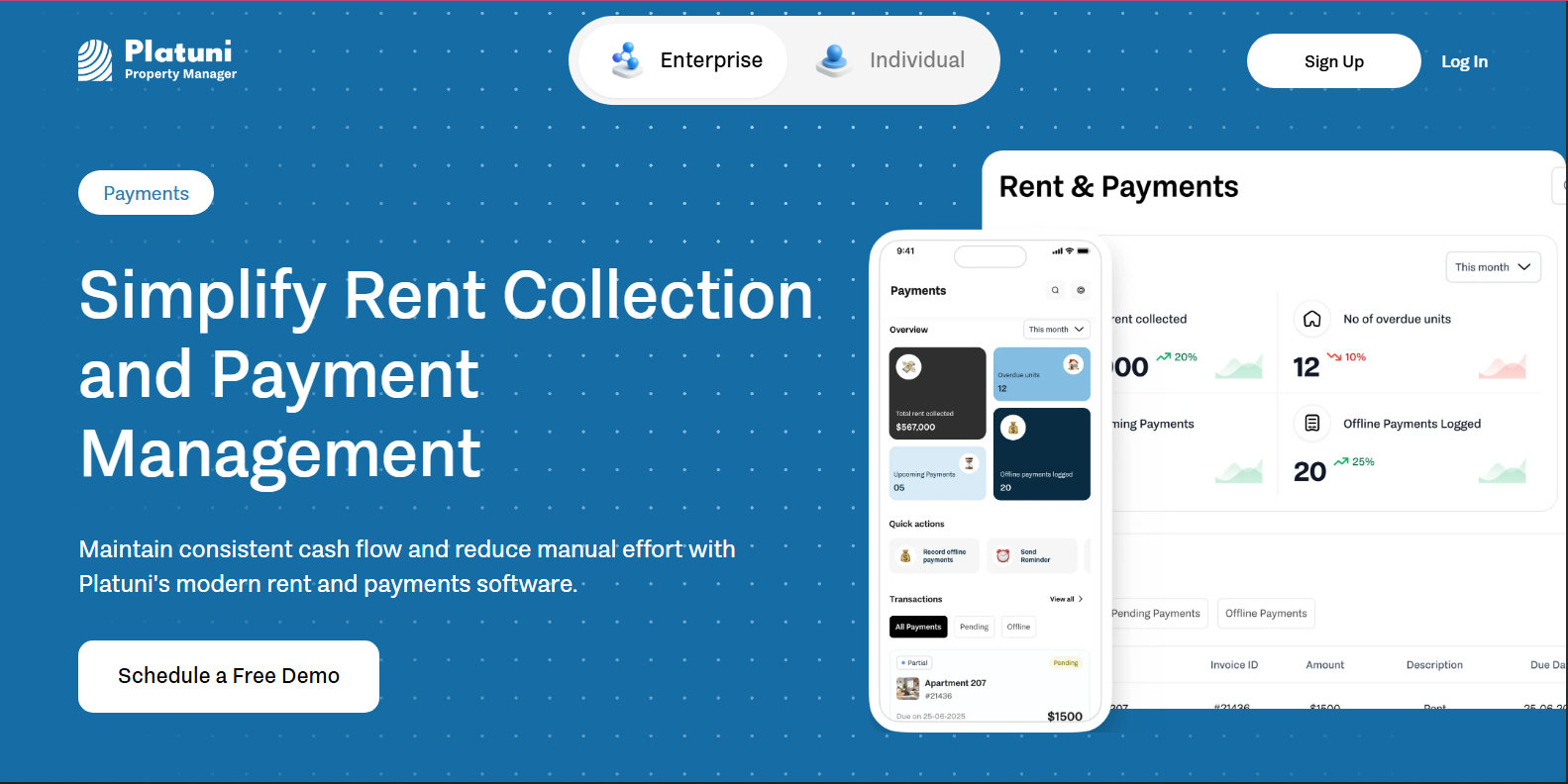
Platuni was built for modern property teams who want a simple, powerful, and flexible platform. Many landlords and small to mid-sized property managers struggle with complex systems that take weeks to learn. Platuni helps teams organize their operations quickly without overwhelming technology or cost. Research from Forrester shows that tools with clear user experience help teams adopt new systems up to 3 times faster than complex software.
Download the Platuni Property Manager App Today
Centralized Property Operations Dashboard
Platuni’s dashboard brings everything into one place. Users can:
- See rent status for all units
- Track maintenance requests
- View tenant communications
- Check lease dates and renewals
This central view reduces time wasted jumping between tools and spreadsheets.
Shared Living and Co-Living Management Tools
Platuni has built-in features for shared households, roommates, and co-living spaces. These tools help:
- Match compatible tenants
- Manage shared responsibilities
- Split rent and bills easily
- Communicate house rules clearly
Shared living is one of the fastest-growing rental trends, and having dedicated tools makes management smoother.
Automated Rent, Lease, and Maintenance Workflows
Platuni automates routine tasks so teams can focus on higher-value work. Automation handles:
- Rent reminders
- Lease renewal alerts
- Task assignments
- Conducting tenant screening
- Follow-ups on overdue maintenance
Automation reduces manual steps that often cause errors and delays.
Also Read: Chicago Landlord-Tenant Ordinance: What You Need to Know
Document Management and Compliance Support
Platuni keeps all documents secure, organized, and easy to find. Landlords can store:
- Lease agreements
- Compliance certificates
- Inspection reports
- Notices and tenant files
Clear document organization supports compliance and reduces risk.
Why Platuni Works Well for Growing Portfolios
Platuni scales with your business without adding complexity. Teams can add units, users, and tools without paying high minimum fees. This makes Platuni ideal for small landlords becoming mid-sized operators and beyond.
What Is TenantCloud? Features, Target Users & Positioning
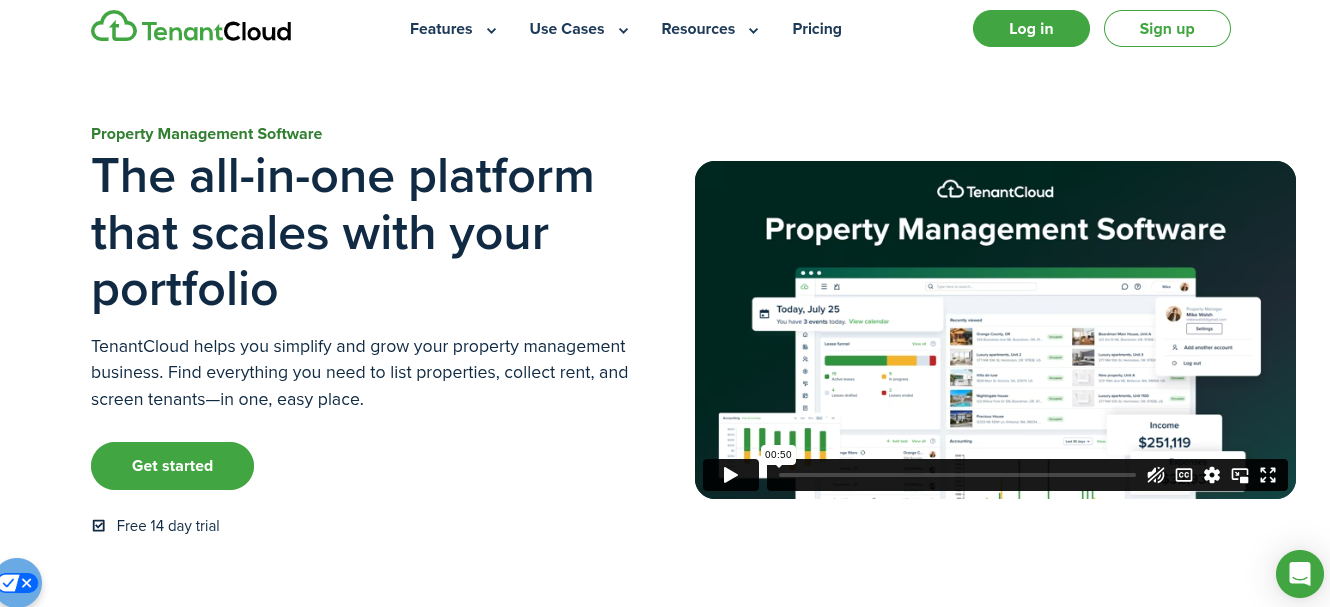
TenantCloud is a cloud-based property management platform designed to help landlords and small property teams manage everyday rental tasks online. It offers tools such as online rent collection, tenant screening, basic accounting, property listings, maintenance tracking, and tenant communication. Many independent landlords choose TenantCloud as an entry point because it provides essential functions without the complexity of enterprise systems.
Some property operators face common challenges such as delayed rent payments, scattered documents, and inefficient communication. Research shows that poor operational systems can slow team performance and increase stress, especially when managing multiple units (American Psychological Association). Centralized tools can reduce cognitive load and improve task accuracy.
TenantCloud positions itself mainly for:
- Small to independent landlords with a handful of units
- New property managers seeking simple property tools
- Owners looking for free or low-cost property software options
TenantCloud’s position in the market tends toward basic property workflows rather than deep operational automation. It works well for landlords focused on essential rental management tasks without heavy process complexity.
Also Read: What a Landlord Cannot Do in Oregon: Legal Rules
Pricing Comparison: Platuni vs TenantCloud
Understanding how pricing works helps landlords choose the right platform for their budget and scale. Platuni and TenantCloud both offer pricing models that appeal to different users.
Platuni Pricing Overview
Platuni focuses on flexibility and transparency with:
- Freemium options: Basic tools at no cost
- Scalable plans: Advanced features as operations grow
- No heavy minimums: No minimum unit requirements to start
- Transparent billing: Clear pricing and fewer surprise fees
This approach allows small and mid-sized teams to scale without large upfront software costs.
TenantCloud Pricing Overview
TenantCloud offers a mix of free and paid plans:
- Free tier: Access to essential tools for small portfolios
- Paid upgrades: Additional features such as more listings, advanced reports, or larger unit counts
- Optional fees: Tenant screening or document fees may apply depending on usage
TenantCloud’s pricing is accessible for landlords with very small portfolios, but larger teams may need paid plans for needed features.
Also See: What Are the Renters’ Rights in Texas? Legal Overview
Side-by-Side Pricing Comparison Table
| Pricing Aspect | Platuni | TenantCloud |
|---|---|---|
| Free Tier | Yes (Basic tools) | Yes (Limited features) |
| Scalability | Grows with business | Simple scaling |
| Advanced Features | Included in paid plans | Requires upgrades |
| Minimum Cost to Start | Low to none | Low to none |
| Hidden Fees | Generally transparent | Possible screening/document fees |
| Best for | Small to growing teams | Independent landlords |
Hidden Cost Considerations
While both platforms offer free and paid tiers, hidden costs can impact total investment:
- TenantCloud may charge for tenant screening reports or additional listings.
Minimum Cost to Start
- Platuni keeps pricing clear and focuses on long-term cost predictability.
Understanding your expected usage and unit count helps you choose the model that fits your budget without surprise expenses.
Also See: Multifamily Property Insurance: Coverage Explained
Platuni vs TenantCloud: Pros and Cons Summary
Understanding the strengths and limitations of each platform helps you decide which tool fits your property management needs. Below is a side-by-side comparison of what Platuni and TenantCloud do well, and where they may fall short.
Pros and Cons of Platuni
Pros
- User-friendly and simple for day-to-day use
- Designed for small to mid-sized portfolios and co-living
- Strong automation for rent reminders and workflows
- Built-in compliance and document support
- Scales without high minimum cost
- Centralized communication and tenant coordination
Cons
- Advanced reporting may require upgrade
- Some large portfolios may need custom integrations
Pros and Cons of TenantCloud
Pros
- Free tier available for basic property needs
- Simple tools for listings, rent collection, and screening
- Good for individual landlords with small portfolios
- Quick setup and easy to learn
Cons
- Limited automation compared to Platuni
- Shared living features are minimal or absent
- Fee add-ons like screening or document costs can increase pricing
- Less centralized workflow coordination across teams
Also Read: What Is Loss of Use Renters Insurance? Explained
Comparison Table: Platuni vs TenantCloud Pros & Cons
| Aspect | Platuni | TenantCloud |
|---|---|---|
| Ease of Use | Simple and intuitive | Easy but basic |
| Automation | Advanced workflows | Basic reminders |
| Shared Living Support | Strong built-in tools | Limited |
| Compliance Tools | Built-in support | Standard |
| Cost Flexibility | Scales with growth | Free entry, upgrades needed |
| Best for | Growing portfolios, co-living | Small, independent landlords |
Which Property Tool Is Better: Platuni or TenantCloud?
Choosing between Platuni and TenantCloud depends on your current challenges and long-term goals.
Also Read: Rental Property Excel Templates for Landlords
Choose Platuni If:
- You manage multiple units or plan to grow.
- You want automation that reduces manual work.
- You run shared living or co-living properties that need clear coordination.
- You need strong document and compliance support.
- You prefer one platform that scales with your needs.
Choose TenantCloud If:
- You manage a small portfolio and want an entry-level tool.
- You need simple listing and rent collection features.
- You want a free or low-cost starting point before scaling.
Real Insight on Productivity and Tools
Research shows that organizations using integrated management systems see significant gains in teamwork efficiency. Teams with connected, centralized tools can reduce errors and save time compared to those using fragmented systems (Harvard Business Review).
That research applies to property teams too: moving from manual or separate apps to a unified platform like Platuni can help reduce confusion and increase operational reliability.
Also Read: QuickBooks for Landlords: Setup and Best Practices
Frequently Asked Questions About Platuni vs TenantCloud
Can Platuni replace TenantCloud for property management?
Yes. Platuni can replace TenantCloud if you want more automation, stronger coordination tools, and shared-living support. Landlords who outgrow basic features or need better tenant communication often switch to platforms like Platuni for more scalable solutions.
Which platform is better for shared living or co-living properties?
Platuni has dedicated tools for shared living, such as roommate coordination, shared responsibilities, and group workflows. TenantCloud does not focus on shared living, so teams managing co-living situations usually find Platuni more useful.
Does TenantCloud include automation features?
TenantCloud includes basic automation, such as rent reminders and payment tracking, but it lacks the deeper workflow and task automation that Platuni offers. Platuni’s automation helps reduce manual tasks and improve efficiency across teams.
Can TenantCloud handle large property portfolios?
TenantCloud works well for small portfolios, but larger or growing operations may need more advanced tools. Platuni scales with portfolio size and supports complex workflows, team coordination, and compliance tracking.
Does Platuni provide tenant communication tools?
Yes. Platuni has centralized messaging and communication features that help managers stay in touch with tenants, send reminders, and handle maintenance requests in one place. This improves clarity and tenant experience.
Stay Informed
Subscribe to the Platuni B2B Newsletter to receive industry insights,
new feature announcements, and exclusive growth reports
Related Posts

SEPTEMBER 22, 2026
How to Build a Rental Maintenance Workflow From Request to Completion
Defines what should happen after a maintenance request comes in, logging, prioritizing, assigning, verifying, and documenting the repair through to completion.
Learn more
SEPTEMBER 22, 2026
QuickBooks vs Property Management Software for Rental Properties
Explains why QuickBooks and property management software solve different problems, and when a landlord needs one, the other, or both.
Learn more