
Tenant Relations & Experience
New York Landlord Tenant Rental Laws & Rights for 2026
by Platuni | 01 May, 2026 | 8 mins read
Platuni
01 May, 2026
8 mins read
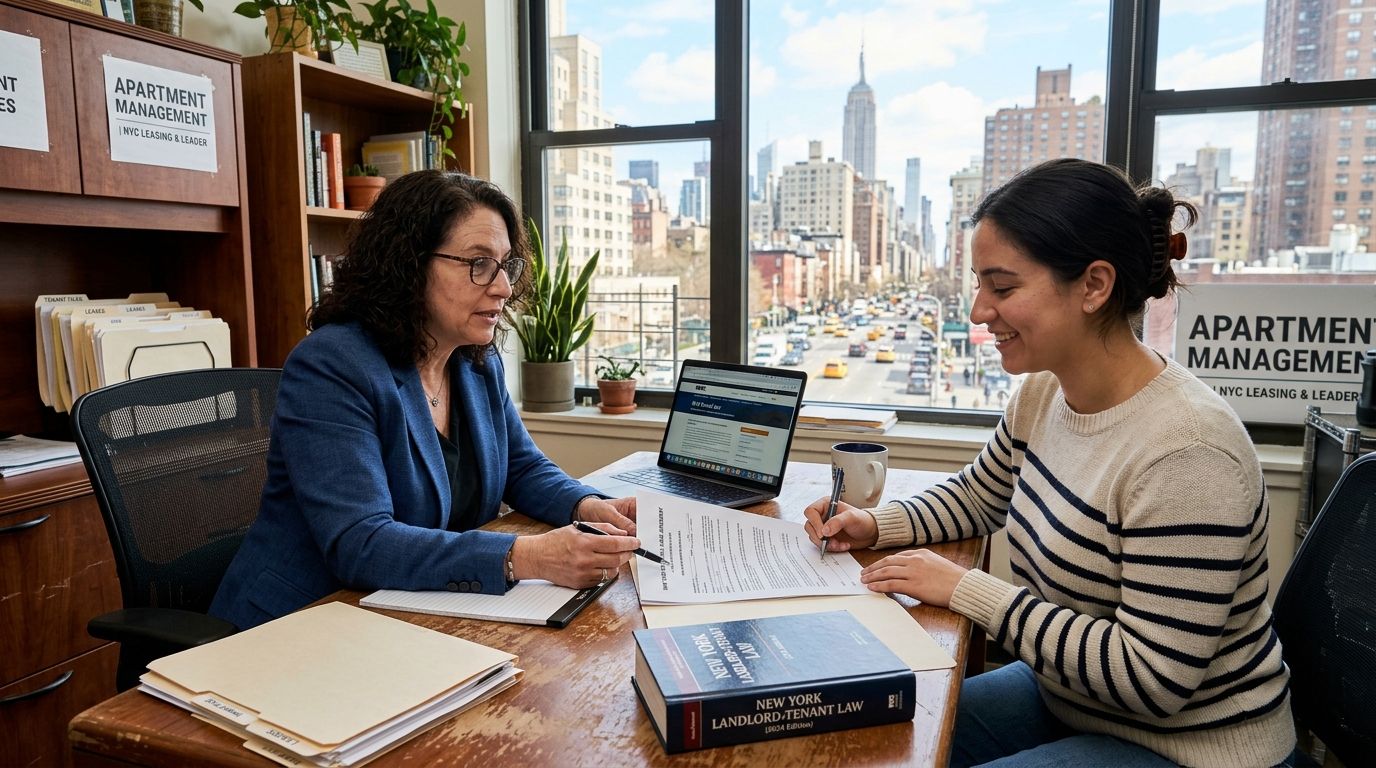
If you own or rent property in New York, you’re operating within one of the most detailed housing legal systems in the country. New York tenant landlord laws are not just guidelines, they are enforceable rules that shape everything from how rent is set to how evictions are carried out. Hence, missing a step isn’t a minor mistake; it can have legal and financial consequences
At the center of these laws are statutes like the Real Property Law and the Real Property Actions and Proceedings Law, which define the rights and obligations of both parties. As emphasized by the New York State Unified Court System, disputes over rent, eviction, or lease violations must follow formal legal procedures, no shortcuts, no assumptions.
Moreover, without clarity on how these laws work, even well-intentioned landlords and tenants can find themselves on the wrong side of the law. This guide breaks those rules down into practical, easy-to-understand sections. Whether you’re a landlord trying to stay compliant or a tenant trying to understand your rights, you’ll find clear answers to the questions that matter most.
Also See: Missouri Eviction Laws: The Process & Timeline
How Does the New York Tenant Landlord Laws Work?
In New York, tenant landlord laws form a simple framework that governs the relationship between landlords and tenants, from lease agreements to rent regulation, maintenance obligations, and eviction procedures. These laws are primarily drawn from statutes like the Real Property Law (RPL) and the Real Property Actions and Proceedings Law (RPAPL), alongside local housing regulations.
At a practical level, the system is built on balance. Tenants are granted protections such as habitable living conditions and due process before eviction, while landlords retain rights to collect rent, enforce lease terms, and seek legal remedies when agreements are violated. The framework ensures that both parties operate within clearly defined legal boundaries, reducing the risk of arbitrary actions or disputes.
What Rights Do Tenants Have Under New York Tenant Landlord Laws in 2026?
Under New York tenant landlord laws, tenants are protected by a range of enforceable rights designed to ensure safety, fairness, and due process. These laws include:
Right to a Habitable Home
Tenants are entitled to safe and livable conditions at all times. According to the New York Real Property Law § 235-b, the landlord must ensure the property is “fit for human habitation,” which includes proper heating, plumbing, and structural integrity.
Right to Due Process Before Eviction
Generally, a landlord cannot remove a tenant without following legal procedures. According to the New York State Unified Court System, tenants must receive proper notice and have the opportunity to be heard in court before eviction can occur.
Also Read: Rhode Island HOA Laws: A Comprehensive Guide
Protection Against Unlawful Rent Increase
Tenants in rent-stabilized or rent-controlled units are protected from excessive rent increases. These increases are regulated and must comply with state and local housing rules.
Right to Privacy and Notice of Entry
Landlords generally must provide reasonable notice before entering a tenant’s unit, except in emergencies. This protects the tenant’s right to quiet enjoyment of the property.
Protection Against Discrimination
Under fair housing laws, tenants cannot be denied housing or treated unfairly based on protected characteristics such as race, religion, gender, disability, or family status.
Also Read: Nevada Rent Control Laws (2026) | The Complete Guide
What Responsibilities Do Landlords Have Under New York Tenant Landlord Laws?
Landlords in New York must meet specific legal obligations under New York tenant-landlord laws, ensuring that tenants’ rights are upheld throughout the rental relationship. Some of these responsibilities include:
Maintain Habitable Living Conditions
Landlords must comply with the warranty of habitability. As stated in New York Real Property Law, the landlord shall be deemed to covenant and warrant that the premises are fit for human habitation. This means ongoing maintenance is not optional, it is a legal duty.
Follow Proper Eviction Procedures
Landlords must go through the court system to remove tenants. The New York State Unified Court System makes it clear that self-help evictions, such as changing locks or removing belongings, are unlawful.
Handle Security Deposits Lawfully
Landlords are required to safeguard tenant
deposits and return them within the legally mandated timeframe after the lease ends, along with any required documentation for deductions.
Provide Clear Lease Terms and Disclosures
Lease agreements must be transparent and comply with legal standards. Landlords are expected to clearly outline rent, obligations, and any applicable rules.
Comply With Anti-Discrimination Laws
As a landlord, you must adhere to fair housing regulations, ensuring that all tenants are treated equally and without bias throughout the rental process.
Also Read: Oregon Rent Control Laws (2026) | The Complete Guide
How Do Rent Control and Rent Stabilization Work in New York?
Typically, the New York tenant landlord laws include two major rent regulation systems: rent control and rent stabilization. While both aim to keep housing affordable, they apply to different types of buildings and tenants. Here's how they differ:
What Is Rent Control?
Rent control is the older system and applies to a limited number of apartments, typically in buildings constructed before 1947 and occupied continuously by the same tenant (or their lawful successor). Furthermore, rents are set by government formulas and are usually lower than market rates. When a rent-controlled tenant leaves, the unit often transitions out of rent control.
What Is Rent Stabilization?
Rent stabilization applies more broadly, covering many apartments in buildings with six or more units built before 1974 (and some newer buildings receiving tax benefits). Rent increases are regulated annually by the New York City Rent Guidelines Board, which sets allowable percentage increases for lease renewals.
Also Read: Ohio Eviction Laws: The Process & Timeline in 2026
What Are the Legal Grounds and Process for Eviction in New York?
Under New York tenant landlord laws, eviction is a strictly regulated legal process. Landlords cannot remove tenants arbitrarily, they must have valid grounds and follow court procedures. Below we break down the legal grounds for eviction:
- Nonpayment of rent
- Violation of lease terms (e.g., unauthorized occupants or illegal use)
- Holdover tenancy (remaining after lease expiration)
- Nuisance or illegal activity
These grounds must be supported by evidence before a court will grant eviction.
Eviction Process in New York
- Serve Proper Notice: Before filing a case, landlords must provide written notice, such as a rent demand (for nonpayment) or a notice to cure (for lease violations). This gives the tenant an opportunity to resolve the issue.
- File a Petition in Court: If the issue is not resolved, the landlord files an eviction case in housing court. This formally begins the legal process.
- Court Hearing and Judgment: Both parties present their case. The court reviews the evidence and determines whether eviction is justified under the law.
- Warrant of Eviction: If the landlord prevails, the court issues a warrant of eviction, authorizing removal.
- Enforcement by Law Enforcement: Only authorized officials, such as a marshal or sheriff, can carry out the eviction. Hence, self-help actions by landlords are prohibited.
Also Read: Are Landlords Responsible for Pest Control in Ohio?
How Can Property Management Software Help New York Landlords Navigate Tenant Landlord Laws?
Staying on top of New York tenant landlord laws can get complicated fast. From multiple statutes, strict timelines, and detailed record-keeping requirements. Property management software simplifies that complexity by giving you structure, visibility, and consistency in how you manage your rentals.
Here's how property management software can assist in making your work seamless:
Centralized Documentation and Record-Keeping
Platforms like Platuni, AppFolio, Buildium, and allow you to store leases, notices, payment records, and inspection reports in one place. This makes it easier to produce evidence if disputes arise and ensures nothing gets lost.
Automated Compliance Reminders
These tools can send alerts so you don’t miss critical deadlines, from lease renewals to notice periods and rent adjustments. This is especially useful in New York, where timing errors can delay enforcement actions or lead to penalties.
Transparent Rent Tracking and Payment History
Accurate rent records help you stay compliant with financial obligations and provide clear documentation in case of nonpayment disputes. Digital tracking also reduces errors compared to manual systems.
Inspection and Maintenance Logs
Maintaining a habitable property is a legal requirement. Software tools help you track maintenance requests, repairs, and inspections, creating a documented history that shows you’ve met your obligations under the law.
Secure Communication Channels
Built-in messaging systems allow you to communicate with tenants in a documented way. This helps avoid misunderstandings and provides a record of notices, agreements, and updates.
Also Read: HOA Special Assessment Explained | Meaning and Examples
How Can New York Landlords Stay Compliant With Lease and Disclosure Requirements?
Compliance with lease and disclosure rules under New York tenant landlord laws is not just about having a signed agreement. It’s about ensuring that every required term and notice is properly communicated and documented. Here's how you can stay compliant:
Use Clear, Legally Sound Lease Agreements
Your lease should outline rent terms, duration, responsibilities, and house rules in a clear and enforceable manner. Avoid vague language, as ambiguity can create disputes later.
Provide Required Disclosures
Depending on the property, you may need to disclose specific information, such as lead-based paint hazards (for older buildings), security deposit terms, and any applicable rent regulation status. These disclosures must be provided at the appropriate time.
Also Read: North Carolina HOA Laws: A Comprehensive Guide
Follow Notice Requirements Strictly
Whether it’s for rent increases, lease termination, or entry into the property, New York law often requires advance written notice. Missing or improperly serving notice can invalidate your actions.
Keep Detailed Records of All Transactions
Maintain copies of leases, notices, payment records, and correspondence. This documentation becomes essential if a dispute arises or if you need to prove compliance in court.
Stay Updated on Legal Changes
Rental laws can evolve, especially in a state like New York. Therefore, regularly reviewing updates or using tools that incorporate compliance tracking can help you stay aligned with current requirements.
Frequently Asked Questions About the New York Tenant-Landlord Laws
Can a landlord increase rent at any time in New York?
Not always. For rent-stabilized or rent-controlled units, increases are regulated and must follow limits set by housing authorities. For market-rate units, landlords generally can raise rent, but they must provide proper notice depending on how long the tenant has occupied the property.
How much notice must a landlord give before eviction in New York?
The notice period depends on the reason for eviction and the type of tenancy. For example, nonpayment cases require a rent demand notice, while lease violations may require a notice to cure. In all cases, eviction must go through the court system, and landlords cannot remove tenants without a court order.
How can landlords stay compliant with New York tenant landlord laws?
Consistency is key. Landlords should use clear lease agreements, follow notice requirements strictly, maintain proper records, and stay updated on legal changes. Many also rely on structured systems or property management tools to track deadlines, store documents, and reduce compliance risks.
What tools can help landlords manage rentals and avoid legal issues in New York?
Digital tools can make compliance much easier. Platforms like Platuni, Buildium, and AppFolio help landlords organize records, monitor rent payments, manage leases, and stay on top of legal requirements, reducing the chances of costly mistakes.
Stay Informed
Subscribe to the Platuni B2B Newsletter to receive industry insights,
new feature announcements, and exclusive growth reports
Related Posts
SEPTEMBER 22, 2026
Tenant Background Check vs Credit Check vs Eviction Check: What Does Each Tell You?
Breaks down what a credit check, an eviction check, and a background check each actually reveal about a rental applicant, and what none of them prove alone.
Learn more
SEPTEMBER 21, 2026
Maintenance Portal vs Email and Text: When Should Landlords Switch?
Looks at when informal maintenance reporting by text and email stops working, and what a dedicated portal adds once request volume grows.
Learn more