
Property Management & Operations
North Carolina HOA Laws: A Comprehensive Guide
by Platuni | 17 Apr, 2026 | 5 mins read
Platuni
17 April, 2026
5 mins read
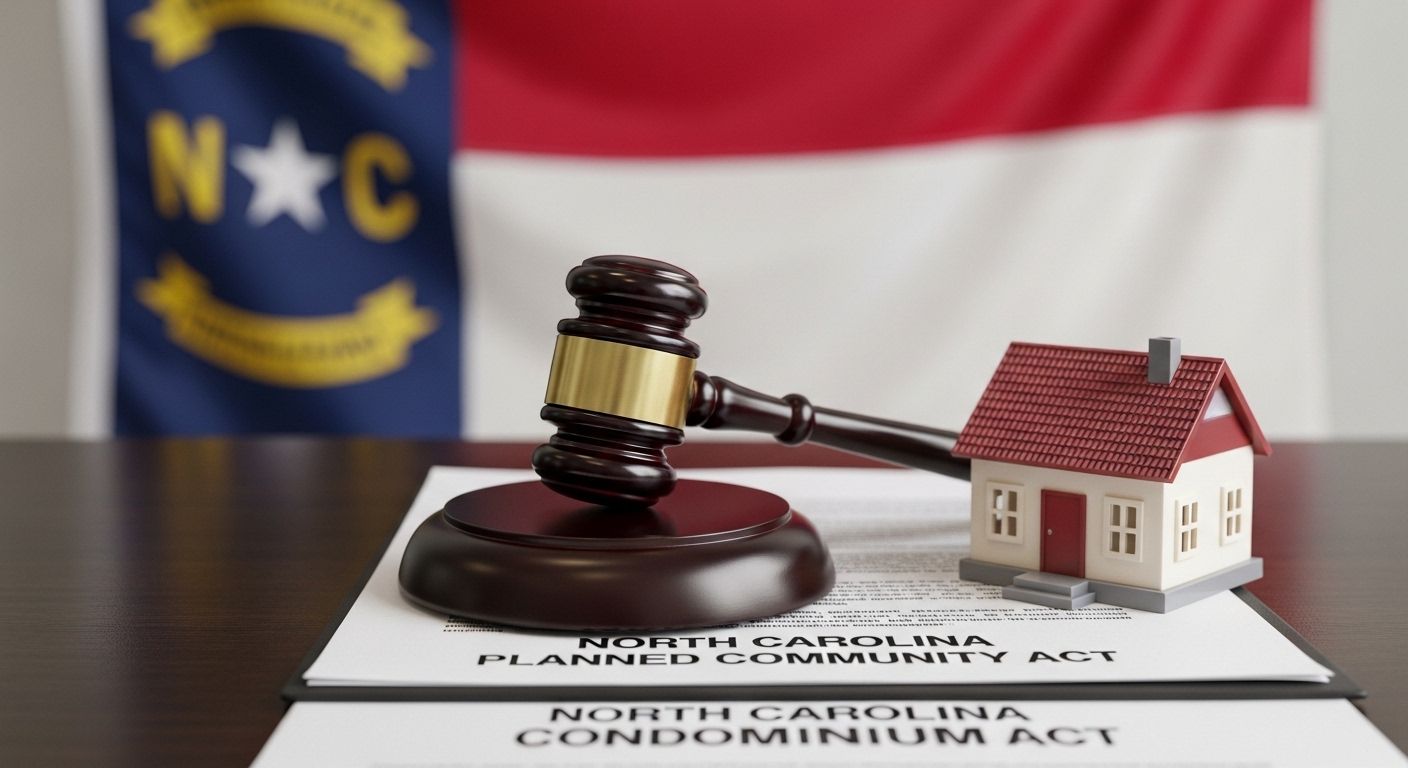
North Carolina HOA laws shape how millions of homeowners and property investors live, manage, and protect their communities. These laws, primarily governed by the North Carolina Planned Community Act, define the powers of homeowners associations, enforce rules, and regulate fees, disputes, and governance. With over 2.75 million North Carolina residents living in approximately 14,000+ community associations, understanding the state’s legal landscape is essential for homeowners and managers. As of 2026, North Carolina HOA laws have shifted toward stricter homeowner protections and greater transparency, primarily driven by the 2025-2026 North Carolina House Bill 444 (often referred to as the NC HOA Reform Bill).That reality makes legal clarity not just helpful, but essential for avoiding disputes, unexpected costs, and compliance issues.
With that in mind, many property owners and residents often find themselves asking important questions such as:
- What rights do homeowners have under North Carolina HOA laws?
- How much power does an HOA legally have over property decisions?
- Can HOA fees be increased without notice?
- What rules must HOAs follow when enforcing violations or fines?
- How can disputes between homeowners and HOAs be resolved legally?
These questions reveal the confusion and risks that come with navigating HOA regulations without proper guidance.
That’s where Platuni steps in with clarity and confidence. This guide breaks down North Carolina HOA laws into simple, actionable insights, helping you understand your rights, responsibilities, and legal options. You’ll discover how to stay compliant, avoid costly mistakes, and confidently manage or live within an HOA community. Platuni exists to simplify complex housing laws, giving you the tools and knowledge to make smarter property decisions every step of the way.
Also Read: South Carolina Eviction Laws: The Process & Timeline in 2026
Overview of North Carolina HOA Laws
Understanding North Carolina HOA laws is essential whether you are a homeowner living in a community association or a board member responsible for managing one. Homeowners’ associations (HOAs) play a major role in maintaining property values, enforcing community standards, and managing shared amenities. However, they must operate within a clearly defined legal framework.
North Carolina HOA laws are primarily governed by the North Carolina Planned Community Act (N.C. Gen. Stat. Chapter 47F). This law applies to most planned communities created on or after January 1, 1999. Older communities may still be governed by parts of this Act unless their governing documents state otherwise.
In addition, certain provisions of the North Carolina Nonprofit Corporation Act (Chapter 55A) also apply, since most HOAs are structured as nonprofit corporations. These laws regulate how HOAs are formed, how they operate, and how they interact with homeowners.
Also Read: North Carolina Security Deposit Laws | Deductions & Rights
Formation and Authority of HOAs
In North Carolina, HOAs are established by developers filing Covenants, Conditions, and Restrictions (CC&Rs). Governed by the North Carolina Planned Community Act (N.C.G.S. Chapter 47F), these associations hold legal authority over common areas, rule enforcement, and assessment collection for communities formed after Jan. 1, 1999.
An HOA is created when a developer records a declaration, which must include the community name, property description, homeowner obligations, and association powers. Once filed in the county records, the CC&Rs become legally binding on all current and future property owners.
Authority (N.C.G.S. § 47F-3-102), Associations have the power to adopt rules, assess dues, maintain common areas, and impose fines. Beyond the Declaration, HOAs are managed through Articles of Incorporation and Bylaws. Communities with 20 or fewer lots are generally exempt from certain provisions of the Act.
Members have the right to vote for the board and on amendments to the covenants. Associations must provide access to financial records and minutes. If a board acts outside its authority, homeowners can seek legal remedies.
Also Read: Tennessee Eviction Laws: The Process & Timeline in 2026
HOA Rules and Enforcement
In North Carolina HOA laws regarding property appearance, parking, and common areas, provided they are reasonable and consistent with governing documents. Under N.C. Gen. Stat. § 47F-3-107.1, enforcement requires due process: written notice and a hearing opportunity before fines (usually up to $100/day) or suspension of services, like amenities, are imposed.
- Rulemaking Authority: Associations can regulate, but not restrict, owner access to their property. Rules must not conflict with local ordinances or state/federal laws.
- Due Process Requirements: Before fining or suspending privileges, the board must give the homeowner a written notice of the violation and an opportunity for a hearing to present a defense.
- Fines and Penalties: Fines are generally limited to $100/per violation per day. If a fine remains unpaid for more than 5 days, additional daily fines may apply.
- Parking and Common Areas: HOAs may regulate parking. Note that their authority over public streets is often subordinate to local municipal rules.
- Unenforceable Rules: Rules that are discriminatory, violate fair housing laws, or exceed the authority given in the CC&Rs are considered invalid.
Common HOA Enforcement Steps
- Violation Identification: The board identifies a breach of rules.
- Notice to Homeowner: Written notice is sent detailing the violation and necessary actions.
- Opportunity to Cure: Homeowners are given a reasonable time to correct the issue.
- Hearing: If the issue is not resolved, the owner has the right to a hearing.
- Penalty Imposition: The board may impose fines or suspend privileges if the violation continues
Also Read: What Are Administrative Fees for Apartments? Explained Clearly
HOA Fees and Assessments
In North Carolina, HOAs are empowered by the Planned Community Act (N.C. Gen. Stat. § 47F) to levy regular assessments for common area maintenance and special assessments for unexpected, major costs. Unpaid fees can lead to late fees, interest, automatic liens against the property, and potentially foreclosure, requiring proper notice.
- Regular Assessments (N.C.G.S. § 47F-3-115): Covered expenses include landscaping, insurance, and administrative costs.
- Special Assessments: Imposed for large, unexpected repairs, such as storm damage.
- Late Fees and Interest (N.C.G.S. § 47F-3-102): HOAs may charge reasonable fees and interest, usually defined in the CC&Rs.
- Liens (N.C.G.S. § 47F-3-116): Unpaid assessments become automatic liens, hindering a homeowner's ability to sell or refinance.
- Foreclosure: While allowed under strict state guidelines, foreclosure is generally considered a last resort for unpaid dues.
- Legal Action: Homeowners facing potential foreclosure should consider contacting a real estate attorney.
For further details, you may explore the North Carolina Condominium Act, which also dictates some regulations for common interest communities
Also Read: Georgia HOA Laws | What Homeowners and Boards Must Follow
Homeowner Rights Under North Carolina HOA Laws
In North Carolina, homeowners in HOAs are protected by the Planned Community Act (N.C. Gen. Stat. §47F) and the Nonprofit Corporation Act (Chapter 55A), ensuring rights to access records, attend meetings, and receive due process. Key protections include reviewing records, consistent rule enforcement, and notice before fines.
- Access to Records (N.C. Gen. Stat. § 47F-3-118): Homeowners have the right to inspect and copy association records, including financial statements, minutes, and contracts. Written notice is required at least five business days before inspection.
- Right to Attend Meetings: Homeowners are entitled to attend most HOA meetings, though they may not always have a right to speak.
- Due Process (N.C. Gen. Stat. § 47F-3-107.1): Before fines or suspension of services are imposed, the HOA must provide the homeowner with written notice and an opportunity to be heard.
- Consistent Enforcement: Rules must be enforced uniformly. Selective enforcement against specific homeowners is a common legal challenge.
- Mediation (N.C. Gen. Stat. § 47F-3-113): Homeowners have the right to request mediation for certain disputes before the board can initiate litigation.
HOA Board Responsibilities
Board members must act in the best interest of the community, adhering to the standard of conduct for directors under Chapter 55A (Nonprofit Corporation Act):
- Good Faith: Act in the best interest of the community.
- Reasonable Care: Act with the care an ordinary person would in a similar position.
- Conflicts of Interest: Disclose and avoid conflicts of interest, acting in the association's best interest.
Important Legal Protections
- Foreclosure Protection: An HOA cannot begin foreclosure proceedings for unpaid dues until they are 90 days delinquent.
- Solar Rights: State law limits the ability of HOAs to prohibit the installation of solar panels, even if covenants are restrictive.
- Governing Documents: While HOAs have power, they cannot enforce rules that violate state, local, or federal law.
For further details, you can read the North Carolina Planned Community Act and get a comprehensive Homeowners' Guide to North Carolina HOA Laws.
Also Read: HOA Special Assessment Explained | Meaning and Examples
Dispute Resolution in HOA Communities
In North Carolina, HOA disputes are common, but governed by state laws and community documents. Effective resolution includes internal methods like hearings, followed by prelitigation mediation and, if necessary, binding arbitration. Courts prioritize whether governing documents, such as CC&Rs, and state laws were followed by all parties.
Internal Dispute Resolution (Pre-Litigation)
Direct communication between homeowners and the board often resolves issues early, such as rule violations or maintenance disputes. HOAs often have procedures for reviewing fines or rule violations before an impartial board panel. Using email to document conversations is recommended, and regular newsletters can prevent misunderstandings.
Mediation and Legal Action
A neutral third party helps the parties reach a mutually agreeable settlement. North Carolina law permits prelitigation mediation for HOA disputes, which can be initiated through the NC Dispute Resolution Commission. If authorized by the governing documents, arbitration can be used where a third party makes a binding decision. As a last resort, lawsuits may be filed for covenant enforcement or board challenges, often regarding breach of contract.
Key Considerations
Always review the HOA's Declaration of Covenants, Conditions, and Restrictions (CC&Rs) and Bylaws, as they dictate the procedures. Issues often arise from rules enforcement, architectural changes, and maintenance responsibilities. Transparency and consistent rule application by the board reduce the need for formal disputes.
Also Read: Will Tariffs Affect Home Prices? Housing Market Impact
Conclusion
In recent years, North Carolina HOA laws have evolved to increase transparency and protect homeowners. Some key trends include:
- Greater emphasis on open meetings
- Stronger protections against excessive fines
- Increased scrutiny of HOA foreclosure practices
These updates aim to balance the power between HOAs and homeowners. Both homeowners and HOA boards often misunderstand North Carolina HOA laws, leading to unnecessary conflicts. HOAs sometimes fail to follow proper procedures when issuing fines or enforcing rules. This can invalidate their actions. Homeowners, on the other hand, may ignore HOA notices or fail to review governing documents before purchasing property. This can lead to unexpected obligations. Understanding the law helps both sides avoid costly mistakes.
North Carolina HOA laws provide a structured framework that governs how homeowners’ associations operate and interact with residents. While HOAs have significant authority to enforce rules and collect dues, they must follow strict legal procedures and respect homeowner rights. For homeowners, understanding North Carolina HOA laws helps you protect your property, avoid disputes, and participate effectively in your community. For HOA boards, compliance ensures smooth operations and reduces legal risks. By staying informed, both sides can create a more transparent, fair, and well-managed community.
Also Read: How to Save Energy in Your Home | Smart Tips to Cut Bills
Frequently Asked Questions on North Carolina HOA Laws
Are HOA rules legally enforceable in North Carolina?
Yes. Under North Carolina HOA laws, rules outlined in the declaration and bylaws are legally binding. Homeowners agree to follow these rules when they purchase property in the community.
Can an HOA fine a homeowner without notice?
No. According to N.C. Gen. Stat. § 47F-3-107.1, HOAs must provide notice and an opportunity for a hearing before imposing fines. This ensures fairness and due process.
Can an HOA foreclose on a home for unpaid dues?
Yes, but only under specific conditions. North Carolina HOA laws allow foreclosure for unpaid assessments, but the HOA must follow strict legal procedures and provide proper notice.
Do homeowners have the right to see HOA financial records?
Yes. Under N.C. Gen. Stat. § 47F-3-118, homeowners can request access to financial records and other important documents. Transparency is a key requirement.
Can an HOA change its rules?
Yes, but changes must follow the procedures outlined in the governing documents and comply with North Carolina HOA laws. In some cases, homeowner approval may be required.
What happens if an HOA does not follow the law?
If an HOA violates North Carolina HOA laws, homeowners can challenge the action in court. The HOA may be required to reverse its decision or pay damages.
Are all communities in North Carolina governed by HOA laws?
No. Only planned communities with recorded declarations are subject to North Carolina HOA laws. However, many neighborhoods fall under these rules.
Stay Informed
Subscribe to the Platuni B2B Newsletter to receive industry insights,
new feature announcements, and exclusive growth reports
Related Posts

SEPTEMBER 22, 2026
How to Build a Rental Maintenance Workflow From Request to Completion
Defines what should happen after a maintenance request comes in, logging, prioritizing, assigning, verifying, and documenting the repair through to completion.
Learn more
SEPTEMBER 22, 2026
QuickBooks vs Property Management Software for Rental Properties
Explains why QuickBooks and property management software solve different problems, and when a landlord needs one, the other, or both.
Learn more