
Technology & Automation
Rent Payment Systems | Best Ways to Collect Rent Online
by Platuni | 22 Feb, 2026 | 8 mins read
Platuni
22 February, 2026
8 mins read
On the first of every month, Daniel used to check under his office door, half-expecting to see a stack of envelopes waiting for him. Some tenants paid early. Others paid late. A few forgot entirely. Tracking every rent payment felt like running a monthly obstacle course instead of managing properties.
One afternoon, after spending hours reconciling handwritten checks with bank deposits, he realized something important: the problem wasn’t the tenants, it was the system. Paper trails, manual reminders, and bank visits were consuming time he could spend improving his properties or finding new investments.
That was the turning point. He switched to a structured online rent payment system, automated reminders, recurring transfers, and real-time tracking. The envelopes reduced, but so did the stress. Typically, managing rent manually can be very demanding. As portfolios grow, so do complications: tracking payments, applying late fees, confirming deposits, sending reminders. Each manual step increases the risk of error and delay.
If you’re still managing rent manually, it is time to evolve and embrace better options. In this guide, we'll show you the best ways to collect rent online efficiently and securely. Ensure to carefully read through every line so you don't miss any important details.
Also Read: Are Landlords Responsible for Pest Control?
How Does Online Rent Payment Work?
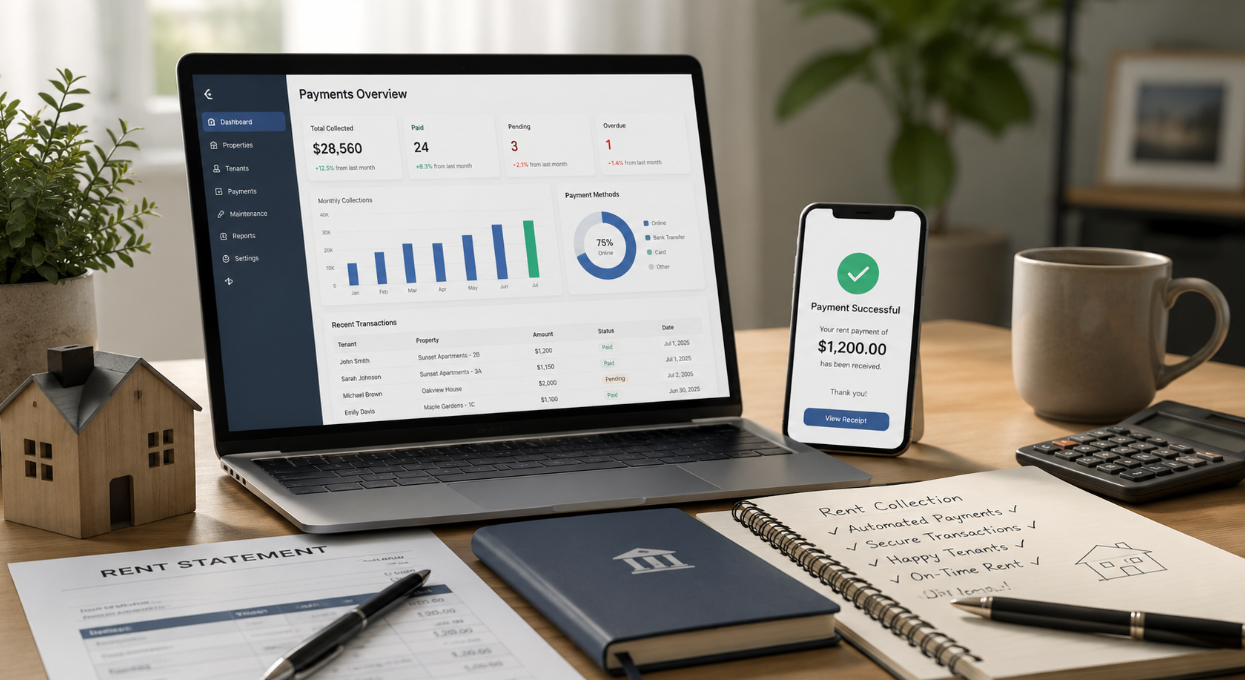
An online rent payment system allows tenants to transfer funds electronically instead of paying with cash or checks. The process usually starts when a landlord or property manager sets up an account on a rent collection platform and invites tenants to enroll. Once enrolled, tenants can log in through a web portal or mobile app to schedule a rent payment. Most systems support ACH bank transfers, debit or credit cards, and automated recurring payments.
Furthermore, tenants may receive reminders before the due date, and landlords are notified once payment is processed. Behind the scenes, the platform securely processes the transaction through payment networks and deposits funds directly into the landlord’s bank account. Many modern systems also generate receipts, track payment history, and integrate with accounting tools, making online rent payment more efficient than traditional methods.
Also Read: Are Landlords Responsible for Appliances?
Is Online Rent Collection Secure?
Yes, online rent payment platforms are generally secure when reputable providers are used. Most systems rely on encrypted payment gateways and bank-level security protocols to protect sensitive financial information. Security features commonly include:
- SSL encryption to safeguard data transmission
- Multi-factor authentication (MFA)
- Fraud monitoring and transaction alerts
- Secure payment processors compliant with financial regulations
Benefits of Using an Online Rent Collection System
An online rent payment system offers convenience, efficiency, and improved financial control for both landlords and tenants. Instead of chasing checks or handling cash, payments are processed digitally and tracked automatically. Here are the key benefits:
Also Read: Is Landlord Responsible for Mold? Laws and Obligations Explained
#1. Faster and More Consistent Rent Payment
One of the biggest advantages of an online rent payment system is speed and consistency. Thus, instead of waiting for checks to clear or dealing with cash handling, funds are transferred electronically and deposited directly into the landlord’s account. Likewise, automated reminders and recurring payment options reduce delays, helping ensure rent payment arrives on time each month.
#2. Improved Cash Flow Management
Predictable income is essential for landlords, especially those managing multiple properties. Online rent payment systems provide clearer timelines for when funds will arrive, making it easier to plan for mortgage payments, maintenance expenses, and other financial obligations. This stability improves overall financial management and reduces uncertainty.
#3. Automated Record-Keeping and Documentation
Digital rent payment platforms automatically generate receipts, transaction logs, and financial summaries. This eliminates the need for manual tracking or paper records. In case of disputes, audits, or tax preparation, landlords can quickly access organized payment histories, saving time and reducing administrative stress.
#4. Reduced Administrative Work
Collecting rent manually often involves follow-ups, physical deposits, and record reconciliation. Online systems automate these processes, freeing up time for landlords and property managers to focus on property improvements, tenant relationships, and portfolio growth rather than routine collection tasks.
Also See: Are Landlords Responsible for Snow Removal? Explained
#5. Lower Risk of Late or Missed Payments
Automated reminders and scheduled recurring rent payment options significantly reduce late payments. Typically, tenants can set up autopay, ensuring rent is deducted on the due date without needing manual action each month. This consistency benefits both parties and minimizes uncomfortable follow-up conversations.
#6. Enhanced Transparency and Accountability
Online rent payment systems create a clear digital trail for every transaction. Both tenants and landlords can see payment statuses in real time, reducing misunderstandings about whether rent was paid, when it was processed, or if late fees apply. Transparency builds trust and simplifies communication.
#7. Increased Security Compared to Cash or Checks
Handling cash or paper checks carries risks such as loss, theft, or fraud. Online rent payment platforms typically use encrypted payment gateways and secure banking protocols, providing stronger protection for sensitive financial data. This reduces physical security concerns while improving convenience.
#8. Scalability for Growing Property Portfolios
As landlords expand their property portfolios, manual rent collection becomes inefficient. Thus, online rent payment systems centralize collections across multiple units, making it easier to track income, monitor performance, and manage tenants from a single dashboard. This scalability supports long-term growth without increasing administrative burden.
Also Read: Common Landlord-Tenant Issues and How to Resolve Them
How to Choose the Right Rent Payment Platform
Selecting the right rent payment platform requires balancing security, cost, and functionality. Not all systems offer the same features, so careful evaluation is essential. Here are ways you can know the right platform.
- Check Security Standards: Look for platforms that use encryption, secure payment gateways, and multi-factor authentication. Financial data protection should be a top priority.
- Compare Transaction Fees: Some platforms charge landlords, others charge tenants, and some split fees. Review:
- ACH transfer fees
- Credit/debit card processing fees
- Monthly subscription costs
- Evaluate Automation Features: Choose a system that offers:
- Automatic recurring rent payment
- Late fee automation
- Payment reminders
- Real-time notifications
- Automation reduces administrative work and improves consistency.
- Review Reporting and Accounting Integration: A strong rent payment platform should generate downloadable reports and integrate with accounting software for seamless bookkeeping.
- Consider Ease of Use: The interface should be simple for tenants and landlords. Complicated systems may discourage adoption and lead to errors.
- Look for Property Management Integration: If you use broader property management tools, select a rent payment system that integrates with maintenance tracking, lease documentation, and communication features.
Also Read: Who to Report Landlords To | Tenant Complaint Guide
Top Rent Collection Methods & Systems
Generally, collecting rent efficiently and reliably is one of the most important tasks for landlords and property managers. The best rent collection methods today utilize digital systems that streamline payments, improve tracking, and reduce friction for tenants and owners alike. Below are top rent collection systems.
#1. ACH (Automated Clearing House) Bank Transfers
ACH transfers allow tenants to pay rent directly from their bank account into the landlord’s account without paper checks. Here, renants authorize a one-time or recurring debit from their bank and funds are transferred electronically. Similarly, this method offer low transaction fees, no need for physical checks, and predictable monthly timing. It's best also best for landlords seeking secure, and automated recurring payments.
#2. Online Rent Payment Platforms
Dedicated online platforms specialize in rent collection and payment tracking. These systems combine multiple payment options with automation and reporting. Hence, this method is best for landlords and property managers who want an all-in-one rent payment workflow.
Examples: Platuni, Buildium, RentRedi, Avail
Features: Recurring payments, reminders, late fee automation, payment history, tenant portals
Download the Platuni Property Manager App Today
#3. Mobile Payment Apps
Mobile apps make rent payment convenient for tenants and accessible for landlords on the go. They offer instant transfers, and widely familiar interfaces and they're suitable for smaller portfolios or informal rental arrangements.
Popular apps includes; Zelle, Venmo, PayPal
Considerations: Transaction limits and fees can vary; tracking and reporting may require manual organization.
#4. Credit and Debit Card Payments
Allowing tenants to pay with credit or debit cards adds flexibility and convenience. This option is best for tenants who prefer card incentives and rewards. In this system, payments are processed through secured gateways linked to landlords’ accounts.
Benefits: Fast payments, ability for tenants to earn rewards
Considerations: Higher processing fees, so landlords may choose to pass fees on to tenants.
Also Read: What a Landlord Cannot Do in Illinois: Legal Rules
#5. Automated Recurring Payments
Many rent collection systems allow tenants to set up autopay, where rent is automatically debited each month without manual intervention. This reduces late payments, and strengthens cash flow consistency.
Systems that support it are Platuni, Buildium, AppFolio, App-based bank ACH options
#7. Property Management Software Integrated Payments
Modern property management systems embed rent payment features alongside maintenance, tenant communication, and accounting tools. Such a platform is for landlords who want comprehensive operations in one system. It also provides Centralized tenant records, automated notices, and seamless reporting. Examples include Platuni, Buildium, AppFolio, Yardi Breeze.
Also Read: Landlord Insurance | Coverage and Legal Requirements
How to Set Up Online Rent Payments for Tenants
Setting up online rent payment systems is a practical way to simplify collections, improve cash flow, and reduce late payments. By using reliable platforms, landlords can make the process smooth for both themselves and their tenants. Here’s a step-by-step guide.
#1. Choose a Reliable Rent Payment Platform
Start by selecting a secure, user-friendly rent payment system. Look for platforms that support bank transfers, recurring payments, late fee automation, and provide digital receipts. Likewise, security is key. So, choose providers that use encrypted payment processing. Popular options include:
- Platuni: Combines rent collection with property management features like maintenance tracking and tenant communication.
- Buildium: Offers recurring payments, automated reminders, and robust reporting.
- AppFolio: Integrates rent payment with accounting and lease management for multi-unit landlords.
- PayProp: Especially popular in the UK, automates rent deposits and reconciles payments.
Download the Platuni Property Manager App Today
#2. Create Your Landlord Account
Once you’ve selected a platform, sign up as a landlord or property manager. Steps usually include:
- Verifying your identity
- Linking your bank account to receive deposits
- Adding property and tenant details (unit numbers, rent amounts, and due dates)
This ensures that rent payments are deposited directly and securely, with records automatically tracked by the system.
#3. Invite Tenants to Join
Most platforms allow you to send invitations via email or a tenant portal. Tenants cab create accounts and link their bank accounts or cards to pay rent digitally. Here are tips for smooth adoption:
- Explain the benefits of online rent payment (convenience, faster processing, automated receipts)
- Provide a clear start date and instructions
- Highlight security measures to reassure tenants
Platforms like Platuni also allow tenants to submit maintenance requests or communicate directly, reducing back-and-forth emails while handling payments.
Also Read: Colorado Landlord-Tenant Law | Complete Legal Overview
#4. Enable Recurring Rent Payments
Encourage tenants to set up autopay so rent is automatically withdrawn each month. Recurring payments reduce missed rent and make your cash flow more predictable. Most platforms allow you to configure:
- Payment due dates
- Grace periods
- Automatic late fees (optional)
- Payment confirmations.
#5. Test the System Before Full Rollout
Before relying entirely on digital payments, confirm your bank account receives deposits correctly, tenants get confirmation of payments, and reports accurately reflect transactions. This prevents confusion or disputes early on.
Also See: Landlord Negligence Compensation | How Much Can You Get
Frequently Asked Questions About Rent Payment Systems
What fees should landlords expect when accepting online rent payments?
Landlords may encounter charges such as transaction fees (often a percentage or flat amount per payment), service subscription fees, and optional processing fees for credit/debit card use. Some platforms allow landlords to pass these fees to tenants, while others absorb them. Therefore, always review the pricing structure before choosing a rent payment system.
Can tenants split rent payments between multiple payers?
Yes. Many online rent payment systems support split payments, allowing roommates or multiple responsible parties to share the rent. This feature simplifies collections when tenants have different pay dates or income sources and reduces tracking complexity for landlords.
Are digital rent payments better than traditional check payments?
In most cases, yes. Digital rent payment systems reduce processing time, eliminate lost checks, automate reminders, and provide immediate transaction records. This improves accountability and cash flow predictability compared to manual check collection.
How do online rent payments impact tenant‑landlord relationships?
Online rent payment systems increase transparency and reduce friction by making payment history easily accessible for both parties. Tenants receive confirmations and reminders, while landlords can document all payments digitally, reducing disputes and improving communication.
Is it possible to waive rent payment fees for tenants?
Yes. Some landlords choose to absorb transaction fees as a benefit to tenants, especially when rent payment systems improve convenience and on‑time payments. Others split fees between landlord and tenant or negotiate fee structures with the platform before implementation.
How can landlords encourage tenants to use online rent payment systems?
Landlords can highlight convenience, autopay options, secure processing, and digital receipts. You can also offer step‑by‑step setup guides, address security concerns, and align collections with tenant habits, as this increases adoption rates. Likewise, integrating rent payment into broader property management platforms such as Platuni encourages consistent use by combining payments with communication and service workflows.
Stay Informed
Subscribe to the Platuni B2B Newsletter to receive industry insights,
new feature announcements, and exclusive growth reports
Related Posts

SEPTEMBER 21, 2026
How to Automate Rental Property Management: 10 Tasks Landlords Can Stop Doing Manually
Ten repetitive landlord tasks, rent reminders, payment checks, report building, that automation can take over while judgment calls stay with the landlord.
Learn more
SEPTEMBER 18, 2026
Leasing Automation Software for Property Managers: What It Automates & What It Costs (2026)
Which steps in the leasing workflow are actually worth automating, what that automation costs, and who it isn't worth it for.
Learn more