
Property Management & Operations
Ohio HOA Laws: A Comprehensive Guide
by Platuni | 24 Apr, 2026 | 7 mins read
Platuni
24 April, 2026
7 mins read
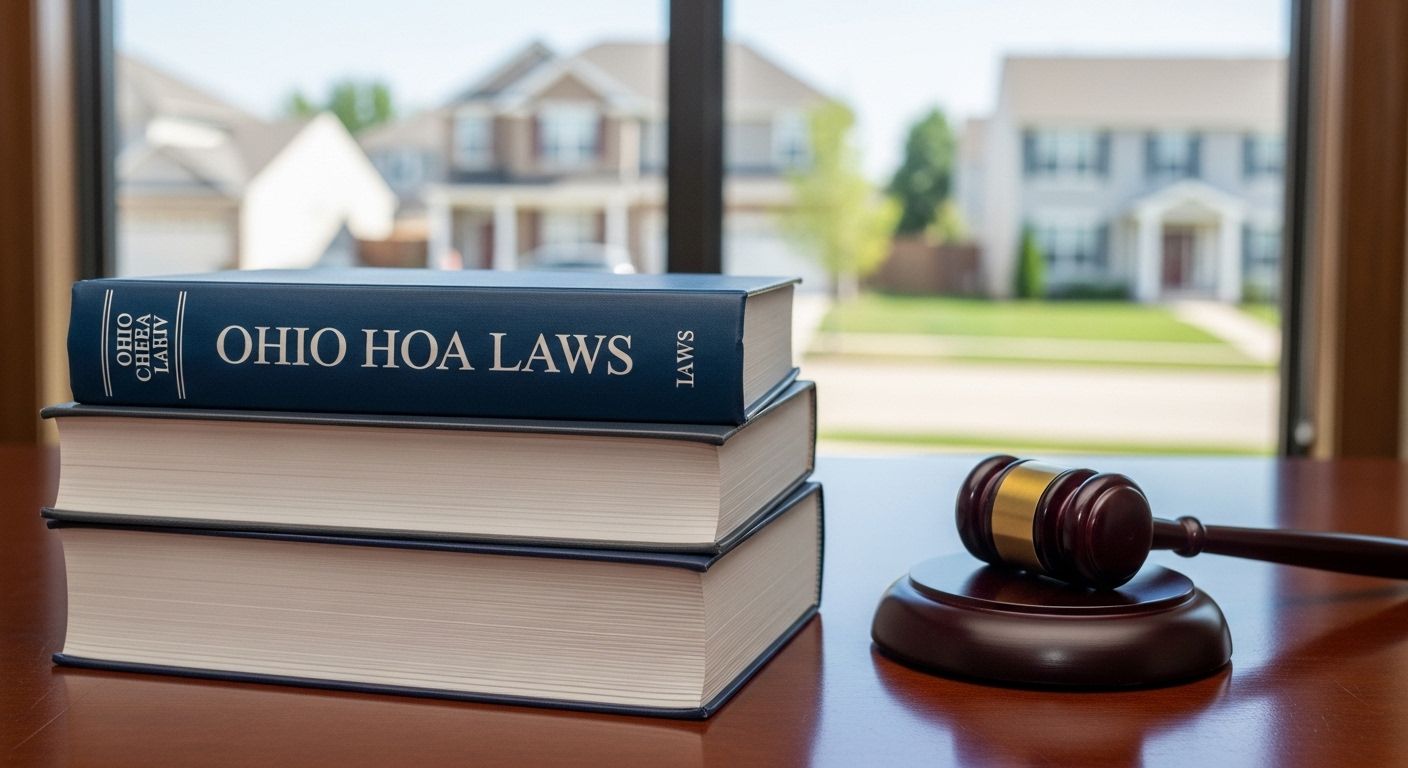
Imagine receiving a notice from your HOA about a violation you didn’t even know existed. Situations like this are common, and they highlight why understanding Ohio HOA laws is so important. In Ohio, these laws determine how far an HOA can go, and where your rights begin.
Moreover, HOAs play a critical role in maintaining property values and community standards, but their authority is not unlimited. State laws, such as the Ohio Planned Community Act and Condominium Property Act, set clear boundaries on what associations can and cannot do. At the same time, homeowners are expected to follow community rules, creating a balance that only works when both sides understand the system.
In this article, we break down that system in a practical and relatable way. You’ll learn the laws that govern HOAs, how they affect you, and what steps you can take to avoid disputes. Whether you’re new to an HOA or have lived in one for years, this guide will help you stay informed and in control.
Also Read: Ohio Eviction Laws: The Process & Timeline in 2026
What Are Homeowners Associations and How Do They Work in Ohio?
Generally, understanding how Ohio HOA laws work starts with understanding what an HOA actually is and the role it plays in your community. A homeowners association (HOA) is a private organization that manages and governs a planned community or subdivision. In Ohio, many planned communities are managed by a homeowners association, and the laws governing HOAs are set forth by various local and state regulations, as well as by each individual HOA's governing documents.
When you purchase a home in one of these communities, membership isn't optional. If an individual buys a property governed by an HOA, they are required to join and abide by the HOA rules. Hence, if you own a home in a planned community in Ohio, there's a good chance you're already part of a homeowners association, whether you fully realize it or not.
How do HOA Work in Ohio?
At its core, HOA exists to protect property values and maintain community standards. The day-to-day work typically includes:
- Maintaining common areas like parks, pools, and walkways
- Collecting dues and assessments from homeowners
- Enforcing community rules and architectural guidelines
- Managing the association's budget and reserve funds
- Holding annual meetings and board elections
Furthermore, every HOA operates through a set of governing documents. Although every HOA is different, the governing documents typically include Articles of Incorporation, Bylaws, a Declaration of Covenants, Conditions and Restrictions (CC&Rs), and other rules and regulations. We'll talk more about this as we forge ahead.
These documents establish the legal authority of the association and spell out the rights and responsibilities of both the board and homeowners.
Also Read: Ohio Landlord Tenant Rental Laws & Rights for 2026
Can an HOA Foreclose on a Home in Ohio?
This is one of the most alarming questions Ohio homeowners ask, and the answer is yes, an HOA can foreclose on your home. Under Ohio Revised Code §5312.12, an HOA may foreclose its lien in the same way that a mortgage on real property is foreclosed, and must initiate the foreclosure within five years after the lien is recorded. However, the important thing to understand is that Ohio HOA laws set a clear process that must be followed before it ever gets to that point.
In Ohio, homeowner associations have the legal authority, granted by state law and their own governing documents, to collect unpaid dues from homeowners. If those dues go unpaid for too long, the association can place a lien on the property, and once that lien is officially recorded, the HOA has the right to move forward with foreclosure, even if your mortgage payments are up to date.
Meanwhile, foreclosure is a last resort, and the right tools can help prevent it from ever reaching that stage. Platuni's dues tracking and lien-alert features can help Ohio boards to identify delinquencies early and engage homeowners before the situation escalates.
What Laws Govern HOAs in Ohio?
Ohio HOA laws draw from multiple layers of legislation, from federal, state, and community-level. To fully understand how Ohio HOA laws apply to your community, you need to know which statutes are in play and what each one covers. Below are the laws that govern HOAs in Ohio:
#1. The Ohio Planned Community Act (Ohio Revised Code Chapter 5312)
This is the primary law governing most HOAs in Ohio, especially those in planned residential communities. It establishes how associations are formed, managed, and how they interact with homeowners. According to the Ohio Legislature, a planned community must be created through a declaration and bylaws, and “an owners association shall administer a planned community” with authority exercised by a board of directors.
The law also outlines:
- HOA powers and duties
- Assessment and fee collection
- Record access and transparency
- Enforcement of covenants and restrictions
#2. The Ohio Condominium Property Act (Ohio Revised Code Chapter 5311)
This law applies specifically to condominium associations, which operate similarly to HOAs but have unique ownership structures involving shared common elements. The Ohio Legislature Chapter 5311, applies only to property that is specifically submitted to its provisions by the execution and filing of a declaration.
Key provisions include:
- Creation of condominium properties
- Governance by a unit owners association
- Rights and responsibilities of unit owners
- Management of common areas and shared expenses
For example, the law states that “every condominium property shall be administered by a unit owners association” governed by a board of directors.
Also Read: Ohio Squatter's Rights & Adverse Possession Laws
#3. The Ohio Nonprofit Corporation Law (Chapter 1702)
Most HOAs in Ohio are organized as nonprofit corporations, meaning they must comply with corporate governance rules under Chapter 1702.
This law governs:
- Formation and structure of HOA corporations
- Duties and responsibilities of board members
- Meetings, voting, and record-keeping
- Fiduciary obligations to act in the community’s best interest
As stated within the Planned Community Act, HOA bylaws are treated as corporate governance instruments under nonprofit law, ensuring that associations operate with accountability and transparency.
#4. The Ohio Fair Debt Collection Framework (and Federal FDCPA)
HOAs often collect dues, fees, and fines, which are considered debts under the law. As a result, debt collection practices are regulated, primarily by the Federal Fair Debt Collection Practices Act (FDCPA) and related state principles. Likewise, courts and legal interpretations recognize that HOA assessments and fees fall within debt collection rules, meaning associations and their agents must follow strict procedures when pursuing unpaid dues.
These laws require that:
- Debt collection must be fair and not abusive
- Proper notices and disclosures must be given
- Harassment or misleading practices are prohibited
Federal Laws That Also Apply
Beyond state statutes, Ohio HOAs must also comply with several federal laws, including:
- The Fair Housing Act: prohibits housing discrimination based on race, religion, sex, national origin, disability, and familial status
- The Americans with Disabilities Act (ADA): requires reasonable accommodations for residents with disabilities
Also Read: Are Landlords Responsible for Pest Control in Ohio?
What Are Homeowner Rights Under Ohio HOA Law?
Living in a planned community in Ohio doesn't mean you surrender your rights at the door. In fact, Ohio HOA laws give homeowners a meaningful set of protections, and knowing them is one of the best things you can do as a member of any association. Here's the homeowners right that you must know in Ohio:
The Right to Access Association Records
Transparency is a backbone of the Ohio HOA law. Under the Ohio Revised Code, two different laws protect your ability to see association records: the Condominium Property Act (O.R.C. 5311.091) and the Planned Community Law (O.R.C. 5312.07). The idea is the same across both: as a member of these organizations, you have the right to look at the records your association keeps.
Furthermore, homeowners have a right to inspect the association's records as described under O.R.C. Section 5312.07, and can also request a copy of these records, including minutes, books, and financial reports.
The Right to Attend Meetings and Vote
Ohio HOA laws also protect your right to participate in how your community is governed. Hence, Ohio law requires HOAs to hold owner meetings at least once per year, and special meetings can be called by the president, the board, or a majority of owners. These meetings aren't just formalities, they're where homeowners can voice concerns and hold the board accountable. Beyond attending, homeowners also hold real voting power.
The Right to Equal and Fair Treatment
Ohio HOA laws don't allow boards to enforce rules selectively. Therefore, an association has a duty to treat owners equally and enforce rules evenly. Owners who believe they are being treated unfairly should become familiar with the declaration and bylaws to determine their rights. Likewise, it would be appropriate for an owner being singled out for maltreatment to pursue a civil action against the board for money damages or injunctive relief, in some situations.
Furthermore, HOPB states that, while an association can record a lien and suspend voting rights and common elements privileges for non-payment of assessments, a board does not otherwise have the authority to take self-help measures to enforce compliance. It must enforce association rules through proper legal channels.
The Right to Challenge Improper Actions
If you believe your HOA has acted against Ohio HOA laws, you have legal recourse. Ultimately, the final decision maker in any dispute between an HOA and an owner is a court of competent jurisdiction. Therefore, if as an owner, you believe the board is exceeding its powers or not meeting its obligations, you can institute a civil suit to resolve the dispute. The Court of Common Pleas of the county in which the development is located has jurisdiction over HOA disputes, or, if the amount in controversy is less than $6,000, the case can be filed in small claims court.
Also Read: HOA Special Assessment Explained | Meaning and Examples
What Are Homeowner Rights Under Ohio HOA Law?
In Ohio, homeowners living in HOA communities are protected by specific rights under Ohio HOA laws, primarily governed by the Ohio Planned Community Law (Ohio Revised Code Chapter 5312). These rights ensure that while associations can enforce rules, homeowners are treated fairly and transparently. Below are homeowner rights under Ohio HOA laws:
#1. Right to Access HOA Records
Homeowners have the right to inspect and copy certain HOA records, including financial statements and meeting minutes. According to the Ohio Legislature, associations, they must make books and records available to owners upon reasonable request, promoting transparency and accountability.
#2. Right to Participate in HOA Meetings and Voting
Homeowners can attend association meetings and vote on important matters such as board elections and major decisions. This ensures that residents have a voice in how their community is managed.
#3. Right to Fair Notice Before Enforcement Actions
Under Ohio HOA laws, homeowners must receive notice before the HOA imposes fines or takes enforcement action. The law requires associations to provide written notice and an opportunity for a hearing before penalties are enforced.
#4. Protection Against Unreasonable Rules
HOA rules must be reasonable and consistent with governing documents. Homeowners can challenge rules that are arbitrary, discriminatory, or not properly adopted.
#5. Right to Dispute and Appeal HOA Decisions
Homeowners have the right to contest violations, fines, or decisions through internal HOA processes and, if necessary, through the courts.
Frequently Asked Questions About the Ohio HOA Laws Guide
Can an HOA enforce rules that aren't in the governing documents in Ohio?
No. Under Ohio HOA laws, an HOA can only enforce rules that are outlined in its governing documents, including the declaration, bylaws, and CC&Rs. If a board tries to enforce a rule that has no documented basis, homeowners have the right to challenge it.
What happens if I don't pay my HOA dues in Ohio?
Missing HOA dues in Ohio can escalate quickly. The board will typically start with written notices and late fees. If the balance remains unpaid, the association can file a lien against your property under O.R.C. §5312.12, and that lien can eventually lead to foreclosure. The good news is that most boards prefer to resolve delinquencies early. If you're struggling to keep up, reach out to your board directly to discuss a payment arrangement before the situation reaches a legal stage.
How does Platuni help Ohio HOA boards stay compliant with state law?
Staying on top of Ohio HOA laws means managing budgets, tracking dues, maintaining records, and communicating with residents, all while keeping pace with statutory requirements. Platuni brings all of that into one platform. From automated dues collection and lien alerts to document storage and resident communications, Platuni helps Ohio boards operate with the kind of transparency and consistency that O.R.C. Chapter 5312 demands, without the administrative overwhelm.
Can an Ohio HOA restrict what I do with my property?
Yes, within limits. Ohio HOA laws allow associations to enforce architectural guidelines, property use restrictions, and community rules outlined in the CC&Rs. However, there are boundaries. HOAs also cannot enforce rules that violate the Fair Housing Act or any other federal or state anti-discrimination statute.
How do you stay compliant and avoid conflicts under Ohio HOA laws?
To stay compliant with Ohio HOA laws in Ohio, homeowners should understand their HOA’s governing documents, follow rules on property use and payments, and communicate with the board before making changes. Keeping records of payments and approvals, attending meetings, and addressing issues early can help prevent disputes and ensure smooth living within the community.
Stay Informed
Subscribe to the Platuni B2B Newsletter to receive industry insights,
new feature announcements, and exclusive growth reports
Related Posts

SEPTEMBER 18, 2026
How Property Management Software Improves NOI
Five specific levers, vacancy, delinquency, maintenance cost, admin labor, and compliance risk, where property management software actually moves the numbers.
Learn more
SEPTEMBER 15, 2026
How to Choose Property Management Software by Portfolio Size (1 to 500+ Units)
A decision framework for picking property management software based on portfolio size, covering what changes at each bracket from a single unit to 500 or more.
Learn more