
Tenant Relations & Experience
North Dakota Eviction Laws: The Process & Timeline In 2026
by Platuni | 24 Apr, 2026 | 7 mins read
Platuni
24 April, 2026
7 mins read
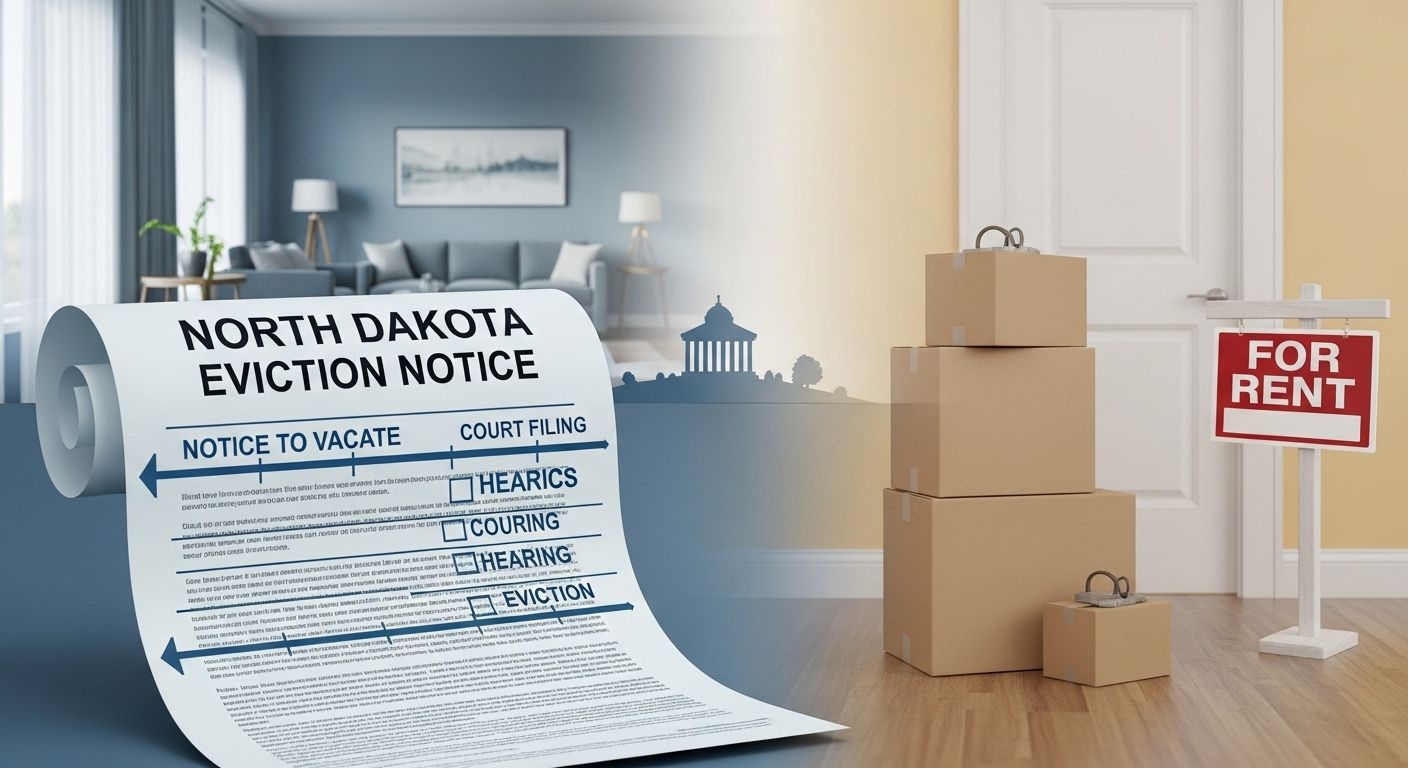
If you’ve ever had to deal with rental conflicts, you already know how important it is to understand North Dakota eviction laws. Whether it’s unpaid rent, a broken lease agreement, or a tenant refusing to move out, these situations can escalate quickly. In North Dakota, the law doesn’t allow shortcuts, every eviction must go through a formal legal process.
Imagine trying to remove a tenant without knowing the correct notice period or filing procedure. One mistake could cost you weeks of delay or even force you to start over. On the other hand, tenants who understand their rights can challenge improper evictions and ensure they are treated fairly. The law is designed to balance both sides, but only if you know how to use it.
In this article, we break down the process into clear, actionable steps. You’ll see how timelines play out, what legal grounds matter, and how both landlords and tenants can protect their interests. By the end, you won’t just understand the rules, you’ll know how to apply them.
Also Read: South Dakota Eviction Laws: The Process & Timeline In 2026
What Are the Legal Grounds for Eviction Under North Dakota Eviction Laws?
Under North Dakota eviction laws, landlords cannot evict a tenant without a legally recognized reason. In North Dakota, eviction is a formal court process, and the law strictly limits the grounds (reasons) a landlord can rely on.
Key legal grounds for eviction include:
- Nonpayment of rent: This is the most common reason. If a tenant fails to pay rent when due, the landlord can begin the eviction process.
- Violation of lease or rental agreement: Tenants can be evicted for breaking lease terms, such as unauthorized occupants, property damage, or disturbing neighbors.
- Illegal activity or misconduct: Engaging in criminal acts (e.g., drug-related activity or violence) on the property can justify eviction.
- Holding over after lease expiration: If a tenant remains in the property after the lease ends without permission, the landlord may proceed with eviction.
How Does the North Dakota 3-Day Notice Work?
If you are a landlord in North Dakota and your tenant has fallen behind on rent, the very first thing you are required to do before taking any legal action is serve them with a 3-Day Notice to Pay or Vacate. This document is not an eviction order, and it does not mean the tenant is automatically being removed. It is simply the law's way of giving the tenant one final, formal opportunity to either settle what they owe or leave the property voluntarily, before the matter goes to court.
Also Read: North Carolina Eviction Process: Laws & Timeline in 2026
What Must the North Dakota 3-Day Notice Include?
For a 3-Day Notice to Pay or Vacate to hold up in court, it cannot simply be a text message or a handwritten note slipped under the door. According to the North Dakota eviction laws, the notice must be a formal written document that contains specific information. At minimum, a valid North Dakota 3-Day Notice should include:
- The tenant's full name and the address of the rental property
- The exact amount of rent owed, broken down clearly, including any applicable late fees if the lease permits them
- The deadline date, specifying the date by which the tenant must pay or vacate (no less than three days from the date of service)
- A clear statement that failure to pay or vacate within the notice period will result in the landlord filing an eviction lawsuit in District Court
- The landlord's name, signature, and contact information
How Must the North Dakota 3-Day Notice Be Served?
Here is where many landlords unknowingly make mistakes. Under the North Dakota eviction laws, you cannot simply hand the notice to the tenant yourself and assume that is sufficient, at least not without the proper documentation. The law is specific about how eviction notices must be delivered.
The legally accepted methods of service are:
#1. Personal delivery to the tenant
The notice is handed directly to the tenant in person. If the landlord serves it themselves, they must obtain a signed Admission of Service from the tenant acknowledging receipt. Without this, personal service by the landlord may not hold up in court.
#2. Substitute service
If the tenant is not home, the notice can be left with another person residing at the property who is at least 12 years of age.
#3. Posting on the door
If no one is available at the property, the notice can be posted conspicuously on the main entrance door of the rental unit. When using this method, it is strongly advisable to also mail a copy to the tenant's last known address and document the posting with a photograph.
Whichever method you use, always keep a copy of the notice for yourself and create a written record of when, how, and by whom it was served. This documentation will become evidence if the case goes to court.
Also Read: Tennessee Eviction Laws: The Process & Timeline in 2026
Tenant Rights and Defenses Under North Dakota Eviction Laws
North Dakota is widely regarded as a landlord-friendly state. Hence, its eviction process is fast, the notice periods are short, and tenants are not automatically entitled to cure lease violations. However, that does not mean tenants are without meaningful protections. Under the North Dakota Century Code (NDCC) Chapters 47-16 and 47-32, tenants facing eviction retain a defined set of legal rights.
Understanding these rights is equally important for landlords and tenants alike. Below are tenant rights and defenses under North Dakota eviction laws:
#1. The Right to Proper Written Notice Before Eviction Proceedings Begin
Before a landlord can file for eviction in District Court, they are legally required to serve the tenant with a written notice of intention to evict. Typically, a three days' written notice of intention to evict must be given to the lessee, subtenant, or party in possession before proceedings can be instituted. This notice is not an eviction order, it is a mandatory procedural step. The North Dakota Court System's official eviction guidance confirms that a tenant cannot be evicted without a court order from a North Dakota state district court.
#2. The Right to Attend and Present a Defense at the Eviction Hearing
Once a Summons and Complaint is filed, tenants have the right to appear in court and tell their side of the story. The North Dakota Court System's Self-Help Center states that the eviction hearing is the tenant's formal opportunity to present their case and, if necessary, request additional time to move out. At the hearing, a tenant can present evidence, call witnesses, and challenge the landlord's claims.
#3. The Right to Request a District Court Judge
Many North Dakota eviction hearings are initially presided over by a judicial referee rather than a fully appointed judge. Tenants have the right to escalate this. Underground Landlord's 2026 North Dakota Eviction Laws guide states that tenants may request the case be heard by a District Court judge instead of a judicial referee, but this request must be submitted in writing within 7 days of being served.
Also Read: Ohio Eviction Laws: The Process & Timeline in 2026
#4. The Right to a Hardship Stay After Judgment
Even after a judge rules in a landlord's favour and a Writ of Execution is issued, tenants are not always required to vacate immediately. NDCC § 47-32-04 provides that if the tenant demonstrates that immediate eviction would cause significant hardship, the court may grant a stay of up to 5 additional days, except in cases involving disturbance of the peace. While this is a narrow window, it provides tenants, particularly families or vulnerable individuals, a small but meaningful buffer to arrange alternative housing.
#5. Protection Against Illegal "Self-Help" Evictions
One of the strongest tenant protections in the North Dakota eviction laws is the outright prohibition on self-help evictions. These are situations where a landlord attempts to force a tenant out without going through the courts. According to DoorLoop's 2026 North Dakota Eviction Laws guide, it states that self-help evictions are illegal in North Dakota, and a tenant has the right to sue their landlord for triple the damages.
#6. Protection Against Retaliatory Eviction
Tenants who exercise their legal rights, such as reporting code violations or requesting repairs, are protected from being evicted as punishment for doing so. Generally, North Dakota courts disfavour retaliatory evictions, and tenants may raise retaliation as a defense if they can demonstrate the landlord's action was motivated by the tenant's exercise of a protected right.
Similarly, the American Apartment Owners Association further notes that landlords are not permitted to increase rent or take adverse action in retaliation against a tenant who has filed a legitimate complaint with a local housing authority. Thus, if a tenant can demonstrate a clear timeline, complaint filed, eviction notice served shortly after, courts are likely to scrutinise the landlord's motives closely.
#7. The Right to Habitable Housing (Warranty of Habitability)
Tenants in North Dakota have a baseline right to live in a property that meets health and safety standards, and this right can serve as a legitimate defense against eviction. Innago's North Dakota Landlord-Tenant Law guide states that tenants have the right to live in a clean, safe, and habitable unit; request repairs within a reasonable timeframe; and enjoy privacy and quiet enjoyment of the property.
Therefore, if a landlord neglects to make necessary repairs within a reasonable time after being notified by the tenant, the tenant may take remedial action, including vacating the premises in cases involving grave repair problems or serious code violations.
Also Read: Oregon Eviction Laws: The Process & Timeline in 2026
How to File an Eviction Lawsuit in North Dakota District Court
So your tenant has not paid rent, violated the lease, or simply refused to leave after their tenancy ended, and now you are wondering what comes next. Before you do anything, make sure you have legal grounds. This is where everything begins. North Dakota eviction laws do not allow landlords to evict tenants on a whim. You must have a legally recognised reason, what the law calls "just cause." After this, you are ready to move forward. Here's the next steps to take:
Step 1: Serve the Correct Eviction Notice
Think of this as your formal warning to the tenant. Before you can file anything in court, you must give the tenant written notice of your intention to evict. The type of notice you serve depends on the reason for eviction.
- For nonpayment of rent: you serve a 3-Day Notice to Pay or Vacate. This gives the tenant three days to pay everything they owe or move out. If they pay in full within those three days, the eviction stops there. If they do not, you can proceed to court.
- For lease violations: you serve a 3-Day Notice to Comply or Vacate, clearly stating what the violation is.
- For holdover tenancies: if the tenant stayed past a fixed-term lease with no renewal, no additional notice is required beyond what was already in the original lease terms. For month-to-month tenancies, you must give 30 days' written notice before termination.
- For illegal activity: there is no grace period required. You can serve notice and move forward promptly.
Step 2: Wait Out the Notice Period
Once the notice is served, you must wait. This part can feel frustrating, especially if you already know the tenant has no intention of complying but skipping the waiting period or cutting it short will get your case dismissed.
Use this time productively. Start gathering your evidence; lease agreements, payment records, communication logs, bank statements showing missed payments, photos of damage, or any relevant correspondence with the tenant.
Step 3: File the Eviction Complaint with the District Court
If the tenant has not complied or vacated by the end of the notice period, it is time to go to court. Head to your local North Dakota District Court and file a Complaint for Eviction, also known as a Forcible Detainer action, under NDCC Chapter 47-32.
What you will need to bring:
- A completed Summons and Complaint for Eviction form
- A copy of the lease agreement
- A copy of the eviction notice you served
- Proof of how and when the notice was delivered
- Payment for the filing fee: the baseline cost is approximately $80 to $190 depending on the county and case complexity
One important note for landlords with LLCs or corporations: If the rental property is owned by a business entity, such as an LLC or corporation, you are legally required to be represented by a licensed North Dakota attorney. Non-lawyer agents of a business entity cannot represent it in court, and documents signed by them are considered void. Individual landlords can represent themselves.
Once you file, the court clerk will stamp and return your documents and assign a hearing date.
Also Read: South Carolina Eviction Laws: The Process & Timeline in 2026
Step 4: Serve the Tenant with the Summons and Complaint
Filing with the court is not enough, the tenant must also be formally served with the eviction paperwork. This is not something you can do yourself. North Dakota eviction laws require that the Summons and Complaint be delivered by a court official, the county sheriff, or a licensed process server.
Ensure to keep the proof of service document. The court will need confirmation that the tenant was properly served before the hearing proceeds.
Step 5: Prepare for the Eviction Hearing
The court will schedule the eviction hearing within 3 to 15 days of the summons being issued. That is a short window, so start preparing immediately after filing.
What to bring to the hearing:
- Original signed lease agreement
- Copies of all eviction notices served
- Proof of service for each notice
- Rent ledger or payment history showing missed or late payments
- Bank statements if relevant
- Photos or videos of property damage
- Any written communication between you and the tenant, texts, emails, letters
- Witness statements if applicable
If the tenant does not show up to the hearing, the court will typically rule in your favour by default. If they do show up, they will have the opportunity to present their defense, so be ready to counter common arguments like proof of payment or claims of retaliatory eviction.
Also Read: Oklahoma Eviction Laws: The Process & Timeline In 2026
Step 6: Attend the Eviction Hearing
On the day of the hearing, arrive early, dress professionally, and bring multiple copies of all your documents, one for yourself, one for the judge, and one in case the tenant's side requests it.
The judge, or in some cases a judicial referee, will hear arguments from both sides. You will need to clearly establish:
- That you had a valid legal ground for eviction
- That you served the correct notice in the correct manner
- That the tenant failed to comply within the required timeframe
- That you followed every procedural step under North Dakota eviction laws
After reviewing the evidence, the judge will issue a ruling. Some judges decide immediately in the courtroom; others issue a written judgment within a few days.
Step 7: Obtain the Writ of Execution
A Judgment for Possession gives you the legal right to the property, but it does not physically remove the tenant. For that, you need a Writ of Execution, which is the court order that authorises law enforcement to carry out the eviction.
Therefore, request the writ from the court as soon as judgment is entered. Once issued, the writ is handed to the county sheriff's office, which will serve it on the tenant. The tenant typically has between 24 hours and 5 days to vacate voluntarily after the writ is served.
Step 8: The Sheriff Removes the Tenant (If Necessary)
If the tenant still refuses to leave after the writ has been served and the deadline has passed, you contact the county sheriff's office to enforce the writ. Only the sheriff or a deputy sheriff is authorised to physically remove a tenant in North Dakota.
Do not attempt to remove the tenant yourself, change the locks while they are still inside, or remove their belongings. Even at this final stage, self-help eviction is illegal and can expose you to a lawsuit for treble damages.
Also Read: New York Eviction Laws: Process & Timeline in 2026
Frequently Asked Questions About North Dakota Eviction Laws
How Long Does the Eviction Process Take in North Dakota in 2026?
The timeline for North Dakota eviction laws is relatively fast compared to many states, but it still depends on how smoothly the case progresses. In most straightforward cases, the entire process takes about 2 to 4 weeks from start to finish.
Can a landlord evict a tenant in North Dakota without a court order?
No. North Dakota law strictly prohibits self-help evictions. Landlords cannot change locks, remove a tenant's belongings, or shut off utilities to force a tenant out. All evictions must go through the District Court under NDCC Chapter 47-32. Bypassing the court process exposes landlords to treble damages liability, meaning a court could order them to pay up to three times the tenant's actual losses.
How much does it cost to file an eviction in North Dakota?
The baseline cost to file an eviction lawsuit in North Dakota District Court averages around $190, covering filing and service fees. However, total costs can rise significantly if the case is contested or if legal representation is required.
Does a tenant have the right to fight an eviction in North Dakota?
Yes. Tenants have the right to attend the eviction hearing and present a defense before a judge. Common defenses include proof that rent was paid, evidence of retaliatory eviction, or documentation that the landlord failed to maintain habitable conditions.
Can Platuni help landlords manage the documentation needed for an eviction?
Absolutely. One of the most common reasons eviction cases get dismissed in North Dakota is incomplete or improperly served documentation. Platuni helps landlords and property managers maintain organised lease records, log resident communications, and track payment histories all of which are critical evidence at an eviction hearing
Stay Informed
Subscribe to the Platuni B2B Newsletter to receive industry insights,
new feature announcements, and exclusive growth reports
Related Posts

SEPTEMBER 21, 2026
Maintenance Portal vs Email and Text: When Should Landlords Switch?
Looks at when informal maintenance reporting by text and email stops working, and what a dedicated portal adds once request volume grows.
Learn more
SEPTEMBER 18, 2026
Residence Life & Dorm Software: What Campus Housing Systems Need to Do
What university housing offices and PBSA operators need from software that a generic property management tool was never built to handle.
Learn more