
Technology & Automation
Rental Equipment Management Software: Best Tools for Growing Rental Businesses
by Platuni | 18 Jan, 2026 | 15 mins read
Platuni
18 January, 2026
15 mins read
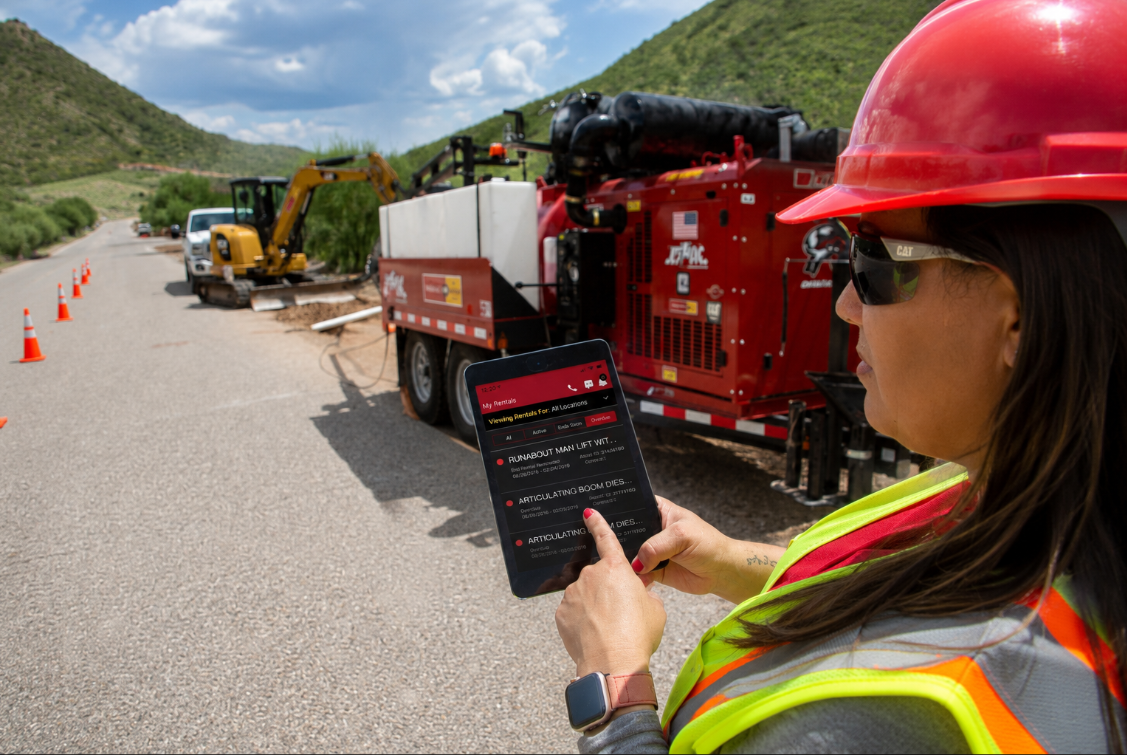
Rental businesses are experiencing significant growth across sectors such as construction, events, logistics, and agriculture; however, many operators continue to rely on spreadsheets, manual records, and reactive workflows to manage their rental inventory. This reliance on outdated processes often results in operational inefficiencies, revenue loss, scheduling challenges, and avoidable maintenance disruptions.
This is where rental equipment management software becomes a critical operational advantage as it enables businesses to track inventory in real time, automate bookings and billing, schedule preventive maintenance, and gain insights that fuel growth. According to recent industry research, the global equipment rental software market is projected to grow from USD 0.19 billion in 2025 to nearly USD 0.38 billion by 2034, driven by rising demand for digital automation and analytics across rental workflows.
In this guide, we’ll explore the benefits of these platforms, compare top software tools used today, break down key features to consider, and provide practical tips for choosing the right system as your business scales.
Why Rental Equipment Management Software Matters
Rental companies manage numerous interconnected operational elements. Equipment inventories ranging from heavy machinery, small tools, vehicles, or specialized event gear each requiring careful scheduling, maintenance oversight, tracking, and accurate billing. As businesses scale, traditional workflows often struggle to keep pace, resulting in:
- Double bookings or overallocated inventory
- Missed maintenance schedules
- Manual invoicing and payment delays
- Lost or misplaced assets
According to industry trend reports, rental operations that switch from manual methods to purpose-built software often see significant gains in operational efficiency, including improved utilization, fewer errors, and enhanced customer satisfaction.
Smart rental software centralizes workflows and keeps teams coordinated, no matter how large or distributed your operations.
Key Benefits of Rental Equipment Management Software
Before comparing specific software, it’s important to understand the problems these platforms are designed to solve. Below are the core benefits that modern rental equipment management software delivers.
1. Real-Time Inventory Visibility and Tracking
Rental software provides a central dashboard where you can view:
- Available vs. rented equipment
- Location of assets
- Usage and reservation history
This reduces the risk of double rentals and idle inventory. Real-time tracking is increasingly common with IoT integrations that monitor equipment health and location, minimizing downtime and improving asset utilization.
2. Automated Booking and Billing
Manual booking processes can create friction and consume staff time. Rental platforms automate:
- Reservation scheduling
- Contract generation
- Billing and payment reminders
- Security deposit tracking
Automation also reduces human errors, accelerates turnaround times, and improves customer experience.
3. Preventive Maintenance Scheduling
Poor or delayed maintenance can be costly, both financially and operationally. Rental software allows businesses to:
- Set automated maintenance reminders
- Track service histories
- Reduce unplanned breakdowns
Predictive analytics are increasingly integrated into rental software, analyzing usage patterns to forecast servicing needs before failures occur ,improving uptime and extending equipment life.
4. Better Financial Reporting and Visibility
Rental businesses often struggle to put invoices together, track revenue, or forecast cash flow using manual tools alone. Rental software enables:
- Accurate invoicing
- Financial dashboards
- Profitability reporting
- Integration with accounting systems
These capabilities help rental operators understand performance at a glance.
5. Scalability and Growth Support
As rental firms expand, adding equipment types, locations, or service offerings, flexible software helps them scale without proportional increases in staff or administrative load. Cloud-based solutions, especially, allow real-time access and remote collaboration across teams.
Top Rental Equipment Management Software Tools in 2026
#1. Platuni
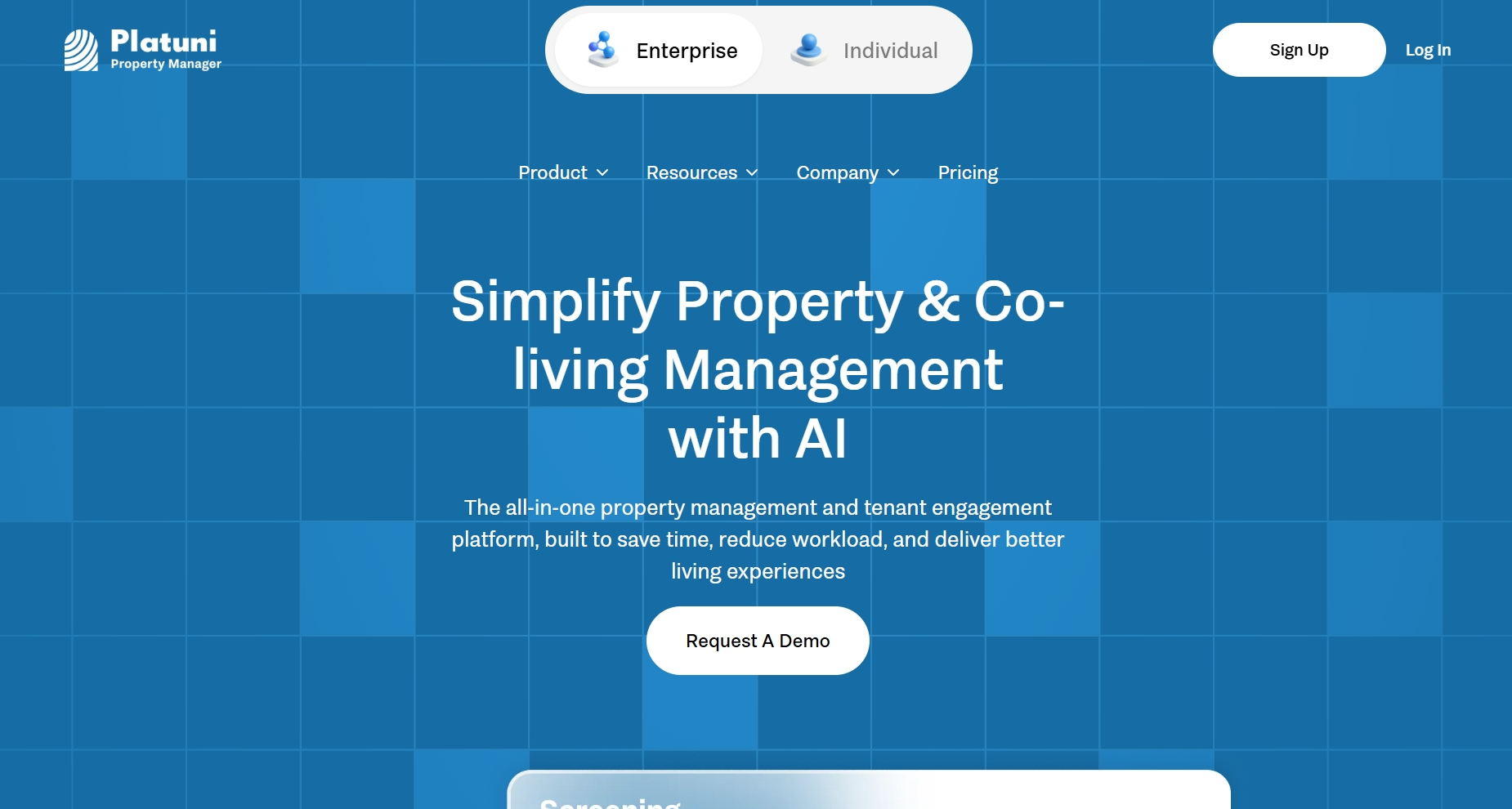
Platuni leads the list by addressing a critical but often overlooked aspect of rental operations: coordination between multiple users sharing assets or spaces. Rather than focusing solely on inventory and bookings, Platuni emphasizes structure, transparency, and operational clarity, making it especially valuable for rental models where compatibility, accountability, and shared responsibilities matter.
Best for: Rental businesses and property operators managing shared assets, co-living spaces, or multi-user rental environments
Key Features:
- Centralized management of shared rentals and occupants
- Automated rent and expense tracking
- Clear onboarding and usage rules
- Communication and coordination tools
- Visibility into responsibilities and usage history
Why it’s great: Platuni stands out by reducing clashes in shared rental environments. Its system-driven approach replaces assumptions with structure, helping rental operators minimize disputes, streamline coordination, and scale operations without increasing administrative overhead.
Pricing: Flexible pricing designed to scale with usage and operational complexity, making it accessible for growing rental businesses.
#2. Rentman
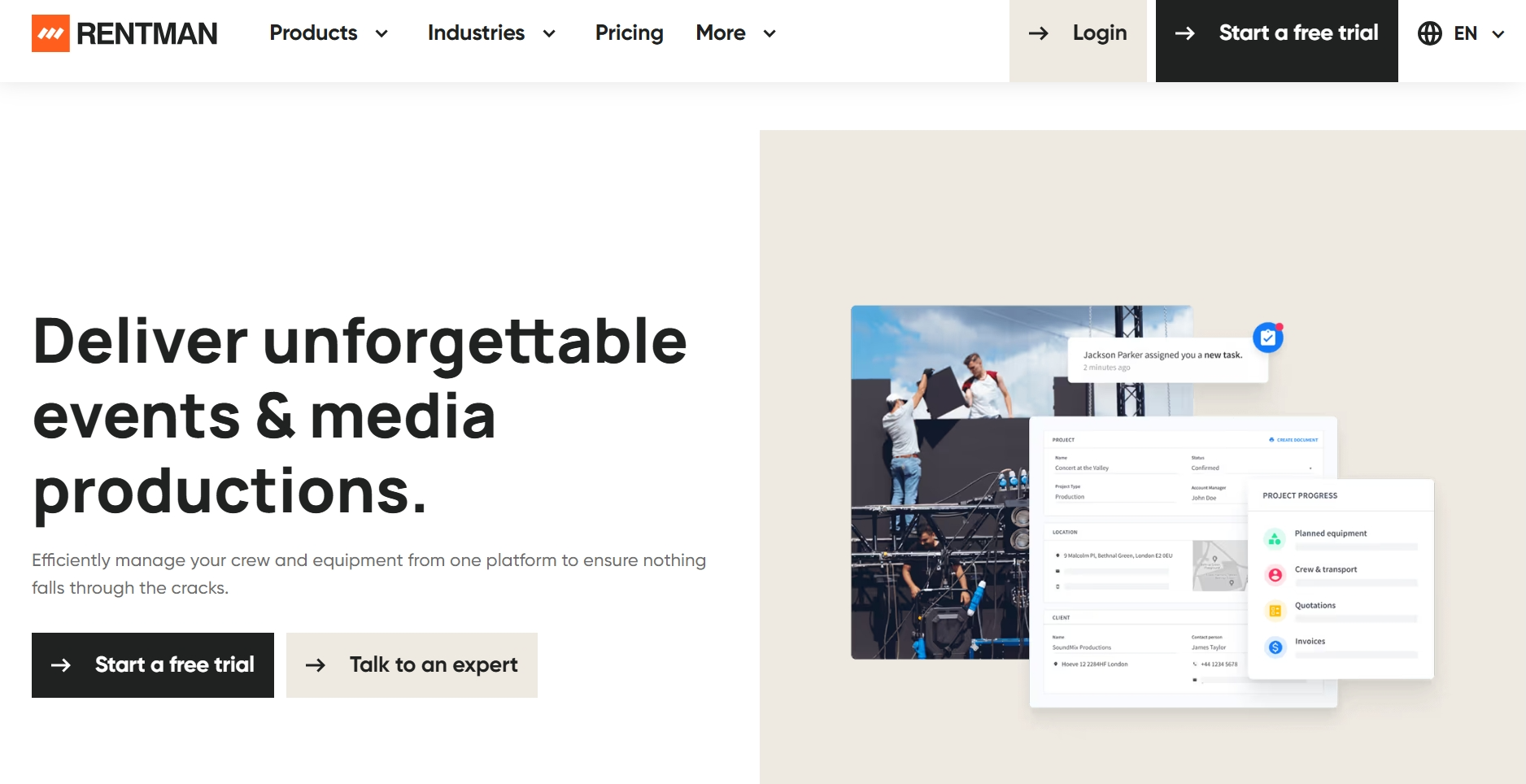
Rentman excels where rentals connect to specific projects or jobs. It offers powerful scheduling and dispatch tools that help businesses plan crew, equipment, transport, and timelines in a single system.
Best for: Rental companies focused on events, film, construction, and project-based scheduling
Key Features:
- Advanced scheduling and dispatch
- Project planning tools
- Multi-location coordination
- Client portals and CRM
- Inventory lifecycle tracking
Why it’s great: Rentman’s workflow supports complex timelines and multi-stakeholder coordination, making it ideal for event and project rentals where precision matters.
Pricing: Generally mid-to-high tier based on modules and number of users.
#3. Booqable
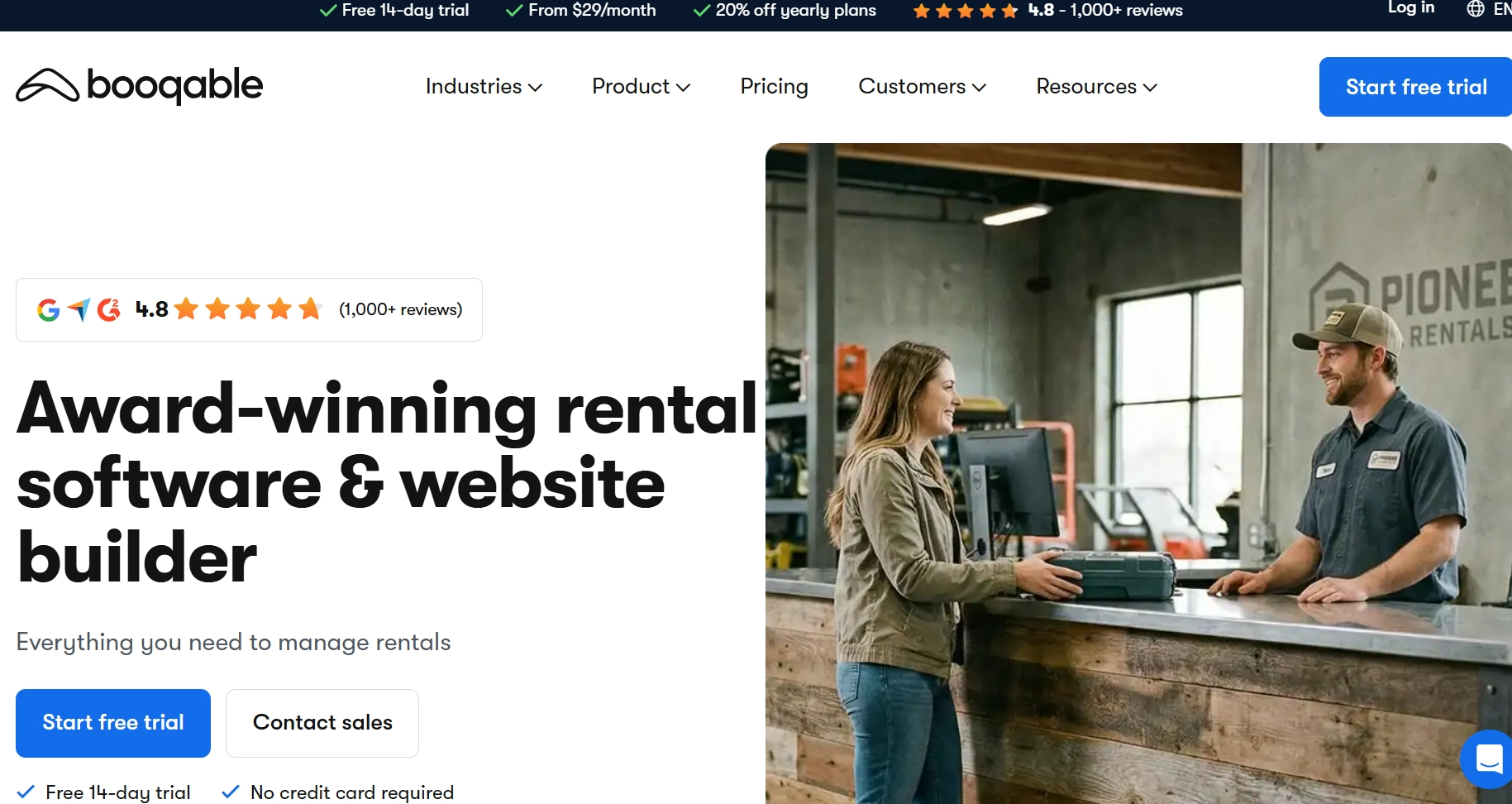
Booqable delivers a streamlined platform with an integrated online rental store, enabling businesses to list inventory, accept bookings, and manage daily operations from a single interface.
Best for: Smaller rental firms and tool or equipment shops
Key Features:
- Online booking and storefront
- Inventory management
- Contract and order tracking
- Mobile applications
- Payment processing
Why it’s great: Its user-friendly design makes it ideal for smaller teams that want an all-in-one solution without unnecessary complexity.
Pricing: Starts with affordable plans for small inventories and scales as usage and features expand.
#4. Point of Rental
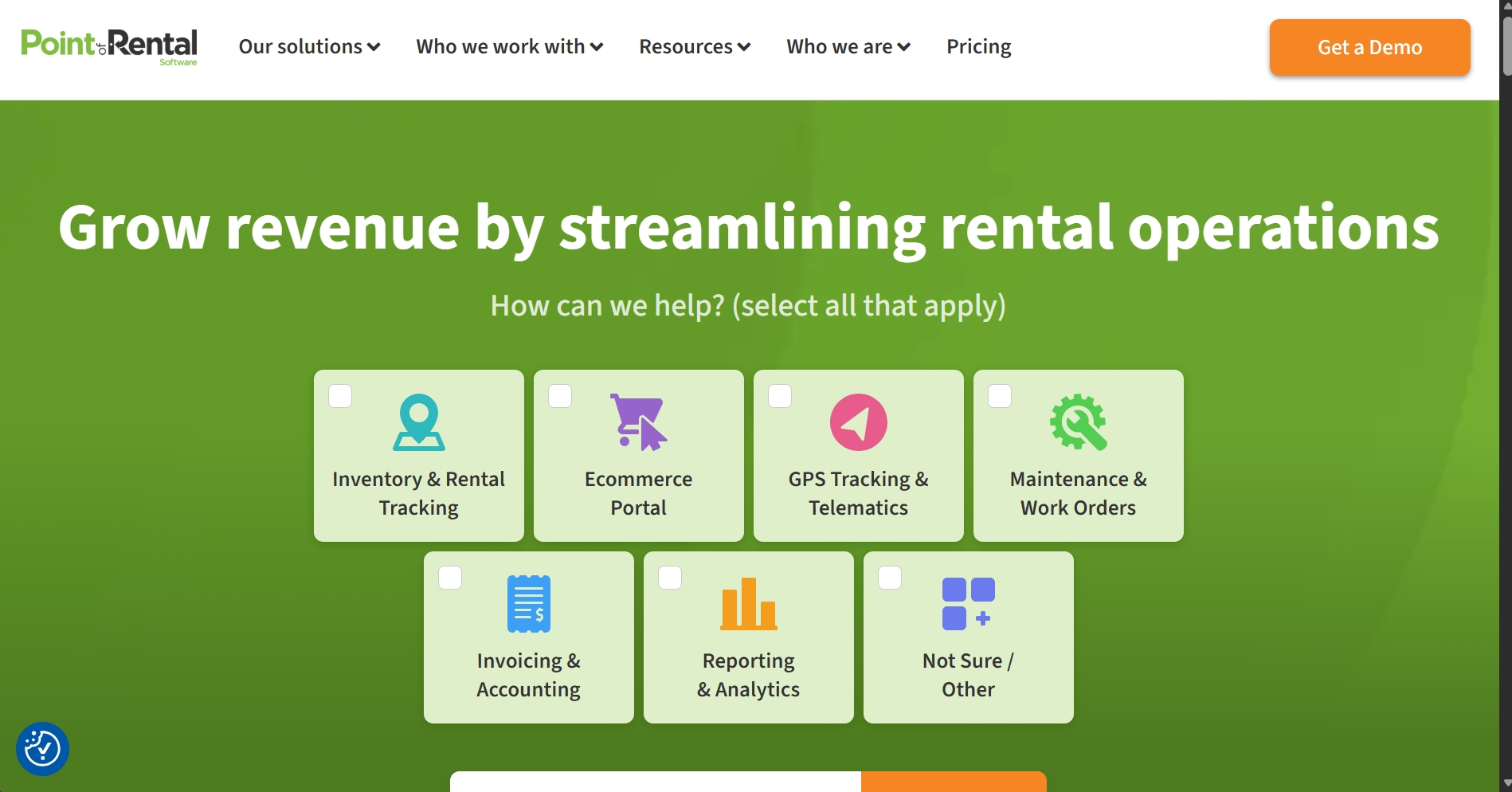
Point of Rental offers a comprehensive feature set with both cloud-based and on-premise deployment options, making it suitable for organizations with advanced operational needs.
Best for: Companies with large equipment inventories or multi-site operations
Key Features:
- Enterprise-grade inventory and contract management
- Dispatch and delivery routing
- Financial system integrations
- Advanced analytics and reporting
- Multi-location support
Why it’s great: Its flexibility and depth make it a strong choice for businesses that require tight control over high-value assets and complex workflows.
Pricing: Enterprise-level pricing, typically higher than small-business-focused platforms.
#5. HireHop
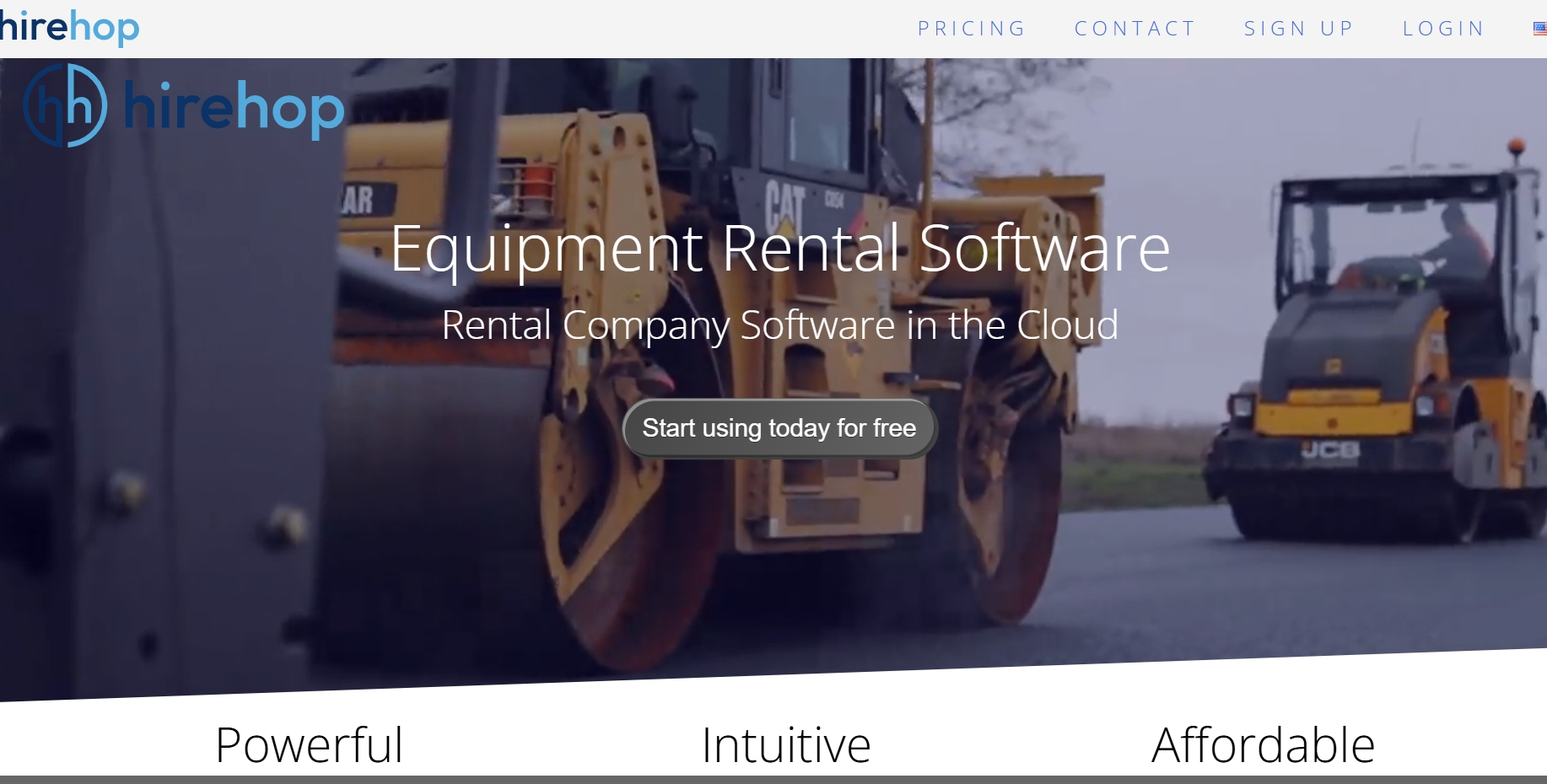
HireHop provides a modular system that allows rental companies to build a solution around their specific needs, from asset tracking to accounting integration.
Best for: Mid-sized rental businesses seeking customizable tools
Key Features:
- Asset and CRM management
- Accounting integrations (QuickBooks, Xero)
- Barcode scanning and mobile apps
- Route planning tools
- Modular feature selection
Why it’s great: Its modular pricing and feature flexibility make it a cost-effective option for growing operations that want control over their software stack.
Pricing: Includes free tiers and paid plans based on selected modules and user count.
#6. EZRentOut
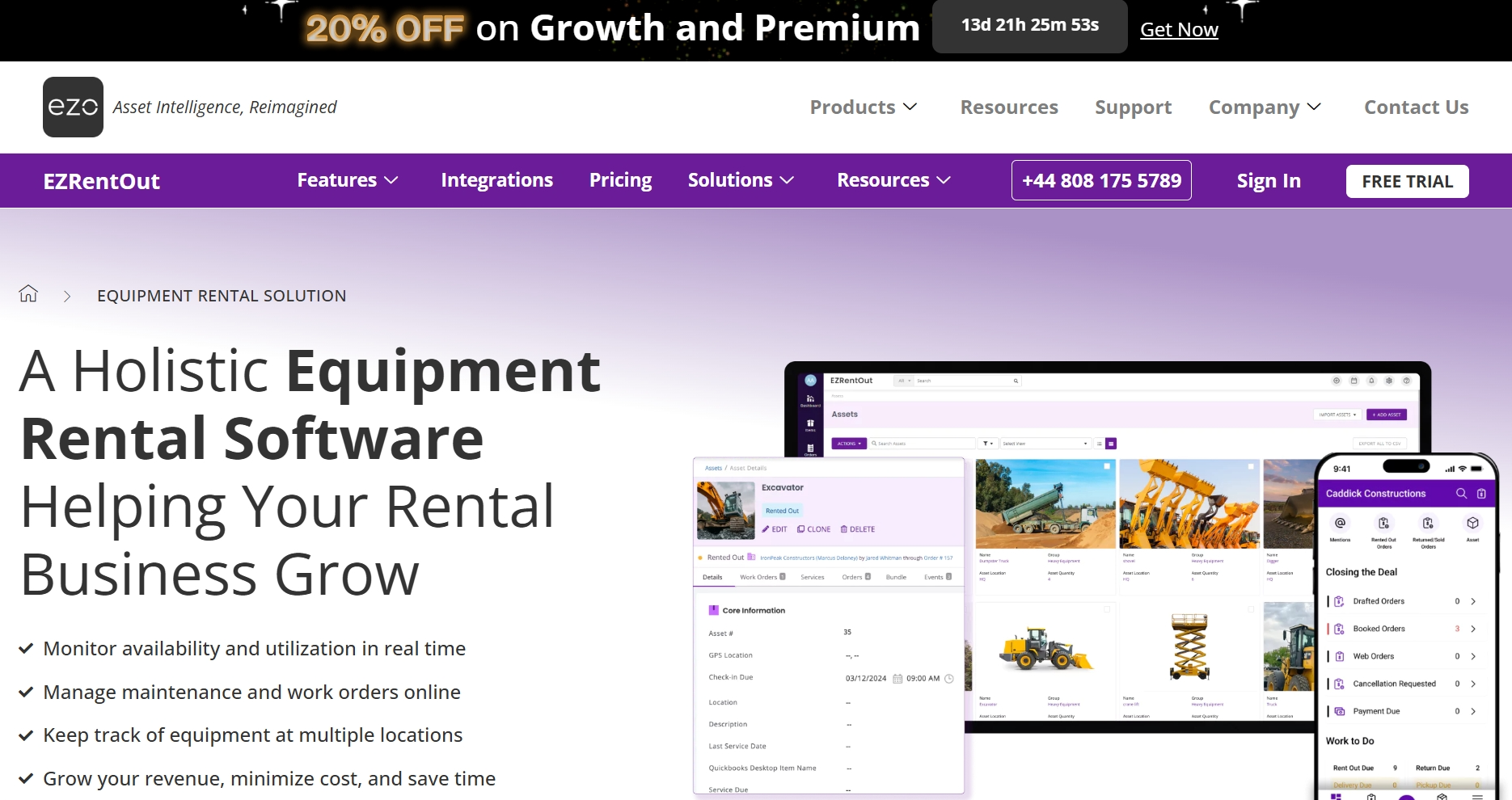
EZRentOut is a cloud-based rental equipment management software known for robust inventory tracking, reporting, and workflow automation. It’s used by mid-sized businesses in construction, IT, events, and industrial rentals.
Best for: Companies managing a broad range of equipment and locations
Key Features:
- Inventory and asset tracking
- Automated reservations and billing
- Maintenance scheduling
- Detailed reporting and analytics
- Online storefront for customer bookings
Why it’s great: This platform strikes a balance between comprehensive functionality and ease of use, making it suitable for businesses with complex fleets that still want user-friendly interfaces.
Pricing: Subscription plans vary by number of users and features, typically starting in mid-range tiers compared to enterprise systems.
Also Read: How Much Does Property Management Cost? Average Fees Explained
Key Features to Look for in Rental Equipment Management Software
Choosing the right tool depends heavily on your business needs. Below are key capabilities that contribute to overall operational success.
1. Cloud-Based Platform
Cloud systems offer remote access, automatic updates, and collaboration across distributed teams, crucial for rental operations spread across sites.
2. Inventory and Asset Tracking
Real-time tracking of equipment status and location reduces errors, idle time, and scheduling conflicts.
3. Scheduling and Dispatch Tools
Software that includes plan boards or drag-and-drop scheduling simplifies allocation and delivery planning.
4. Billing Automation
Automated invoicing, payments, and security deposit handling reduce manual work and billing errors.
5. Maintenance Scheduling
Regular maintenance scheduling and history tracking extend asset lifespan and reduce unplanned downtime.
6. Analytics and Reporting
Access to utilization rates, revenue insights, and trend data helps businesses make smarter decisions.
Choosing the Right Software for Your Rental Business
To narrow your options, consider:
- Size of inventory: Simple inventory vs. multi-site, multi-equipment portfolios
- Industry needs: Events and projects often need richer scheduling tools
- Budget and scalability: Cloud SaaS offerings often cost less upfront and scale with growth
- Integration needs: Accounting and CRM integrations streamline workflows.
Conclusion
In an increasingly competitive equipment rental landscape, digital rental management platforms are no longer optional, they are essential. From real-time inventory visibility and automated billing to predictive maintenance and business analytics, these systems transform manual, error-prone processes into streamlined workflows that fuel growth.
Whether you’re a small tool rental shop or a multi-location enterprise, the right rental equipment management software can help you operate smarter, increase utilization, reduce costs, and provide a better experience for customers.
Frequently Asked Questions on Rental Equipment Management Software
What is rental equipment management software?
Rental equipment management software is a digital platform that helps businesses track inventory, automate booking and billing, schedule maintenance, and gain analytics to optimize their rental operations.
Do equipment rental software systems support mobile access?
Yes, most modern solutions offer cloud-based platforms and mobile apps that enable real-time updates, on-site scheduling, customer communication, and inventory checks
What industries benefit most from rental software?
Construction, logistics, events, agriculture, and industrial equipment rentals benefit significantly due to complex workflows and high asset values, which software can help streamline.
Can rental software improve equipment utilization?
Yes, by using predictive analytics, scheduling tools, and real-time tracking, rental management software helps businesses allocate assets efficiently, reduce idle equipment, and increase overall utilization.
Stay Informed
Subscribe to the Platuni B2B Newsletter to receive industry insights,
new feature announcements, and exclusive growth reports
Related Posts
SEPTEMBER 21, 2026
How to Automate Rental Property Management: 10 Tasks Landlords Can Stop Doing Manually
Ten repetitive landlord tasks, rent reminders, payment checks, report building, that automation can take over while judgment calls stay with the landlord.
Learn more
SEPTEMBER 18, 2026
Leasing Automation Software for Property Managers: What It Automates & What It Costs (2026)
Which steps in the leasing workflow are actually worth automating, what that automation costs, and who it isn't worth it for.
Learn more