
Tenant Relations & Experience
Lease vs Rent | Key Differences Every Tenant Should Know
by Platuni | 03 Feb, 2026 | 10 mins read
Platuni
03 February, 2026
10 mins read

Understanding the difference in lease and rent is one of the most important steps every tenant should take before signing any housing agreement. According to data from the U.S. Census Bureau and the U.S. Department of Housing and Urban Development (HUD), over 44 million households rent their homes, yet many renters still confuse lease agreements with rental arrangements. This confusion often leads to unexpected rent increases, early termination penalties, and avoidable disputes. Knowing the difference in lease and rent protects tenants financially and legally.
As housing markets become more competitive, especially in urban areas, renters are facing faster decision timelines and more complex agreements. That reality leads many tenants to pause and ask important questions about lease terms, rental flexibility, and long-term commitments. Understanding how these agreements work becomes the bridge between affordability and stability.
So, what exactly separates a lease from rent?
- What is the real difference in lease and rent agreements?
- Which option offers more flexibility for tenants?
- Which option provides better financial stability?
- How do legal rights change between leasing and renting?
This guide answers those questions clearly and thoroughly. It explains the difference in lease and rent using real-world examples, legal insights, comparison tables, and expert-backed facts. Tenants will learn how to choose the right option for their lifestyle, budget, and long-term plans while avoiding costly mistakes.
Also Read: 10 Best Rental Management Companies in the US 2026
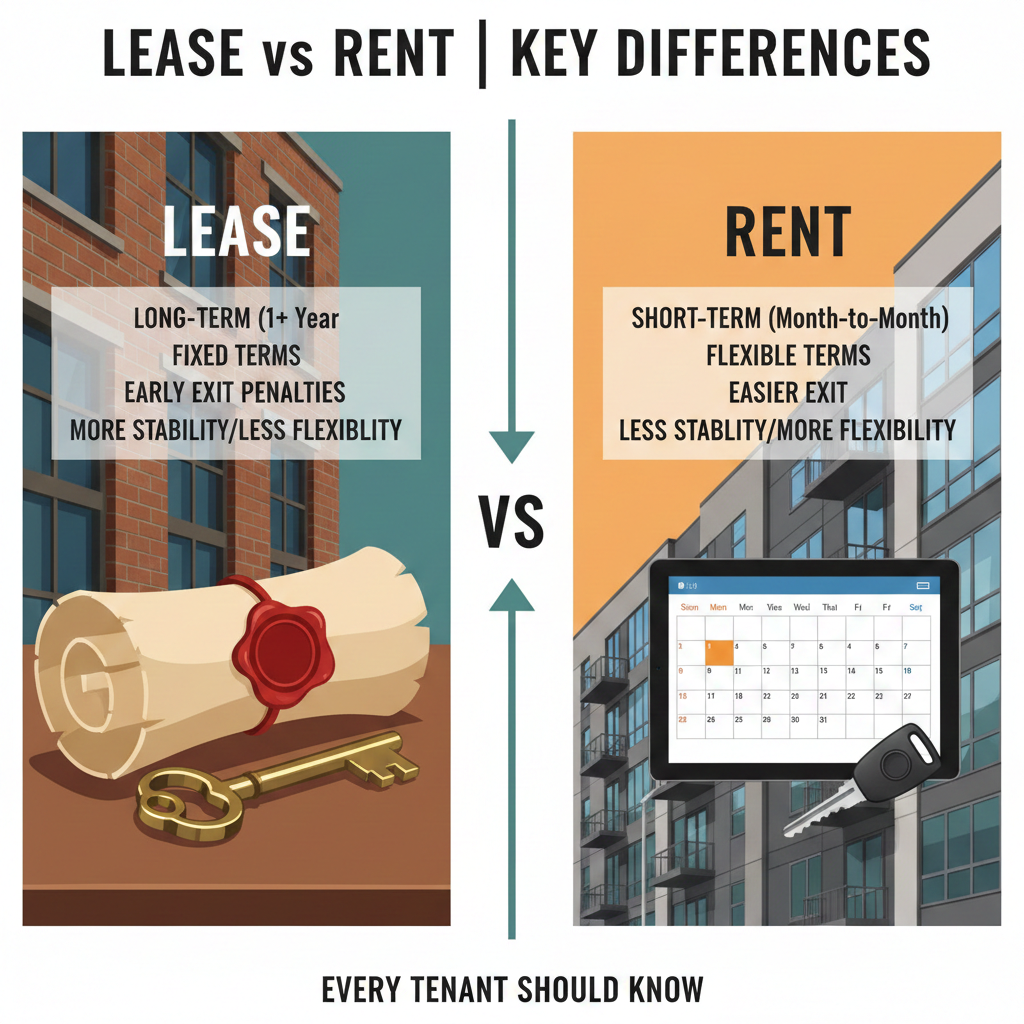
What Does “Rent” Mean?
Rent refers to a short-term housing agreement, usually on a month-to-month basis, where a tenant pays a landlord for the right to occupy a property. Unlike leases, rent agreements typically renew automatically each month unless either party gives proper notice to end the arrangement. This flexibility makes renting an attractive option for people who anticipate changes in their living situation, such as moving for work, school, or personal reasons.
Renting offers flexibility for both tenants and landlords. Tenants can relocate more easily without being locked into long-term commitments, while landlords can adjust rental terms, including pricing or rules, with proper notice. This adaptability is a key distinction between renting and leasing, and it often shapes the decision-making process for first-time renters, short-term residents, and landlords seeking operational flexibility.
Key Characteristics of Renting
- Month-to-Month Duration: Rental agreements automatically renew each month unless notice is given, providing tenants with short-term living arrangements.
- Easier Termination with Notice: Both landlords and tenants can end the agreement relatively easily, often with 30 days’ notice, making renting suitable for transitional periods.
- Potential for Rent Changes with Notice: Landlords can adjust rental amounts, usually with advance notice, reflecting market conditions or property expenses.
- Limited Long-Term Price Stability: Rent can fluctuate over time, offering less predictability than a fixed-term lease.
Rent agreements work best for tenants who expect lifestyle changes, short stays, or uncertain timelines. For example, a student relocating for school or a professional on a temporary work assignment benefits from the flexibility that renting provides. Landlords, on the other hand, can maintain control over their property while responding to market demand, making month-to-month rental agreements a practical option in dynamic housing markets.
What Does “Lease” Mean?
A lease is a long-term contractual agreement, typically lasting six months, one year, or longer, that locks in the terms of occupancy for a fixed period. Unlike month-to-month rental agreements, a lease ensures that the rent amount, responsibilities, and other conditions remain stable throughout the lease term. This predictability benefits both tenants and landlords, creating a clear understanding of rights, obligations, and financial expectations for the duration of the contract.
Leases prioritize stability and predictability. Tenants know exactly how much they will pay each month, and landlords have guaranteed occupancy and income for the term. This long-term structure forms the other side of the difference between leases and rent, offering a level of certainty that month-to-month renting cannot provide.
Common Lease Features
- Fixed Contract Duration: Leases last for a predetermined period, providing tenants with a sense of security and landlords with guaranteed occupancy.
- Stable Rent Amount: Rent is typically locked in for the lease term, protecting tenants from unexpected increases and ensuring predictable income for landlords.
- Clear Legal Obligations: Leases clearly outline responsibilities for maintenance, utilities, property use, and rules governing the tenancy, reducing potential disputes.
- Penalties for Early Termination: Breaking a lease usually comes with financial consequences or legal obligations, encouraging tenants to honor the full term or negotiate terms before ending early.
Leases are ideal for tenants who value long-term housing security, such as families, professionals planning to stay in one location, or anyone seeking financial predictability. For landlords, leases reduce turnover, provide steady income, and help in planning property management and maintenance schedules.
By understanding the structure and benefits of a lease, tenants can make informed decisions about their housing needs, while landlords can maintain stability and reduce the risks associated with short-term rentals.
Also Read: Free Rental Ledger Template: Track Rent Payments Accurately
Rent vs Lease: Understanding the Differences
Choosing between renting and leasing is one of the first decisions tenants face when looking for housing. While both involve paying to occupy a property, they differ in duration, flexibility, cost stability, and legal obligations. Understanding these differences helps tenants and landlords make informed choices.
1. Duration and Flexibility
| Feature | Rent | Lease |
|---|---|---|
| Duration | Typically month-to-month | Fixed term, usually 6–12 months or longer |
| Flexibility | Can move out with proper notice; easier to change terms | Locked in for the lease period; breaking the lease may incur penalties |
| Best for | Short-term stays, transitional housing, or uncertain plans | Long-term housing stability, predictable living arrangements |
Example:
A student relocating for a 9-month school program may benefit from renting month-to-month, while a professional moving to a city for a 2-year job contract may prefer a one-year lease for stability.
2. Rent Stability and Financial Predictability
| Feature | Rent | Lease |
|---|---|---|
| Rent Amount | Can change monthly with proper notice | Fixed for the lease term unless contract specifies changes |
| Financial Risk | Higher risk of rent increases | Lower risk of sudden cost changes |
| Budgeting | Less predictable for long-term planning | Easier to plan monthly expenses |
Example:
A renter on a month-to-month agreement may face a rent increase after six months if the landlord adjusts the rate, whereas a leaseholder knows exactly what to pay for the entire term.
Also Read: 6 Best Rental Management Software for Landlords
3. Legal Obligations
| Feature | Rent | Lease |
|---|---|---|
| Tenant Responsibilities | Usually outlined monthly; may change with landlord notice | Clearly defined for the full term in the contract |
| Landlord Responsibilities | Flexible; can be adjusted with notice | Legally bound for the lease term |
| Termination Rules | Easier to end with short notice | Early termination often incurs penalties |
Example:
A lease might specify that the tenant must maintain lawn care or cover minor repairs, while a rental agreement may have more general rules that change from month to month.
4. Pros and Cons
| Aspect | Renting | Leasing |
|---|---|---|
| Pros | Flexible, easier to move, suitable for short-term plans | Predictable rent, legal protection, long-term security |
| Cons | Less financial stability, rent can change monthly | Less flexible, penalties for early termination, longer commitment |
5. Which Option Is Right for You?
- Renting is best if you:
- Expect lifestyle or location changes
- Need short-term housing
- Prefer flexibility over predictability
- Leasing is best if you:
- Want long-term housing security
- Value stable rent and clear legal obligations
- Plan to stay in one place for several months or years
The choice between rent and lease depends on personal plans, financial priorities, and lifestyle needs. Renting offers flexibility and adaptability, while leasing provides stability and predictability. Tenants should assess how long they expect to stay, their budget, and their need for flexibility before deciding. Landlords, in turn, can match rental terms to their property management goals, market demand, and tenant preferences.
Flexibility vs Stability: A Key Difference in Lease and Rent
Flexibility appeals to tenants with changing plans. Stability appeals to tenants seeking consistency.
- Rent agreements allow faster moves.
- Lease agreements reward commitment.
Choosing depends on personal circumstances.
How Rent Increases Differ Between Lease and Rent
Rent increases highlight a critical difference in lease and rent.
- Lease agreements usually prevent rent increases until the lease ends.
- Rent agreements allow rent adjustments with legal notice.
According to the National Multifamily Housing Council, month-to-month renters experience rent changes more frequently than leaseholders.
Maintenance Responsibilities Under Lease vs Rent
Maintenance obligations often remain similar, but clarity differs. Lease agreements clearly define:
- Landlord duties
- Tenant responsibilities
- Repair timelines
Rent agreements may rely more on local housing laws than contract language.Clear documentation reduces disputes.
Also Read: How Often Can a Landlord Raise Rent in California?
Termination Rules: Difference in Lease and Rent
Ending an agreement varies significantly.
Lease termination may require:
- Early termination fees
- Notice periods
- Lease break clauses
Rent termination usually requires:
- 30-day notice
- Minimal penalties
This difference in lease and rent impacts tenant mobility.
Who Should Choose a Lease?
Leases work best for:
- Families
- Long-term workers
- Students with fixed schedules
- Tenants seeking rent stability
Lease agreements reward predictability.
Who Should Choose Renting?
Renting suits:
- Temporary workers
- Students on short programs
- Travelers
- People exploring neighborhoods
Rent agreements provide freedom.
Risk Factors Tenants Should Consider
Risk exposure varies based on agreement type.
Lease risks include:
- Penalties for early exit
- Commitment during job changes
Rent risks include:
- Sudden rent increases
- Housing instability
Evaluating risk clarifies the difference in lease and rent.
Also Read: Rent Reduction for Inconvenience: When It Applies
Difference in Lease and Rent for Landlords
Landlords experience trade-offs as well.
Lease benefits landlords with:
- Predictable income
- Lower tenant turnover
Rent benefits landlords with:
- Pricing flexibility
- Faster tenant replacement
Tenant choices affect landlord strategies.
Common Myths About Lease and Rent
Many renters misunderstand agreements.
Common myths include:
- Renting is always cheaper
- Leases eliminate all risk
- Month-to-month offers no protection
Facts clarify the difference in lease and rent realities.
How to Decide Between Lease and Rent
Decision-making requires honest assessment.
Consider:
- Length of stay
- Budget stability
- Career plans
- Family needs
Personal context matters more than trends.
Long-Term Housing Strategy
Housing decisions impact finances, stress levels, and lifestyle.
Choosing correctly improves:
- Financial stability
- Emotional comfort
- Legal security
Understanding the difference in lease and rent supports smarter planning.
Final Thoughts
The difference in lease and rent shapes tenant experiences in meaningful ways. Lease agreements offer stability, predictable costs, and legal protection. Rent agreements deliver flexibility, short-term freedom, and adaptability.
Key takeaways include:
- Lease equals stability
- Rent equals flexibility
- Legal and financial implications differ
- Personal goals determine the best choice
Tenants who understand the difference in lease and rent make better housing decisions and avoid unnecessary stress.
Also Read: How to Manage a Rental Property Successfully
Frequently Asked Questions on Lease and Rent
What is the main difference in lease and rent?
The main difference between a lease and a rent agreement is the duration and stability of terms. A lease locks in details such as the monthly rent, length of stay, and responsibilities for a fixed period usually six months, one year, or longer. Rent agreements, on the other hand, typically renew month-to-month, providing more flexibility but less long-term security. This means renters can move or end the agreement with relatively short notice, while leaseholders enjoy stability and predictable costs for the lease term.
Example: A student may choose a month-to-month rental while attending school for a semester, whereas a professional relocating for a 12-month job assignment may prefer a one-year lease.
Can rent increase during a lease?
Generally, rent stays fixed for the duration of a lease. Landlords cannot raise rent mid-term unless the lease contract explicitly allows for adjustments. Such clauses may include periodic rent reviews, increases tied to inflation, or additional fees for shared utilities.
Tip: Always review your lease carefully before signing to ensure you understand any potential rent changes. Knowing this in advance prevents surprises and helps you plan your budget.
Is renting riskier than leasing?
Renting carries more exposure to sudden changes in monthly costs because landlords can adjust rent with proper notice. Leasing, on the other hand, provides predictability but requires a longer commitment. The level of risk depends on your priorities: flexibility or stability.
Example: Someone who anticipates moving within a few months may prefer renting, despite possible rent increases. Conversely, a tenant planning to stay in one place for a year or more may find a lease safer because it guarantees a fixed rent.
Which option is better for first-time renters?
For first-time renters, the decision usually comes down to flexibility versus stability. Renting month-to-month is ideal if you want the freedom to move, explore different neighborhoods, or adjust your living situation quickly. Leasing works better for those who want predictable costs, secure housing for a set period, and clear legal protections.
Tip: Consider your lifestyle, job stability, and future plans. If your situation may change within months, renting offers freedom. If you want certainty and a long-term arrangement, a lease is the safer choice.
Stay Informed
Subscribe to the Platuni B2B Newsletter to receive industry insights,
new feature announcements, and exclusive growth reports
Related Posts

SEPTEMBER 22, 2026
Tenant Background Check vs Credit Check vs Eviction Check: What Does Each Tell You?
Breaks down what a credit check, an eviction check, and a background check each actually reveal about a rental applicant, and what none of them prove alone.
Learn more
SEPTEMBER 21, 2026
Maintenance Portal vs Email and Text: When Should Landlords Switch?
Looks at when informal maintenance reporting by text and email stops working, and what a dedicated portal adds once request volume grows.
Learn more