
Data, Compliance & Insights
Apartment Fire Insurance | Coverage and Requirements
by Platuni | 26 Feb, 2026 | 10 mins read
Platuni
26 February, 2026
10 mins read
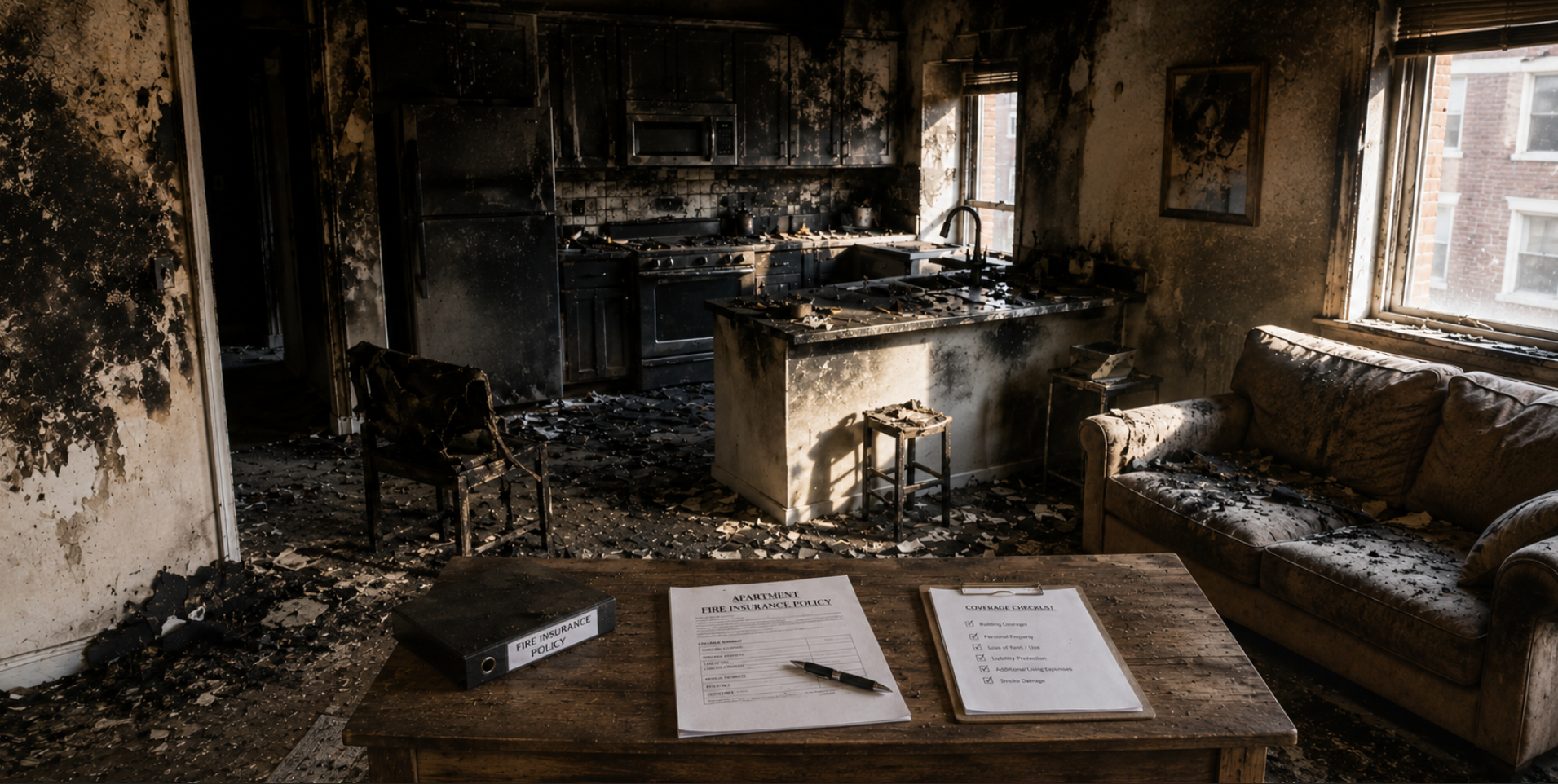
Apartment fires rarely make headlines until the damage is already done. Yet statistics show how common and costly these incidents are. According to the National Fire Protection Association, U.S. fire departments respond to more than 95,000 apartment building fires each year, causing billions of dollars in property losses. Apartment fire insurance exists to protect owners from these sudden financial shocks, but many landlords only discover coverage gaps after a claim is denied. Missed requirements, outdated policies, and unclear limits often turn a manageable incident into a long-term financial setback.
Rising construction costs, aging electrical systems, and higher tenant density have increased fire-related risks across rental properties. Insurance premiums continue to climb, inspections grow stricter, and lenders now expect clearer proof of adequate coverage. Property owners also face pressure from local fire codes, mortgage conditions, and liability exposure when tenants or neighboring units are affected. Even one uninsured loss can disrupt cash flow, delay repairs, and damage long-term investment plans.
This guide breaks down apartment fire insurance in clear, practical terms. Coverage basics, legal and lender requirements, common exclusions, and cost factors are explained step by step. Smart strategies for choosing the right policy and avoiding underinsurance are also covered. Platforms like Platuni help property owners compare market requirements, understand risk exposure, and make confident insurance decisions using reliable data and local insights. The goal stays simple: protect the building, protect income, and stay compliant without overpaying or leaving gaps that create future problems.
Also See: Apartment Flood Insurance: Coverage and Exclusions
What Is Apartment Fire Insurance and Why Does It Matter?
Apartment fire insurance refers to fire-related protection included in renters insurance, condo insurance, or landlord insurance, depending on who occupies and owns the apartment.
For renters, it protects personal belongings, temporary living costs, and liability after a fire. For property owners, it focuses on protecting the building structure and lost rental income.
Many tenants wrongly believe the landlord’s policy covers everything. In reality, landlord insurance usually covers only the building, not the tenant’s personal items. This gap is why apartment fire insurance matters.
Fire risk in apartment buildings is common due to shared walls, electrical systems, and cooking spaces. According to the National Fire Protection Association, cooking and electrical issues remain the leading causes of residential fires in North America.
Apartment fire insurance helps reduce financial shock after a fire by:
- Replacing damaged personal property
- Covering hotel or temporary housing costs
- Protecting tenants from liability claims
- Supporting faster recovery after displacement
In the U.S., renters insurance is regulated at the state level by insurance departments. In Canada, oversight falls under provincial regulators such as FSRA (Ontario) and AMF (Quebec). While laws rarely force renters to buy coverage, many lease agreements require it.
How Apartment Fire Insurance Works in Real-Life Fire Scenarios
Apartment fire insurance responds based on who caused the fire, what was damaged, and where the damage occurred.
Example scenarios
| Fire Situation | Who Pays | How Coverage Applies |
|---|---|---|
| Kitchen fire damages your furniture | Your renters policy | Personal property coverage applies |
| Smoke spreads into nearby units | Your renters policy | Liability coverage may apply |
| Building structure is damaged | Landlord’s policy | Covered under landlord insurance |
| Apartment becomes unlivable | Your renters policy | Loss of use coverage pays housing |
| Fire starts in common hallway | Building’s master policy | HOA or landlord insurance responds |
Coverage decisions depend on policy wording and local laws. Shared spaces are usually handled under a master policy, while unit interiors and belongings fall under personal policies.
In large disasters such as wildfires or mandatory evacuations, apartment fire insurance may also respond to government evacuation orders issued by authorities like Federal Emergency Management Agency.
Platforms like us at Platuni help renters and landlords understand these differences clearly, especially when comparing policies or reviewing lease insurance requirements.
Also See: Challenges in Real Estate Investment | Common Problems and Solutions
What Apartment Fire Insurance Typically Covers
Apartment fire insurance coverage depends on the policy type, but most standard policies include the following protections:
Core coverage areas
Personal property
- Furniture, clothing, electronics
- Fire and smoke damage
- Covered even outside the apartment in some cases
Loss of use
- Hotel stays
- Short-term rentals
- Extra food and transportation costs
Personal liability
- Damage to neighboring units
- Injury claims caused by accidental fires
- Legal defense costs
Smoke and related damage
- Smoke residue
- Soot damage
- Odor removal (policy limits apply)
Coverage overview table
| Coverage Type | Applies To | Who Benefits |
|---|---|---|
| Personal property | Tenant belongings | Renters |
| Loss of use | Temporary housing | Renters |
| Liability | Third-party damage | Renters |
| Structural fire damage | Walls, roof, systems | Landlords |
| Lost rental income | Rent interruption | Landlords |
Items such as jewelry, art, or specialized equipment may have sub-limits, though added endorsements can increase protection.
Insurance policy standards in both countries follow consumer protection principles enforced by provincial and state insurance regulators, ensuring clear disclosure of limits and exclusions.
Also See: Security Deposit Alternatives for Renters | How They Work
What Apartment Fire Insurance Does Not Cover
Apartment fire insurance has clear limits. Understanding what is excluded helps avoid denied claims and costly surprises.
Common exclusions
- Intentional fires: Damage caused deliberately by the policyholder or insured occupants is never covered.
- Building structure (for renters): Walls, roofs, plumbing, wiring, and permanent fixtures belong to the landlord and fall under landlord or HOA insurance.
- Fire damage before coverage starts: Fires that occur before the policy activation date are excluded.
- Wear, neglect, or code violations: Fires linked to poor maintenance, illegal wiring, or ignored safety warnings may be denied.
- High-value items beyond sub-limits: Jewelry, collectibles, musical instruments, and artwork often have caps unless scheduled separately.
- Certain secondary damage: Mold, rot, or water damage after firefighting may be limited unless explicitly included.
Insurance exclusions must be disclosed under consumer protection rules enforced by state and provincial regulators, including oversight from agencies aligned with the National Association of Insurance Commissioners.
Apartment Fire Insurance for Renters vs Landlords
Fire insurance responsibilities differ sharply depending on who owns the unit.
Key differences
| Coverage Area | Renters | Landlords |
|---|---|---|
| Personal belongings | Covered | Not covered |
| Apartment structure | Not covered | Covered |
| Loss of rental income | Not covered | Covered |
| Temporary housing | Covered | Not applicable |
| Liability for fire spread | Covered | Covered |
| Common areas | Not covered | Covered |
Renters insurance focuses on personal recovery, while landlord insurance protects property value and income. Lease agreements often require renters to carry coverage to reduce disputes after fires.
Fire Coverage Differences Between Apartments, Condos, and Multi-Unit Buildings
Fire coverage also changes based on property type and ownership structure.
Property-type comparison
| Property Type | Property Type Fire Coverage Structure |
|---|---|
| Apartment (rental) | Landlord covers structure; renter covers belongings |
| Condo | HOA covers shared areas; owner covers unit interior |
| Multi-unit building | Owner policy covers building; tenants insure contents |
Condo-specific complexity
Condo fire coverage depends on the HOA’s master policy and governing documents. Some associations insure only exterior elements, while others cover standard fixtures inside units. Disputes are resolved based on bylaws enforced under provincial or state condominium laws.
Fire safety standards for all building types are guided by codes published by the National Fire Protection Association, widely adopted across the U.S. and Canada.
For large-scale fire events or evacuations, response coordination may involve authorities such as the Federal Emergency Management Agency in the U.S.
Also See: Will Tariffs Affect Home Prices? Housing Market Impact
Who Pays for Fire Damage in Shared Apartment Areas
Shared apartment areas include hallways, stairwells, elevators, lobbies, parking garages, laundry rooms, and building systems.
In most cases, apartment fire insurance for renters does not pay for shared areas. Responsibility usually falls on the building owner or homeowners association (HOA) through their master or landlord insurance policy.
How payment responsibility is decided
- Landlord or HOA insurance: Covers fire damage to shared structures and common spaces.
- Tenant apartment fire insurance: Pays only if the tenant caused the fire and is held legally responsible. Personal liability coverage may respond.
- Shared responsibility cases: Claims may be split if investigations show both tenant negligence and building system failure.
Fire investigations and liability decisions often rely on local fire authorities and insurance rules guided by regulators such as the National Association of Insurance Commissioners.
Apartment Fire Insurance Requirements You Should Know
Apartment fire insurance requirements depend on location, lease terms, and building type.
Common requirements in the U.S. and Canada
Renters
- Renters insurance with fire coverage often required in leases
- Personal liability limits commonly set between $100,000 and $300,000
- Proof of insurance may be required before move-in
Landlords
- Building fire coverage required by lenders
- Loss-of-rental-income coverage recommended
- Compliance with local fire and building codes mandatory
Note: Failure to meet safety requirements may lead to denied claims or policy cancellation.
Is Apartment Fire Insurance Mandatory by Law or Lease Agreements?
Apartment fire insurance is rarely mandatory by law for renters, but it is commonly required through lease agreements.
Legal vs contractual requirements
| Situation | Is Fire Insurance Required? |
|---|---|
| State or provincial law | Usually no |
| Lease agreement | Very common |
| Federally backed mortgages (owners) | Yes |
| Condo or HOA bylaws | Often yes |
Landlords and property owners with mortgages backed by U.S. federal programs may face strict insurance rules enforced through agencies such as the Federal Emergency Management Agency and related housing authorities.
In Canada, similar obligations are enforced through provincial insurance and housing regulators.
Also See: Landlord Responsibilities in California: Legal Overview
Why do leases require apartment fire insurance
- Faster recovery after fires
- Reduced legal disputes
- Protection against liability claims
- Lower risk for property owners
Apartment fire insurance has become a standard risk-management tool, even when not legally mandated.
Is Apartment Fire Insurance Mandatory by Law or Lease Agreements
Apartment fire insurance is not usually required by law for renters, but it is very often required through lease agreements.
In the United States, no federal law forces renters to carry apartment fire insurance. However, landlords can legally require renters' insurance as part of the lease. Many property owners do this to reduce liability risks and speed up recovery after a fire. Insurance rules are guided at the state level under regulators coordinated through the National Association of Insurance Commissioners.
In Canada, fire coverage is also not legally mandatory for tenants. Still, landlords frequently require it under provincial tenancy laws. Mortgage lenders and property insurers strongly encourage coverage, especially in multi-unit buildings. Oversight and housing guidance often involve agencies such as the Canada Mortgage and Housing Corporation.
Lease-based requirements usually focus on:
- Fire damage to personal belongings
- Liability if a tenant accidentally causes a fire
- Temporary living expenses after a fire
Ignoring a lease insurance requirement can lead to lease violations or termination.
How Much Apartment Fire Insurance Coverage Is Enough
The right amount of apartment fire insurance depends on what needs protection and how expensive replacement would be today.
General coverage guidelines
| Coverage Type | Common Recommended Range |
|---|---|
| Personal property | $20,000–$50,000 (renters) |
| Liability coverage | $100,000–$300,000 |
| Loss of use | 20%–30% of the Personal property limit |
| Building coverage (owners) | Full replacement value |
Personal property coverage should match the cost of replacing furniture, electronics, clothing, and valuables after a fire. Underinsuring often leads to out-of-pocket losses.
Replacement Cost vs Actual Cash Value in Apartment Fire Insurance
Apartment fire insurance policies pay claims using either replacement cost or actual cash value (ACV). The difference strongly affects payouts after a fire.
Key differences explained simply
| Feature | Replacement Cost | Actual Cash Value |
|---|---|---|
| Depreciation applied | No | Yes |
| Payout amount | Higher | Lower |
| Premium cost | Slightly higher | Lower |
| Best for | Long-term protection | Budget-focused policies |
Replacement cost coverage pays what it costs to buy new items of similar quality after a fire. Actual cash value subtracts depreciation based on age and wear.
Insurance claim handling standards in both countries follow consumer protection principles enforced by national and provincial regulators, with fire safety guidance commonly aligned with standards from the National Fire Protection Association.
Choosing replacement cost coverage usually offers better financial recovery after serious apartment fires.
Also See: Leasing Laws in Florida: Legal Overview
Loss of Use Coverage After an Apartment Fire
Loss of use coverage is a key part of apartment fire insurance. It helps pay for temporary living expenses when a fire makes an apartment unsafe or unlivable.
Covered expenses often include:
- Hotel or short-term rental costs
- Extra food expenses beyond normal spending
- Temporary transportation and storage costs
Coverage lasts only for the reasonable repair period, not indefinitely. Policy limits usually range between 20% and 30% of personal property coverage.
Consumer protection rules guiding fair claims handling are enforced in the U.S. through state regulators coordinated by the National Association of Insurance Commissioners.
In Canada, similar consumer standards apply under provincial insurance regulators, with housing recovery guidance often aligned with Canada Mortgage and Housing Corporation.
Liability Protection in Apartment Fire Insurance
Liability coverage protects tenants or property owners when a fire spreads to other units or causes injury to others.
This part of apartment fire insurance can help cover:
- Damage to neighboring apartments
- Legal fees and settlements
- Medical costs for injured third parties
Typical liability limits range from $100,000 to $300,000, with higher limits recommended in multi-unit buildings.
Fire safety standards that influence liability risk assessments often reference guidelines from the National Fire Protection Association.
How Smoke, Water, and Mold Damage Are Treated After a Fire
Fire damage rarely stops at flames alone. Apartment fire insurance may also address secondary damage, depending on policy terms.
| Damage Type | How Insurance Treats It |
|---|---|
| Smoke damage | Usually covered as part of fire damage |
| Water damage | Covered if caused by firefighting efforts |
| Mold growth | Covered only if directly linked and promptly addressed |
Mold exclusions are common if moisture cleanup is delayed. Quick mitigation is critical to avoid claim denial.
Also See: Landlord Responsibilities in California: Legal Overview
Tips to Lower Apartment Fire Insurance Risks and Premiums
Lower fire risk often leads to lower premiums and fewer claim disputes.
Effective risk-reduction steps include:
- Installing smoke detectors and fire extinguishers
- Avoiding overloaded electrical outlets
- Maintaining heating and cooking equipment
- Using fire-resistant materials where allowed
- Completing periodic safety inspections
Insurers frequently offer discounts for documented fire safety measures.
When Apartment Fire Insurance Claims Are Denied
Claims may be denied for reasons such as:
- Intentional or fraudulent fire activity
- Damage occurring before policy activation
- Failure to mitigate smoke or water damage
- Exceeding policy limits or exclusions
Clear documentation and early reporting help reduce denial risk.
How Platuni Helps You Make Smarter Fire Insurance Decisions
Platuni supports renters and property owners by simplifying how apartment fire insurance options are compared and understood. Coverage insights, risk awareness, and policy clarity help users choose protection that actually works when a fire occurs.
Using tools like Platuni reduces guesswork, avoids underinsurance, and improves confidence during claims and recovery.
Download the Platuni Property Manager App Today
Frequently Asked Questions About Apartment Fire Insurance
Does apartment fire insurance cover personal belongings?
Yes, renters insurance with fire coverage protects personal items such as furniture, electronics, and clothing. The building structure remains the landlord’s responsibility.
Does apartment fire insurance cover smoke damage?
Yes, smoke damage is generally treated as part of fire damage. Coverage applies if the smoke comes from a covered fire event.
What happens if a fire forces me to move out temporarily?
Loss of use coverage may pay for hotel stays, temporary rentals, and extra food costs during repairs.
Does apartment fire insurance cover water damage from sprinklers or firefighters?
Yes, water damage directly related to putting out a fire is typically covered.
How can tenants and landlords reduce fire insurance risks?
Smoke detectors, proper wiring, safe cooking habits, and regular inspections help lower risk and may reduce premiums.
Stay Informed
Subscribe to the Platuni B2B Newsletter to receive industry insights,
new feature announcements, and exclusive growth reports
Related Posts

AUGUST 3, 2026
Kentucky Security Deposit Laws | Deductions & Rights
This guide explores everything you need to know about Kentucky security deposit laws, including how much landlords can charge...
Learn more
JULY 31, 2026
Incident Report Template | How to Document Property Incidents
This article explains how property managers and landlords can use an incident report template to document incidents properly...
Learn more