
Property Management & Operations
11 Best Rental Property Bookkeeping Software for Landlords
by Platuni | 07 Jan, 2026 | 20 mins read
Platuni
07 January, 2026
20 mins read

Managing rental properties can be demanding, especially when it comes to keeping your books clean, accurate, and ready for tax time. Landlords often juggle rent collection, expense tracking, maintenance costs, bank reconciliations, and tax reporting. Without the right system, it’s easy to lose track of something important and that’s where rental property bookkeeping software comes in. One missed receipt or forgotten transaction can throw off your records and cost you money.
In today’s fast-paced rental market, bookkeeping is more than just an administrative task, it’s the backbone of profitable property management. Without accurate financial tracking, landlords risk cash-flow problems, compliance issues, and unnecessary stress during tax season.
As a Landlord, have you ever found yourself wondering
- How do I keep track of income and expenses across multiple properties without confusion?
- Is there a bookkeeping software that is best for landlords, not just general businesses?
- How can I prepare tax reports without hiring an accountant for every detail?
- Is there a simple, affordable way to manage my rental finances in one place?
- How can technology simplify rental property bookkeeping and reduce costly mistakes?
Let’s walk through the 11 best rental property bookkeeping software solutions for landlords. Whether you’re a single-property owner or managing dozens of units, there’s a platform here to help you automate accounting tasks, track financials, and expertly prepare for tax time.
Scroll down to discover the tools that make rental accounting easier, smarter, and more efficient, so you can spend less time on paperwork and more time growing your portfolio.
Also Read: Intersection of Cultural Exchange and Corporate Social Responsibility (CSR)
Rental Property Bookkeeping Software?
Rental property bookkeeping software is a type of specialized financial and accounting software designed specifically for landlords, real estate investors, and property managers to track and manage the financial aspects of owning and operating rental properties. Instead of relying on manual spreadsheets, paper records, or generic accounting tools, this software centralizes your financial data, automates routine tasks, and helps ensure regulatory and tax compliance.
Rental bookkeeping is more than recording numbers. It’s about understanding your property’s performance, spotting problems early, and making informed decisions. Accurate records help landlords:
- Track profitability by property
- Control expenses and improve cash flow
- Prepare tax filings quickly and correctly
- Maintain compliance with financial regulations
- Gain confidence when scaling their portfolio
Without proper systems, landlords often rely on memory or manual spreadsheets, which leads to mistakes, lost receipts, and stress during audits or tax season. This is why dedicated rental property bookkeeping software has become an essential tool for modern landlords.
Also Read: How to Leverage the Power of Networking for Career Growth
Key Uses of Rental Property Bookkeeping Software
#1. Tracking Rental Income
One of the most important functions of rental property bookkeeping software is recording every rent payment accurately. The system logs who paid, when they paid, how much they paid, and whether there are outstanding balances. This improves cash-flow management and ensures no income goes unrecorded. Instead of manually checking bank statements or chasing paper receipts, landlords can instantly see:
- Which tenants are up to date
- Which payments are late or missing
- Monthly and yearly rental income totals
#2. Managing Property Expenses
Every rental property comes with expenses, maintenance, repairs, utilities, insurance, property taxes, management fees, and more. Rental Property Bookkeeping software allows landlords to log each expense under proper categories. Rather than guessing where the money went, every dollar is documented and organized. By tracking expenses in real time, landlords can:
- Monitor operating costs
- Identify areas where spending is too high
- Budget more effectively for future repairs
- Understand the true profitability of each property
#3. Organizing Receipts and Financial Documents
Paper receipts are easy to lose, and searching through folders during tax season can be stressful. Rental property bookkeeping software lets landlords upload, scan, or attach digital receipts directly to transactions. Having everything stored digitally saves time, reduces clutter, and ensures important records are always accessible when needed. This creates a secure, searchable archive of:
- Maintenance invoices
- Utility bills
- Mortgage statements
- Tax documents
- Contractor payments
Also Read: How To Manage High-Stress Work Environments
#4. Generating Financial Reports
Understanding how your property is performing requires more than just looking at your bank balance. These reports give landlords a clear overview of their business and help them make informed decisions about rent adjustments, refinancing, expansion, or cost reduction. Rental property bookkeeping software automatically generates detailed reports such as:
- Profit and loss statements
- Cash-flow summaries
- Expense breakdowns
- Year-to-date income reports
#5. Preparing for Taxes
Tax season is one of the biggest stress points for landlords. Without organized records, filing returns can be confusing, time-consuming, and error-prone. Instead of scrambling at the last minute, landlords remain tax-ready throughout the year. Rental property bookkeeping software simplifies tax preparation by:
- Categorizing income and expenses correctly
- Summarizing deductible costs
- Providing annual financial reports
- Reducing the risk of missing deductions
#6. Managing Multiple Properties in One Place
For landlords with more than one rental unit, tracking finances manually becomes increasingly complex. This level of insight is essential for portfolio growth and long-term investment planning. Rental property bookkeeping software allows users to:
- Separate income and expenses by property
- Compare performance across different units
- Monitor which properties are most profitable
- Identify underperforming assets
What to Look for in Rental Property Bookkeeping Software
Before choosing a rental property bookkeeping software, consider these key features:
- Income & Expense Tracking: Automatically categorize rent, repairs, utilities, and management costs.
- Bank Integration: Sync transactions directly from your bank accounts.
- Property-Based Reports: See profit and loss by property or unit.
- Tax-Ready Documents: Generate Schedule E or end-of-year summaries.
- Ease of Use: The software should simplify, not complicate, your workflow.
- Scalability: Your system should grow as your portfolio expands.
For landlords who want clarity, control, and consistency in their finances, bookkeeping software acts as a central hub for all rental income and expenses. With that in mind, let’s explore the 10 best rental property bookkeeping software options for landlords.
Also Read: Overcoming Social Anxiety in Professional Networking
11 Best Rental Property Bookkeeping Software
| Software | Starting Price | Free Tier / Trial | Best For |
|---|---|---|---|
| Platuni | $0 to start; Growth from $1.39/unit/mo; Enterprise custom | Yes, all tiers | Landlords who want one platform that scales from a single unit to a full portfolio |
| Stessa | Free (Essentials plan); paid from $12/mo | Yes, permanent free tier, no credit card required | DIY landlords who want free core bookkeeping |
| Buildium | From $62/mo | 14-day free trial only, no permanent free tier | Growing to mid-size property managers ready for a paid system |
| Baselane | Free (Core plan); Smart plan $20/mo | Yes, free tier plus a 30-day trial of the paid plan | Landlords who want free banking and rent collection bundled in |
| Rentec Direct | From $25/mo | 2-week free trial, no permanent free tier | Small-to-mid landlords who want flat-rate pricing, not per-unit fees |
| TenantCloud | Free and low-cost plans | Yes | Landlords managing small portfolios who want to leave spreadsheets behind |
| Xero | $2.50/mo for 6 months (promo), then $25/mo | No free trial, no permanent free tier | Landlords comfortable with general accounting software, not landlord-specific tools |
| Landlord Studio | Free (Go plan, 1-3 units); Pro from $12/mo | Yes, free tier plus a 14-day trial of Pro | New or small landlords who want free basics before scaling up |
| TurboTenant | Free core plan; Essentials from $12.42/mo | Yes, permanent free tier | Landlords who already use TurboTenant for listings and want bookkeeping added |
| Innago | Little to no cost | Yes | Small landlords or beginners avoiding monthly software fees |
| REI Hub | Free (limited); Professional from $9/mo | Yes, free tier plus a 14-day trial of Pro | Investors who want dedicated rental-specific accounting (Schedule E, per-property P&L) |
#1. Platuni
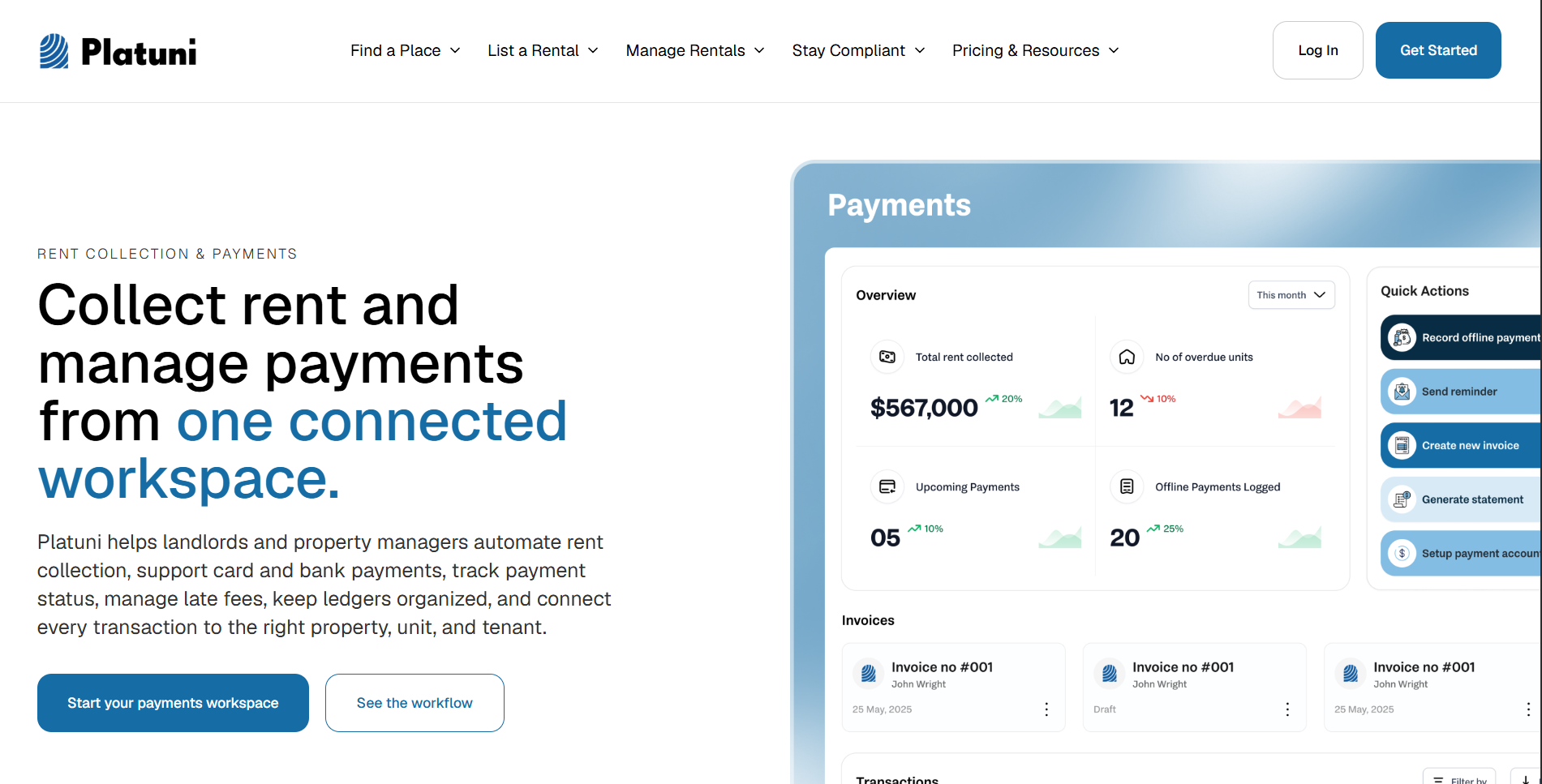
Platuni is a modern rental property bookkeeping software built specifically for landlords and property managers. It helps track rental income and expenses, organize financial records by property and unit, and streamline day-to-day operations from one dashboard.
Why landlords love it:
Platuni simplifies property finances by keeping all transactions, rent records, and expenses in one place. Instead of juggling spreadsheets or generic accounting tools, landlords get a clear, real-time view of how each property is performing.
Key benefits:
- Centralized income and expense tracking
- Property- and unit-level financial reporting
- Automated rent records and payment tracking
- Organized documentation for easier tax preparation
- User-friendly dashboard built for landlords
Platuni is ideal for small to mid-sized landlords and property owners who want straightforward bookkeeping, better financial visibility, and a rental-focused system without the complexity of traditional accounting software.
Try Downloading the Platuni Property Manager App Today!
#2. Stessa
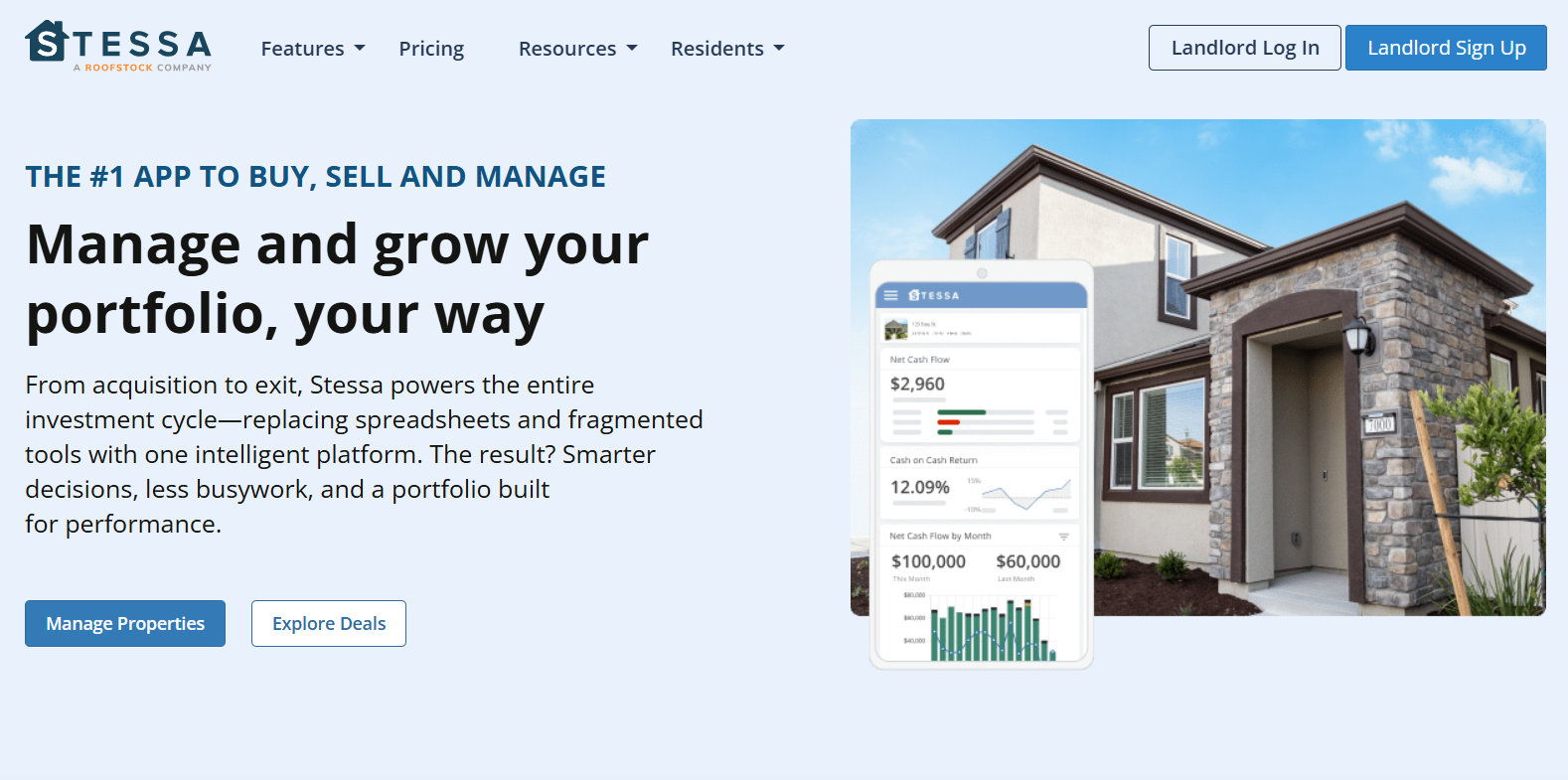
Stessa is one of the most popular rental property bookkeeping software built specifically for landlords and real estate investors. It automates income and expense tracking by syncing directly with your bank accounts and categorizing transactions by property.
Why landlords love it:
Stessa removes the need for manual data entry, making it easy to monitor performance in real time. You can instantly see cash flow, operating expenses, and net income for each property.
Key benefits:
- Automated transaction imports
- Property-level profit and loss reports
- Tax-ready Schedule E packages
- Clean, easy-to-use dashboard
Stessa is ideal for small to mid-sized landlords who want accurate bookkeeping without complex accounting setups.
#3. Buildium
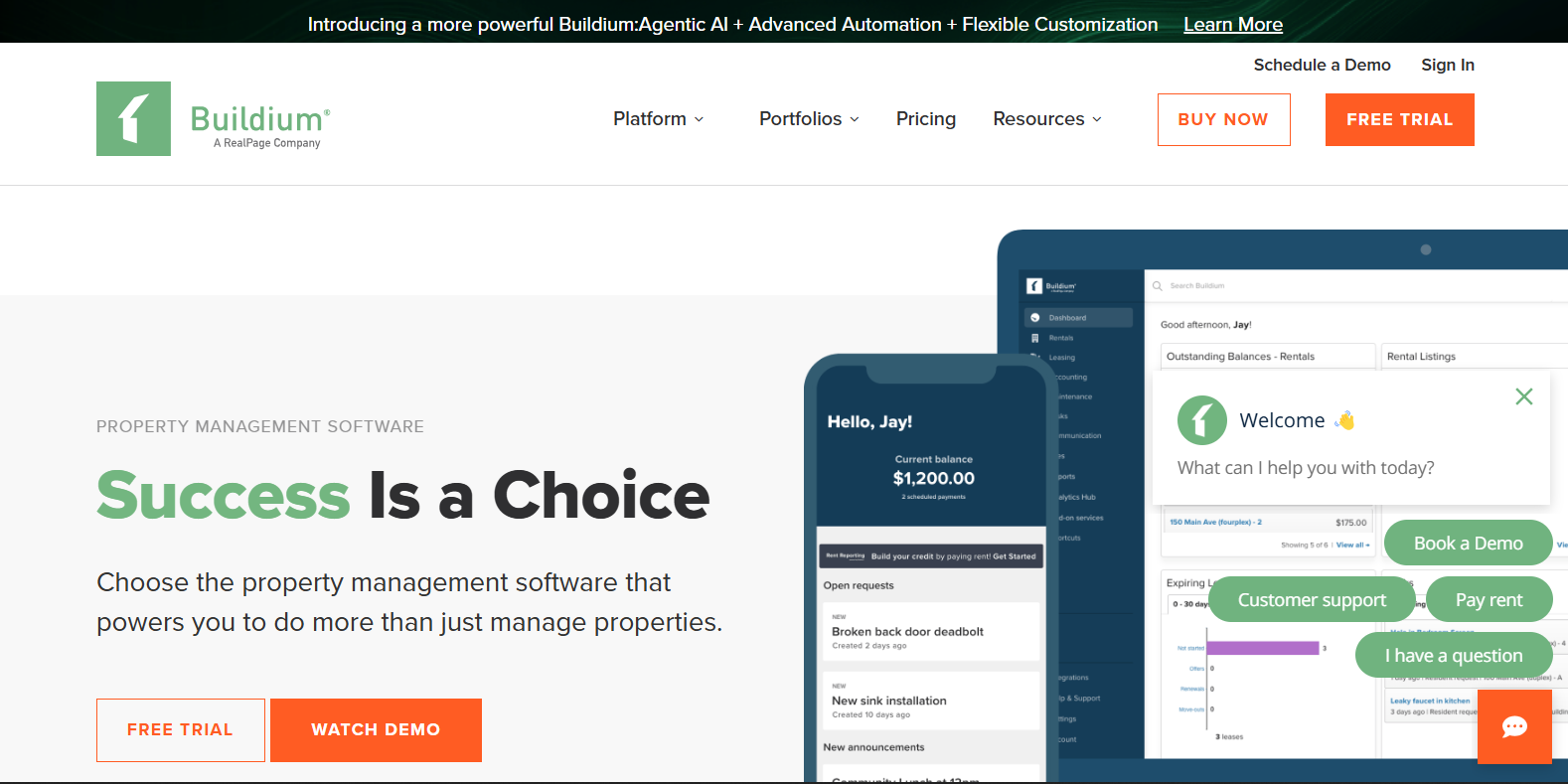
Buildium is a professional-grade rental property bookkeeping software built for landlords managing larger portfolios. It offers full accounting tools alongside operations such as leasing, maintenance, and communication.
Why it stands out:
Buildium provides advanced financial controls, making it ideal for landlords who want enterprise-level bookkeeping.
Key benefits:
- Full general ledger accounting
- Bank reconciliation
- Detailed financial reporting
- Automated income and expense management
While it has a steeper learning curve, Buildium is perfect for landlords scaling their operations or transitioning into professional property management.
Also Read: How to Communicate Effectively with Roommates and Host Families
#4. Baselane

Baselane stands out by combining banking, bookkeeping, and rent collection into one platform. Designed for independent landlords, it simplifies financial management by keeping everything in one ecosystem.
Why it works:
With built-in landlord banking and AI-powered transaction categorization, Baselane eliminates the need to juggle multiple apps.
Key benefits:
- Integrated bank accounts for rental income
- Automatic expense tracking
- Rent collection with financial reporting
- One-click tax documents
If you’re looking for an all-in-one financial system for your rental business, Baselane offers simplicity and control in one place.
#5. Rentec Direct
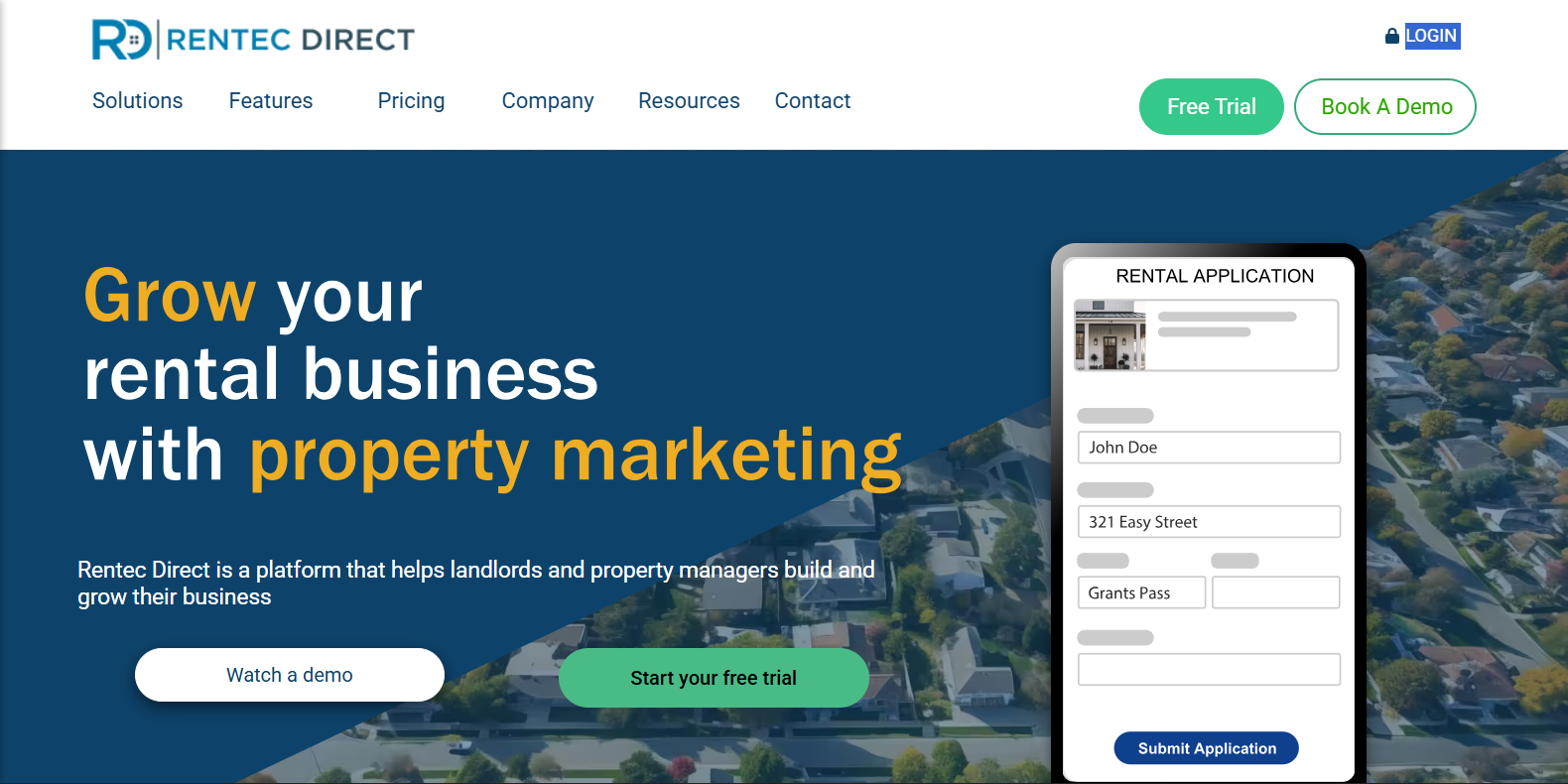
Rentec Direct is a trusted solution that combines accounting, tenant management, and owner reporting. Its built-in general ledger system ensures financial accuracy.
Why landlords trust it:
Rentec offers strong reporting tools that help landlords maintain transparency and compliance.
Key benefits:
- Full accounting system
- Automated rent and invoice tracking
- Tax reporting and 1099 e-filing
- Owner and tenant portals
Rentec Direct is well-suited for landlords who want professional bookkeeping without overwhelming complexity.
Also Read: The Benefits of a Strong Social Circle for Career Advancement
#6. TenantCloud
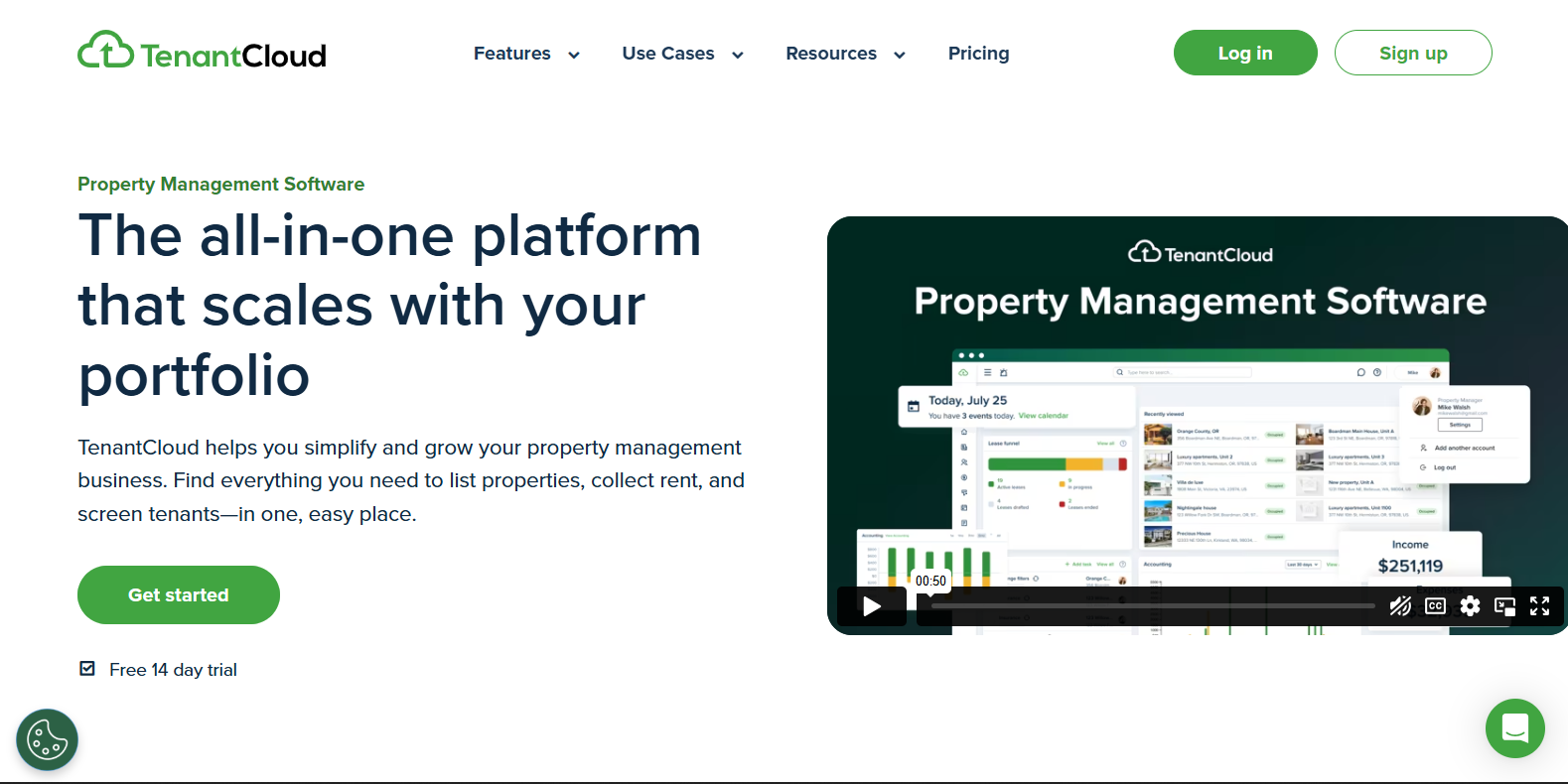
TenantCloud is another affordable option for landlords who want straightforward rental bookkeeping without complex features.
Why landlords use it:
It offers basic accounting, rent tracking, and reporting in an easy-to-navigate system.
Key benefits:
- Income and expense tracking
- Rent collection
- Financial summaries
- Free and low-cost plans
TenantCloud is ideal for landlords managing small portfolios who want to move away from spreadsheets.
#7. Xero (with Rental Add-Ons)
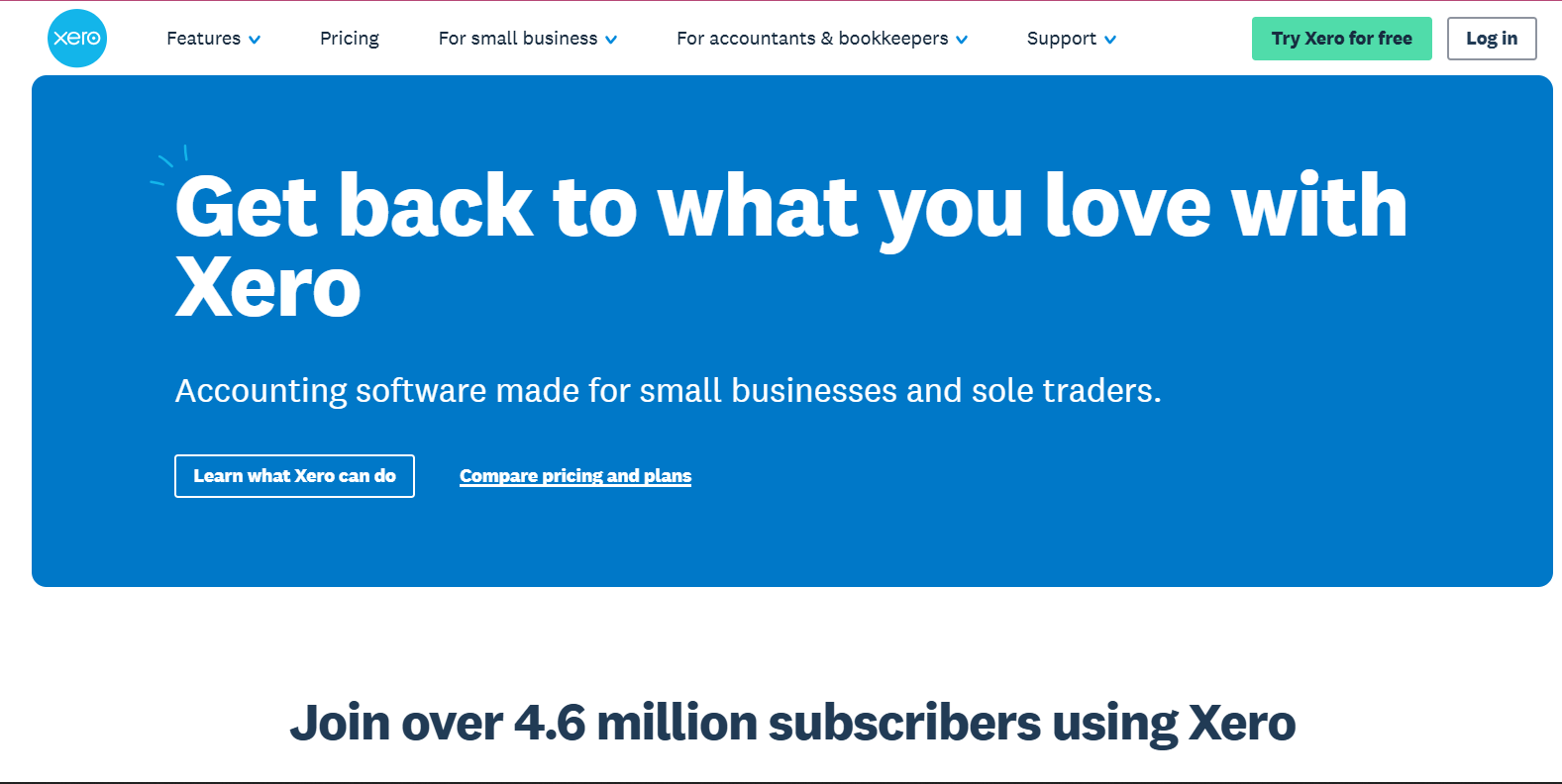
Xero is a general accounting rental property bookkeeping software that becomes rental-friendly when paired with property management add-ons or customized charts of accounts.
Why some landlords prefer it:
It provides professional-level bookkeeping with powerful reporting and automation.
Key benefits:
- Bank reconciliation and financial tracking
- Custom categories for properties
- Invoicing and expense management
- Large ecosystem of integrations
Xero is best for landlords who are comfortable with accounting tools and want flexibility beyond landlord-specific platforms.
#8. Landlord Studio
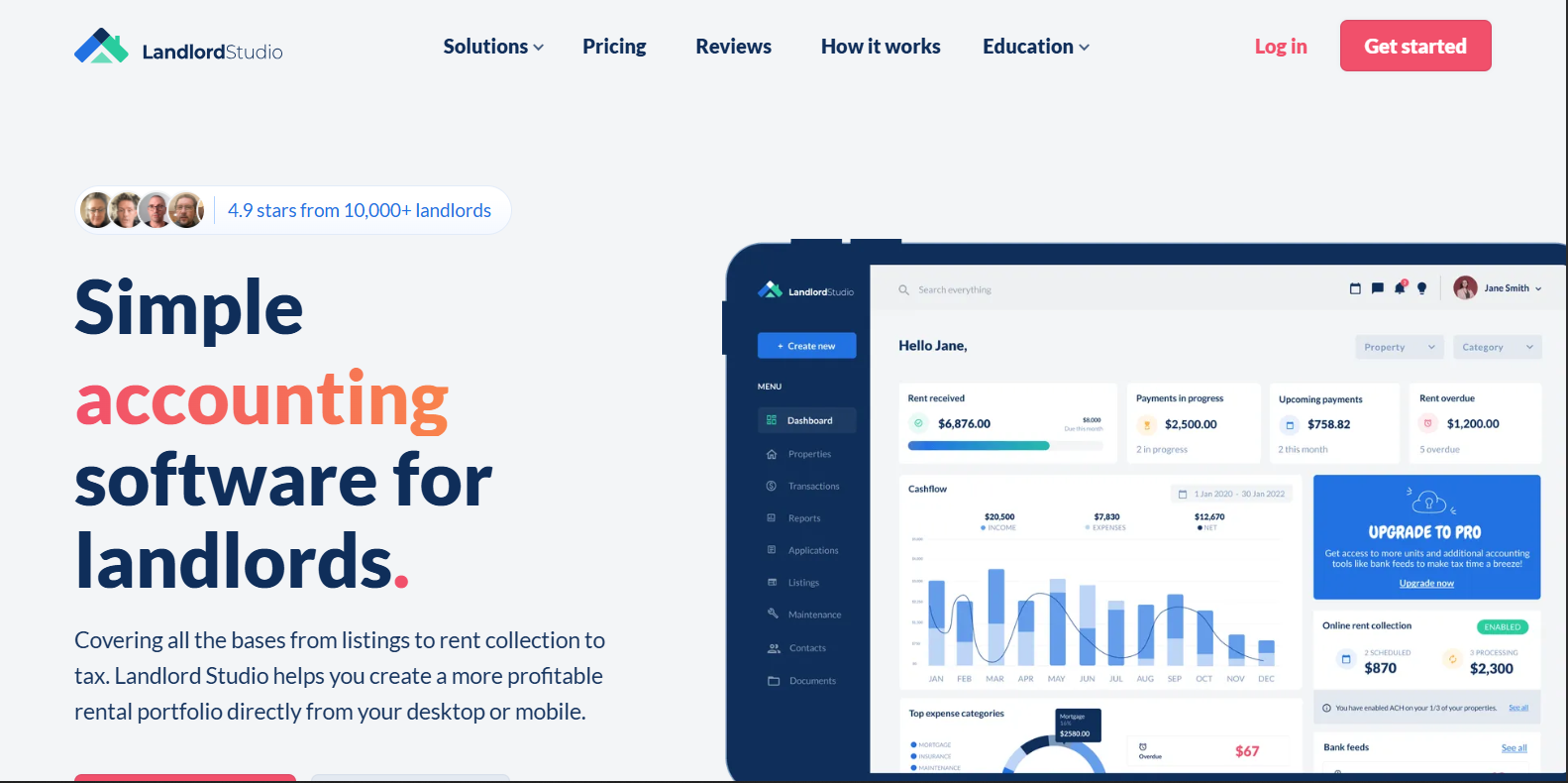
Landlord Studio blends rental bookkeeping with property management tools, making it a great choice for landlords who want more than just accounting.
Why landlords choose it:
It tracks income, expenses, receipts, and maintenance costs while also offering tenant management and rent collection features.
Key benefits:
- Expense and income tracking
- Smart receipt scanning
- Profit and loss statements
- Schedule E tax reports
- Mobile app for on-the-go bookkeeping
Landlord Studio is especially useful for landlords who manage their properties themselves and want everything in one dashboard.
#9. TurboTenant Accounting
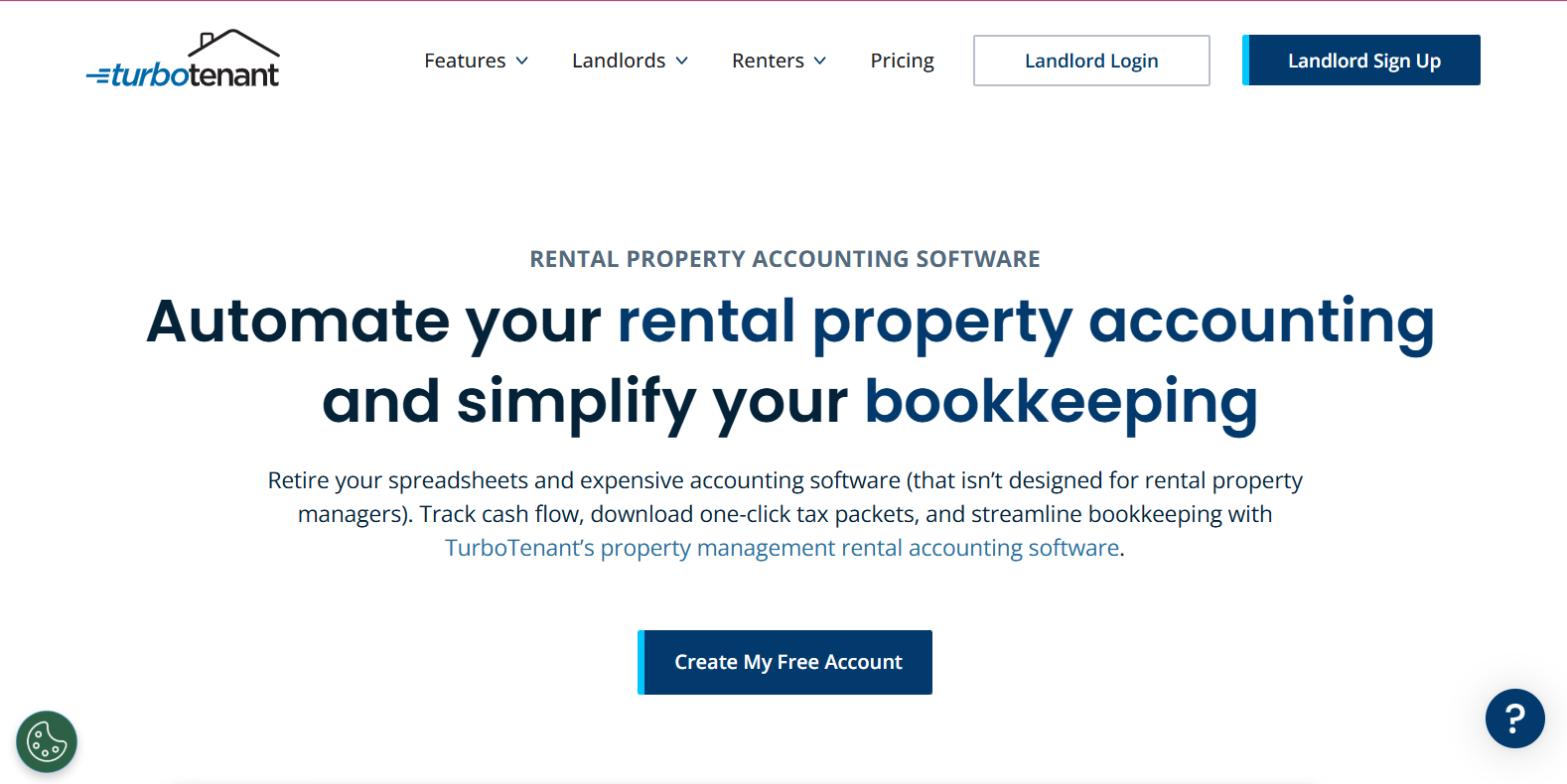
TurboTenant is a rental property bookkeeping software widely known for property management, but it also offers built-in accounting tools that simplify rental bookkeeping.
Why it works well:
It automatically syncs rent payments and expenses, reducing manual work.
Key benefits:
- Automated income and expense categorization
- Real-time cash-flow insights
- Downloadable tax reports
- Integration with tenant management
If you already use TurboTenant for listings or rent collection, its accounting features create a seamless workflow.
#10. Innago
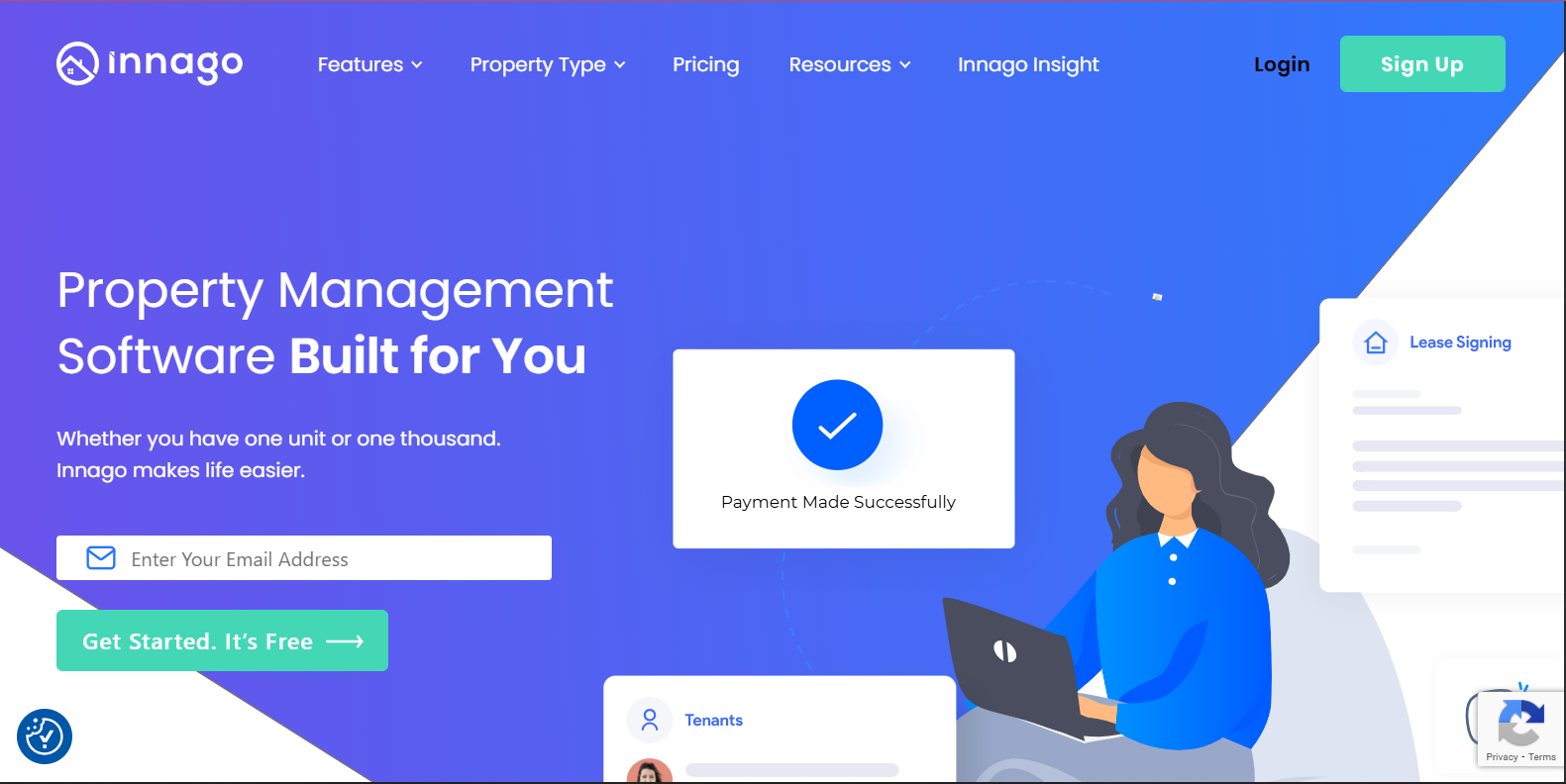
Innago is a budget-friendly solution offering basic accounting and property management features at little to no cost for landlords.
Why it’s appealing:
It removes monthly software fees, making it perfect for small landlords or beginners.
Key benefits:
- Free income and expense tracking
- Online rent payments
- Simple financial reports
- Tenant and lease management
While not as advanced as premium platforms, Innago provides essential bookkeeping tools without financial commitment.
#11. REI Hub
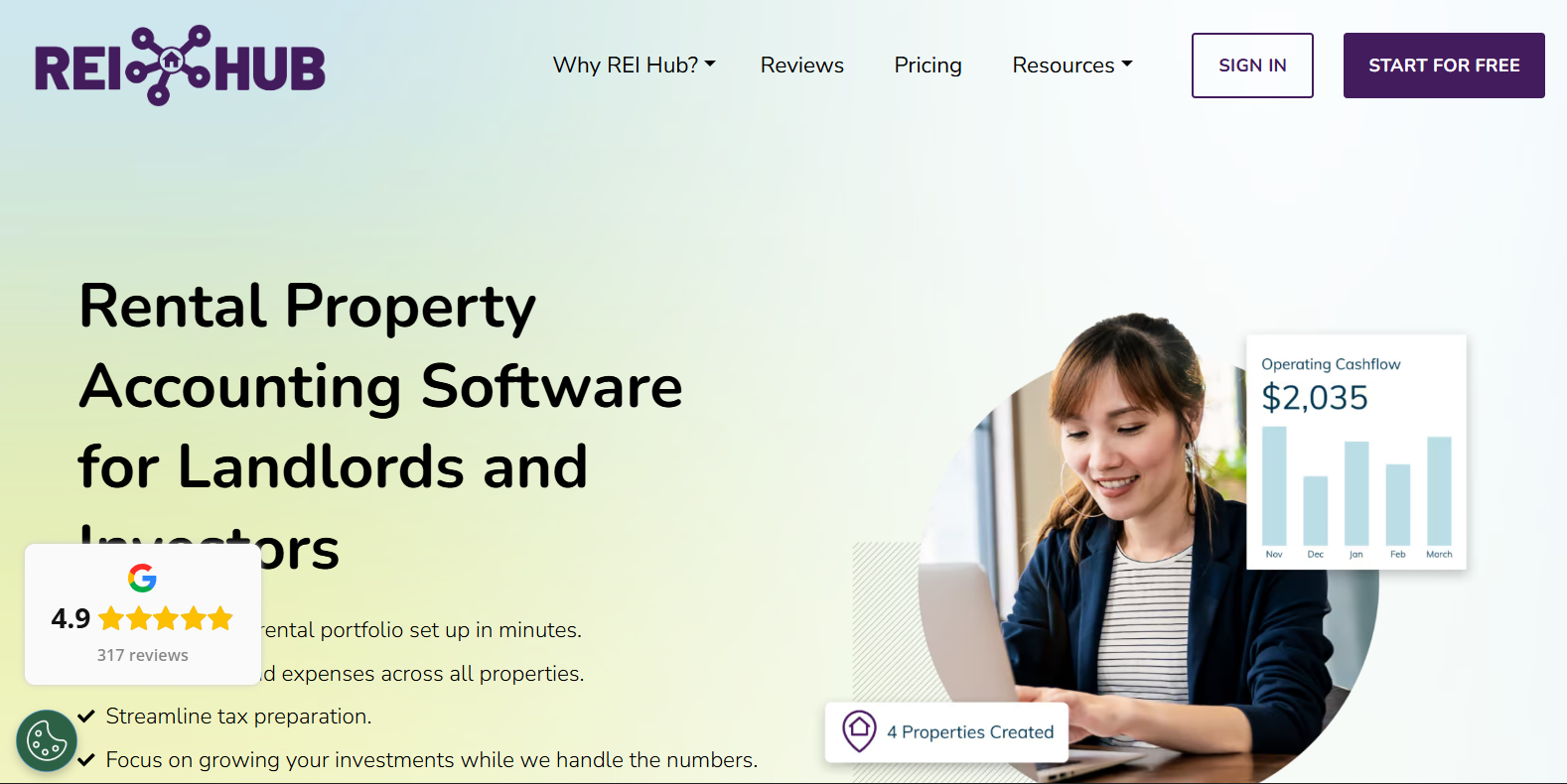
REI Hub is specialized accounting rental property bookkeeping software built for landlords, providing property-focused bookkeeping with features tailored to real estate investors.
Why it’s appealing:
It streamlines rental property finances by automating tracking, reporting, and tax prep, making it ideal for landlords with single or multiple properties, short- or long-term rentals.
Key benefits:
- Property-based accounting at the unit, property, and portfolio levels
- Automated import and categorization of bank transactions
- Rental-specific reports like Profit & Loss, Balance Sheets, Cash Flow, and IRS Schedule E
- Tax-ready features including 1099 tracking, depreciation, and mileage logs
- Document storage for receipts and lease agreements
- Mobile app for on-the-go expense entry and report access CPA-approved double-entry accounting for easy tax preparation
While more advanced than generic tools, REI Hub stands out with its real estate-centric design, investor-friendly features, and dedicated support.
How to Choose the Rental Property Bookkeeping software
Every landlord’s situation is different. When choosing rental property bookkeeping software, It is important to ask yourself:
- How many properties do I manage?: Smaller portfolios may only need simple tools like Stessa, Innago, or TenantCloud. Larger portfolios benefit from platforms like Platuni, Buildium or Propertyware.
- How complex is my accounting?: If you need full double-entry accounting, advanced reporting, or tax compliance, look for professional-grade systems.
- Do I want management tools too?: Some landlords prefer bookkeeping-only software, while others want rent collection, maintenance tracking, and tenant communication in the same platform.
- What’s my budget?: Free or low-cost tools are great for beginners, while paid solutions offer scalability and automation for growing businesses
Try Downloading the Platuni Property Manager App Today!
Frequently Asked Questions on Rental Property Bookkeeping Software for Landlords
What is rental property bookkeeping software?
It is a digital tool that helps landlords track rental income, expenses, receipts, and financial reports in one organized system.
Why should landlords use bookkeeping software instead of spreadsheets? Software automates tasks, reduces errors, generates reports, and keeps records tax-ready, saving time and improving accuracy.
Can small landlords with one property use bookkeeping software?
Yes. Even landlords with one unit benefit from better organization, easier tax preparation, and clearer financial insights.
How does bookkeeping software help with taxes?
It categorizes expenses, tracks deductible costs, and produces annual reports that simplify tax filing.
Does bookkeeping software support multiple properties?
Yes. Most platforms like Platuni allow landlords to track income and expenses separately for each property, making portfolio management easier.
Stay Informed
Subscribe to the Platuni B2B Newsletter to receive industry insights,
new feature announcements, and exclusive growth reports
Related Posts

SEPTEMBER 22, 2026
How to Build a Rental Maintenance Workflow From Request to Completion
Defines what should happen after a maintenance request comes in, logging, prioritizing, assigning, verifying, and documenting the repair through to completion.
Learn more
SEPTEMBER 22, 2026
QuickBooks vs Property Management Software for Rental Properties
Explains why QuickBooks and property management software solve different problems, and when a landlord needs one, the other, or both.
Learn more