
Data, Compliance & Insights
Rental Market Analysis | Data, Trends, and Insights
by Platuni | 11 Feb, 2026 | 7 mins read
Platuni
11 February, 2026
7 mins read

Rental market analysis helps landlords, investors, policymakers, and renters understand the current state of rental housing and what might come next. This type of analysis looks at key data, such as rent prices, vacancy rates, supply and demand trends, and demographic shifts that shape rental behavior across regions. Knowing how and why the rental market changes empowers people to make informed decisions about rent pricing, investment timing, and housing policies.
Understanding macroeconomic factors sets the stage for deeper exploration, especially how rent trends align with broader economic shifts. For example, factors like rising construction, changing vacancy rates, or slowing rent growth influence both investor strategies and renter affordability. These variables shape not just local markets but also national rental performance.
Connecting this outline of rental market analysis to specific trends reveals a nuanced story: today’s markets show signs of stabilization, ongoing challenges with affordability, and shifting renter behavior. This context provides the foundation needed to interpret data and trends with confidence, bridging numbers with real-world meaning.
Also Read: Colorado Landlord-Tenant Law | Complete Legal Overview
What Is Rental Market Analysis?
Rental market analysis evaluates current and historical data to identify patterns in the rental housing market. It helps predict future trends and guides stakeholders in making decisions grounded in evidence rather than speculation.
A proper rental market analysis includes:
- Rent price trends over time
- Vacancy and occupancy rates
- Supply levels (new construction and units entering market)
- Demand side indicators (population growth, employment trends)
- Regional and local rent variations
- Rental concessions and incentives
This analysis draws from multiple data sources and often includes comparisons across time and geographic areas to spot emerging patterns and strategic insights.
Key Data Points in Rental Market Analysis
#1. Rent Price Trends
Rent price trends reflect how rent levels change over time, which is a central part of rental market analysis. Nationally, rent has shown moderate increases, though growth has slowed in many areas in recent years. According to national data, median rents increased approximately 3.4 % in 2024 to about $1,964.80, which reflects consistent growth though at a more moderate pace when compared with earlier post-pandemic spikes.
Regional variation is strong, however. Some cities, especially vibrant economic hubs like San Francisco, are seeing rent increases that far outpace national averages. In San Francisco, one-bedroom rents jumped to around $3,500, with year-over-year growth reaching double digits.
Other markets are experiencing rent declines as vacancy rates climb. For example, nationwide median rents have dropped slightly in recent months, with some indices showing declines of about 1 % year-over-year and rent prices hovering near their lowest in several years.
#2. Vacancy Rates and Supply
Vacancy rates provide insight into the balance between rental supply and demand. Rental market analysis uses vacancy as a gauge of market tightness, and recent data shows a continuing increase in national vacancy rates. A national rental vacancy rate reaching around 7.2 % to 7.3 % indicates higher supply relative to demand than in previous years, especially in parts of the South and Sun Belt.
Areas with lower vacancy rates remain competitive, particularly in the Northeast and parts of the Midwest, where rates below 4 % suggest stronger demand and limited available units.
New construction has significantly expanded rental supply in recent years. Multifamily completions reached the highest levels in decades, contributing to elevated vacancies and slower rent growth in many metros.
#3. Rent Concessions and Market Dynamics
When supply outpaces demand, landlords often offer concessions to attract tenants, which is an important element in rental market analysis. Incentives such as free rent months, reduced deposits, or utility discounts appeared in nearly 40 % of rental listings by late 2025, signaling strong competition for renters in some markets.
These concessions reduce effective rent (the rent tenants actually pay when incentives are included) and reflect a shift toward a more tenant-friendly market environment.
#4. Segment and Regional Trends
Rental market analysis also considers different property types and geographic variation. Single-family rental homes have seen stable demand, with rent growth around 2.9 % year-over-year as of mid-2025.
Regional trends show contrasting performance:
- Sun Belt cities often experience oversupply and softer rent growth
- Coastal and high-demand metros, such as San Francisco and New York, continue to see strong rent pressures
- Midwest markets demonstrate a mix of moderate growth and affordability gains
These regional distinctions illustrate why rental market analysis must be granular and location-specific.
Also Read: Does Paying Rent Late Affect Your Credit? Explained
Economic Factors Shaping Rental Markets
Renter Demographics and Affordability
Demographics strongly shape rental market dynamics. Younger renters, including many Generation Z adults, represent a growing share of the renter population, often with limited income relative to rent costs. National research shows rent-to-income ratios frequently exceed traditional affordability guidelines, especially in high-cost areas.
Affordability trends shifted in 2025, with the share of income spent on rent dropping to around 26.5 % the lowest since 2021 as rent growth slowed and concessions increased. This signals modest improvement for some households, though affordability remains strained in many high-rental regions.
Supply and Construction
Supply plays a pivotal role in rental market analysis. Years of strong development have elevated rental inventory, which contributes to vacancy increases and slows rent growth in many major metros. Multifamily construction reached its highest level in decades, which has helped balance markets in some regions.
However, supply effects are uneven. Overbuilding in some Sun Belt cities contrasts with persistent shortages in established urban centers with restrictive zoning and slow permitting, keeping rents high in those areas.
Insights for Investors and Policymakers
Rental market analysis offers insights that influence investment and policy strategy.
For Investors
Investors watch rent growth, vacancy trends, and concessions to assess yield prospects. Stable or declining rents and higher vacancies signal caution or repositioning, while markets with sustained rental increases and low vacancies often signal long-term demand.
For Policymakers
Policymakers use rental market analysis to understand housing affordability and decide on zoning changes, tenant protections, or incentives for affordable housing supply. Rising rent burdens and occupancy trends inform whether tenants need more legal protections or whether housing supply policies need adjustment.
Also Read: Chicago Tenant Law | Rights and Responsibilities Explained
Future Outlook
Current rental market analysis suggests a transitional period. After rapid rent growth earlier in the decade, markets are now balancing supply and demand more evenly, with slowing rent increases and rising vacancy rates in many regions. Longer-term trends will depend on factors like construction activity, labor markets, migration patterns, and broader economic conditions.
Seasonal and regional variations will also continue to affect rental market performance, with some areas outperforming others due to local economic strengths or demographic shifts.
Interactive Data Charts: Rental Market Trends Explained
The charts above visually support key points discussed in the rental market analysis. These visuals help readers quickly understand how rent prices and vacancy rates move over time.
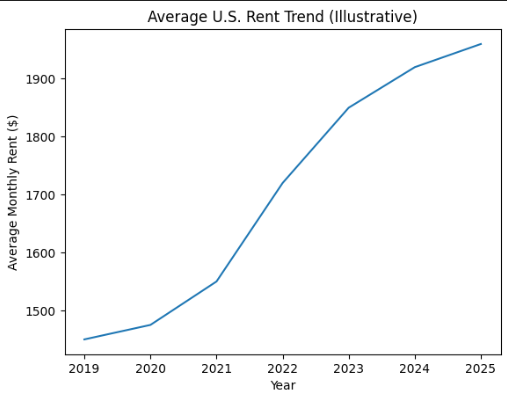
The Average U.S. Rent Trend chart shows a steady rise in rental prices from 2019 through 2025. Rent growth accelerated sharply between 2021 and 2023, reflecting post-pandemic demand, inflation, and limited housing supply. Growth begins to slow after 2023, which aligns with increased rental supply and changing affordability conditions.
This trend highlights how rental market analysis uses historical pricing data to explain current market pressure and future expectations.
Rental Vacancy Rate Trend
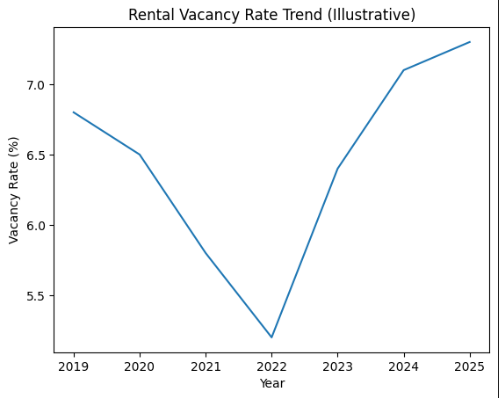
The Rental Vacancy Rate Trend chart shows vacancies declining through 2022 and then rising afterward. Lower vacancy rates usually signal strong demand and competitive rental markets. Rising vacancy rates often indicate increased supply, slower rent growth, or more tenant leverage.
This pattern supports current rental market analysis insights showing that many markets are shifting from landlord-driven conditions toward more balanced or renter-friendly environments.
Why These Charts Matter
Charts simplify complex data. Instead of scanning long tables or reports, readers can visually connect:
- Rent growth with supply changes
- Vacancy rates with market competition
- Market cycles with real-world rental decisions
These visual tools strengthen rental market analysis by turning data into clear, actionable insights.
Conclusion
Rental market analysis pulls together data on rent prices, vacancy rates, supply trends, concessions, and regional dynamics to paint a comprehensive picture of rental housing conditions. Through careful interpretation of these trends, landlords, investors, renters, and policymakers can make informed decisions that reflect current realities rather than outdated assumptions.
Today’s rental markets show both stability and strain, with affordability improvements in some regions and continued pricing pressure in others. Understanding these trends enables stakeholders to adapt, plan, and respond to evolving market conditions with confidence.
Also Read: How Often Can a Landlord Raise Rent in California?
Frequently Asked Questions on Rental Market Analysis
What is rental market analysis used for?
Rental market analysis helps landlords, investors, renters, and policymakers understand how rental prices, demand, and supply are changing. It supports decisions related to rent pricing, investment timing, housing development, and affordability planning. Accurate analysis reduces guesswork and improves long-term outcomes.
How often should rental market analysis be updated?
Rental market analysis works best when updated quarterly or annually. Markets can shift quickly due to economic changes, migration trends, or new housing supply. Regular updates ensure pricing strategies and investment decisions reflect current conditions rather than outdated data.
What data sources are commonly used in rental market analysis?
Rental market analysis typically relies on data from government housing agencies, real estate platforms, census data, and market research firms. Common metrics include rent indices, vacancy rates, construction activity, and renter income trends. Using multiple sources improves accuracy and credibility.
Can rental market analysis predict future rent prices?
Rental market analysis cannot guarantee future prices, but it helps identify trends and risk factors. Patterns in supply, vacancy rates, and demand often signal where rents may stabilize, rise, or decline. Investors and landlords use this insight to plan more confidently.
Stay Informed
Subscribe to the Platuni B2B Newsletter to receive industry insights,
new feature announcements, and exclusive growth reports
Related Posts

AUGUST 3, 2026
Kentucky Security Deposit Laws | Deductions & Rights
This guide explores everything you need to know about Kentucky security deposit laws, including how much landlords can charge...
Learn more
JULY 31, 2026
Incident Report Template | How to Document Property Incidents
This article explains how property managers and landlords can use an incident report template to document incidents properly...
Learn more