
Property Management & Operations
Property Management Financial Reports: What to Include
by Platuni | 02 Mar, 2026 | 7 mins read
Platuni
02 March, 2026
7 mins read
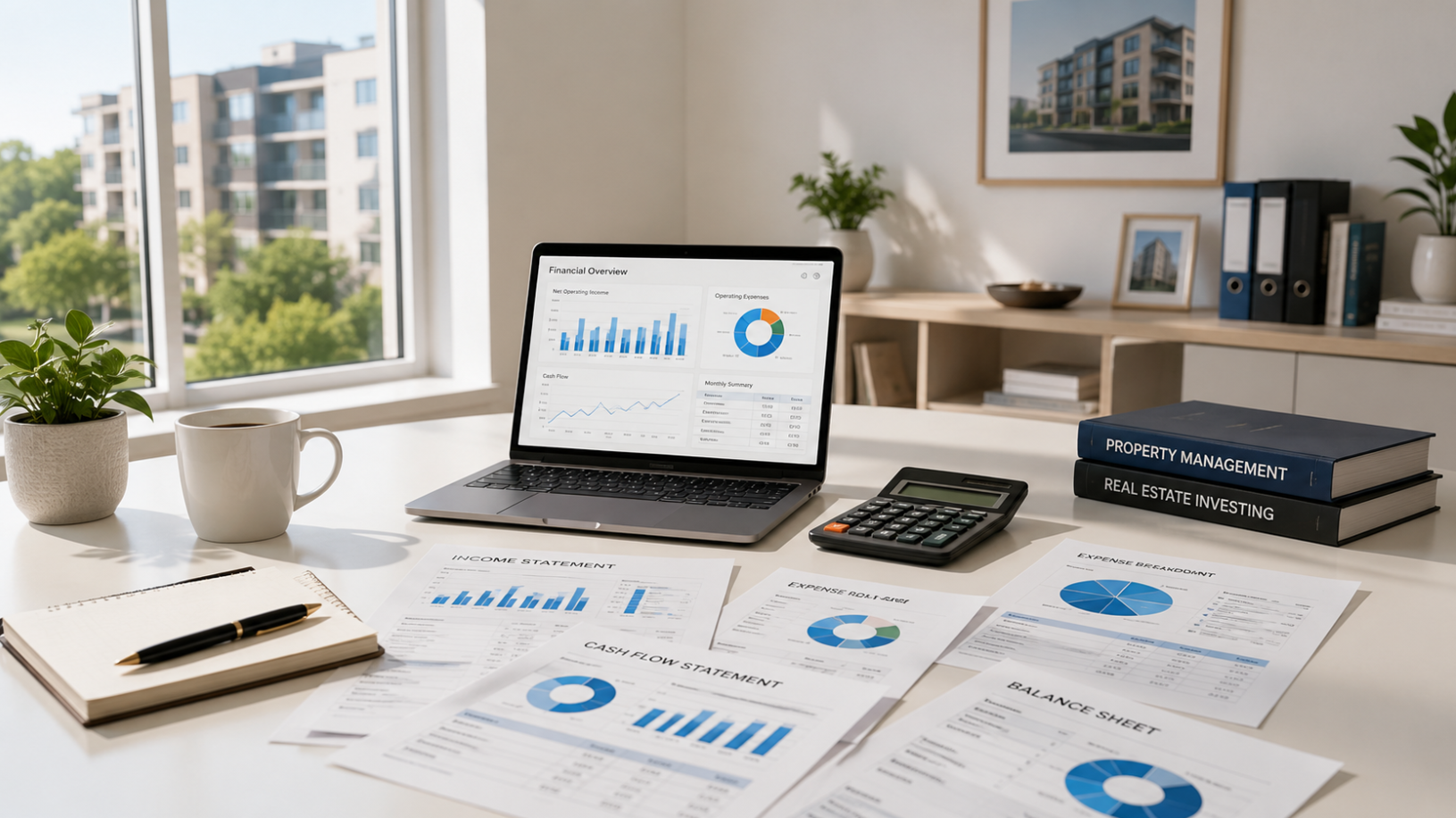
In today’s data-driven real estate environment, financial reporting is the foundation of transparency, compliance, and business growth. For landlords, investors, and property managers alike, understanding and preparing accurate financial reports is a strategic necessity.
Proper financial reporting allows property owners to measure performance, ensure legal compliance, and make informed investment decisions. Yet, despite its importance, many operators still struggle to create consistent, audit-ready financial statements that align with both corporate and regulatory expectations.
At Platuni, we recognize that accountability in property operations begins with clear and consistent documentation. Financial reporting is not just an exercise in bookkeeping, it’s a compliance framework that defines how professionally and responsibly a property portfolio is managed.
This article explains the essential components of property management financial reports, their legal and operational significance, and how modern technology can make the process efficient, consistent, and regulation-ready.
The Purpose of Property Management Financial Reports
Financial reports in property management serve two core objectives:
- Operational Insight – Helping owners and managers understand their property’s financial health, income patterns, and expense structures.
- Compliance and Accountability – Demonstrating adherence to accounting principles, lender covenants, and fiduciary obligations under property and housing laws.
For professional landlords and property companies, structured reporting also facilitates:
- Transparent communication with investors.
- Simplified tax filing and audit readiness.
- Consistent performance tracking across multiple properties.
Foundations of Property Financial Reporting
In the U.S. and Canada, real estate entities are required to follow standardized accounting frameworks such as:
- GAAP (Generally Accepted Accounting Principles) – U.S.-based reporting standard governed by the Financial Accounting Standards Board (FASB).
- IFRS (International Financial Reporting Standards) – Used globally and by some foreign-owned U.S. subsidiaries.
Both frameworks emphasize accuracy, comparability, and transparency in financial statement preparation.
Under these guidelines, property management financial reports must include:
- Comprehensive income and expense records.
- Accrual-based accounting for recurring income streams (rent, service fees, etc.).
- Full disclosure of liabilities, maintenance reserves, and escrow balances.
Platuni enhances this compliance ecosystem through structured governance solutions automating how property data, audit records, and financial submissions are tracked, stored, and verified, creating a secure and transparent reporting environment.
Core Components of Property Management Financial Reports
Understanding what to include in property management financial reports ensures all stakeholders from private investors to asset managers can interpret the financial condition of a portfolio accurately. Below are the essential reports and their purposes.
1. Income Statement (Profit and Loss Statement)
This report provides a snapshot of a property’s profitability over a defined period monthly, quarterly, or annually.
The income statement includes:
- Gross rental income (fixed rent, escalations, late fees, ancillary income).
- Operating expenses (utilities, property taxes, insurance, maintenance).
- Management fees and payroll expenses.
- Net Operating Income (NOI) – the critical measure of operational efficiency.
- Depreciation and amortization.
- Net Income Before and After Taxes.
According to the Institute of Real Estate Management’s (IREM) 2024 Benchmark Report, properties managed with systematic NOI tracking outperform unmanaged properties by up to 22% in profit stability year over year. Integrating real-time reporting from digital platforms allows property managers to auto-generate monthly income statements directly from payment logs, ensuring comparison across multiple assets without duplicating effort.
2. Balance Sheet
The balance sheet outlines the financial position of a property at a specific moment in time, listing assets, liabilities, and equity.
Key components include:
- Assets: Land, buildings, cash reserves, tenant receivables, and capital improvements.
- Liabilities: Outstanding loans, unpaid invoices, and prepaid rent.
- Owner’s Equity: The difference between total assets and liabilities.
For property owners, the balance sheet demonstrates an asset’s leverage ratio and long-term financial stability.
According to PwC’s Real Estate 2025 Outlook, transparent balance sheets increase investor trust and readiness to provide financing particularly for portfolios that document depreciation schedules accurately and maintain clear liability transparency.
3. Cash Flow Statement
The cash flow statement tracks how cash enters and leaves the business. It’s one of the most critical tools in property management, identifying liquidity risks and ensuring sufficient cash is available for maintenance, debt service, and emergencies.
The three main sections include:
- Operating Activities: Rent collected, utility reimbursements, and other income.
- Investing Activities: Purchases or improvements of long-term assets.
- Financing Activities: Loan payments, capital infusions, or distributions.
Accurate cash tracking ensures that liquid reserves align with operational needs.
With Platuni’s digital governance system, managers can align cash flow oversight, recording every disbursement, invoice, and financing activity for future audits or lender reports.
4. Rent Roll or Tenant Ledger
A rent roll provides property-specific income data listing every tenant, lease term, and rent payment details. It serves both as an operational tracker and an audit document.
Standard rent roll fields:
- Tenant name and suite number.
- Lease start and expiration dates.
- Monthly rent and security deposit.
- Payment status and delinquency history.
- Renewal or escalation clauses.
This report not only tracks income but also forecasts future revenues.
According to JLL’s digital transformation research, property managers who adopt automated rent roll and digital payment systems gain stronger visibility into tenant payment behavior, reduce manual errors, and improve overall rent collection consistency due to more reliable follow‑up workflows.
Platforms such as Platuni can centralize this information in the same place as maintenance logs and financial records reinforcing clarity in both operations and fiscal responsibility.
5. Accounts Receivable and Accounts Payable Reports
Accounts Receivable (AR)
Lists outstanding payments owed by tenants. It’s essential for identifying potential rent arrears, late fees, or disputed balances.
Accounts Payable (AP)
Tracks outgoing payments, vendor invoices, utilities, staff salaries, and taxes.
Proper AR and AP reporting maintains strong cash management and prevents delayed payments that can harm vendor relationships or credit ratings.
Platuni automates AR and AP workflows, sending reminders, centralizing receipts, and generating compliance-audit-ready logs.
6. Budget vs. Actual Report
This report provides year-to-date tracking of planned expenses against actual expenditure, revealing discrepancies between goals and performance.
It includes:
- Scheduled vs. actual maintenance costs.
- Marketing and leasing expenditures.
- Income variance analysis.
Regular variance tracking allows property operators to make quick budget revisions without waiting for external audits.
With Platuni’s tracking framework, users can connect maintenance, rents, and budgets seamlessly ensuring an integrated, data-backed view of property portfolios.
Download the Platuni Property Manager App Today
7. Owner or Investor Statement
For third-party managers, owner statements aggregate financial and operational performance for each property under management.
They typically contain:
- Summary income statement.
- Cash distributions or withheld reserves.
- Maintenance costs, asset performance notes, and compliance updates.
Such statements are fundamental to investor relations and serve as legal evidence of fiduciary diligence.
8. Maintenance and Capital Expense Report
Financial performance isn’t just about income; it’s also about asset durability. Maintenance reports track recurring service expenses, equipment replacements, and long-term capital upgrades (CAPEX).
Typical categories:
- Routine maintenance (landscaping, cleaning, HVAC service).
- Emergency repairs.
- Planned improvements like roofing or accessibility upgrades.
With Platuni, maintenance and CAPEX records are automatically tied to inspection logs and compliance data, creating a full lifecycle record for every property asset.
9. Tenant Deposit and Liability Ledger
Landlords are legally required to keep detailed records of tenant deposits. The ledger should include:
- Deposit amount and date received.
- Account or escrow information.
- Any authorized deductions (with justification).
- Returned balance and confirmation date.
In many U.S. states, failure to separate or track deposit funds can result in legal penalties.
Also Read: What Is Loss of Use Renters Insurance? Explained
10. Compliance and Tax Reporting Summary
Finally, property owners must ensure that every financial report aligns with tax and compliance regulations.
This includes:
- 1099 forms (for independent contractors).
- Sales and property tax remittances.
- State-specific landlord regulatory filings.
- Documentation for depreciation and capital allowances.
According to the IRS Office of Taxpayer Assistance, incomplete or inaccurate housing reports lead to thousands of landlord audits annually.
Platforms like Platuni automate the timeliness and traceability required in these filings. By consolidating documents into an audit-ready format, operators ensure compliance is not an afterthought but a built-in process.
The Role of Technology in Modern Financial Reporting
Technology, automation, and compliance monitoring systems are redefining how property management financial reports are created and maintained.
Modern solutions now provide:
- Automated data entry and reconciliation.
- Cloud-based collaboration between property managers, accountants, and owners.
- Integration with IoT systems to track real-time maintenance and operational expenditures.
- Predictive analytics for forecasting long-term financial health.
Best Practices for Property Financial Reporting
- Be Consistent: Use standardized accounting systems and monthly reconciliation.
- Maintain Documentation: Every transaction should have traceable documents.
- Review Regularly: Compare budget vs. actual performance each quarter.
- Collaborate Securely: Share financial data with accountants via compliant platforms.
- Align with Compliance Frameworks: Follow GAAP, tax codes, and ISO-aligned governance principles.
Through structured compliance solutions, property managers can turn financial reporting from a reactive task into a proactive governance function.
Conclusion
Effective property management financial reports are more than just statements of income and expense, they represent accountability, compliance, and professional integrity.
By including detailed income statements, balance sheets, cash flows, and compliance logs, landlords and managers gain visibility into every financial aspect of their operations.
At Platuni, we believe that modern property management depends on three pillars: financial accuracy, documentation transparency, and legal readiness. Our platform is designed to support these pillars by automating reporting, securing records, and ensuring every document meets compliance and operational standards.
Frequently Asked Questions on Property Management Financial Reports
What should property management financial reports include?
They should include income statements, balance sheets, cash flow statements, rent rolls, accounts payable/receivable, and compliance summaries.
How often should property managers prepare financial reports?
Monthly reporting is standard, with quarterly and annual reviews for audits and investors.
Are property management financial reports required by law?
They are required for all registered property firms and strongly recommended for individual landlords under GAAP, tax regulations, and investor agreements.
How can technology improve property financial reporting?
Platforms like Platuni automate data collection, reconciliation, and recordkeeping ensuring accuracy, compliance, and real-time reporting visibility.
Stay Informed
Subscribe to the Platuni B2B Newsletter to receive industry insights,
new feature announcements, and exclusive growth reports
Related Posts

SEPTEMBER 22, 2026
How to Build a Rental Maintenance Workflow From Request to Completion
Defines what should happen after a maintenance request comes in, logging, prioritizing, assigning, verifying, and documenting the repair through to completion.
Learn more
SEPTEMBER 22, 2026
QuickBooks vs Property Management Software for Rental Properties
Explains why QuickBooks and property management software solve different problems, and when a landlord needs one, the other, or both.
Learn more