
Data, Compliance & Insights
Kansas Eviction Laws: The Process & Timeline In 2026
by Platuni | 11 May, 2026 | 8 mins read
Platuni
11 May, 2026
8 mins read
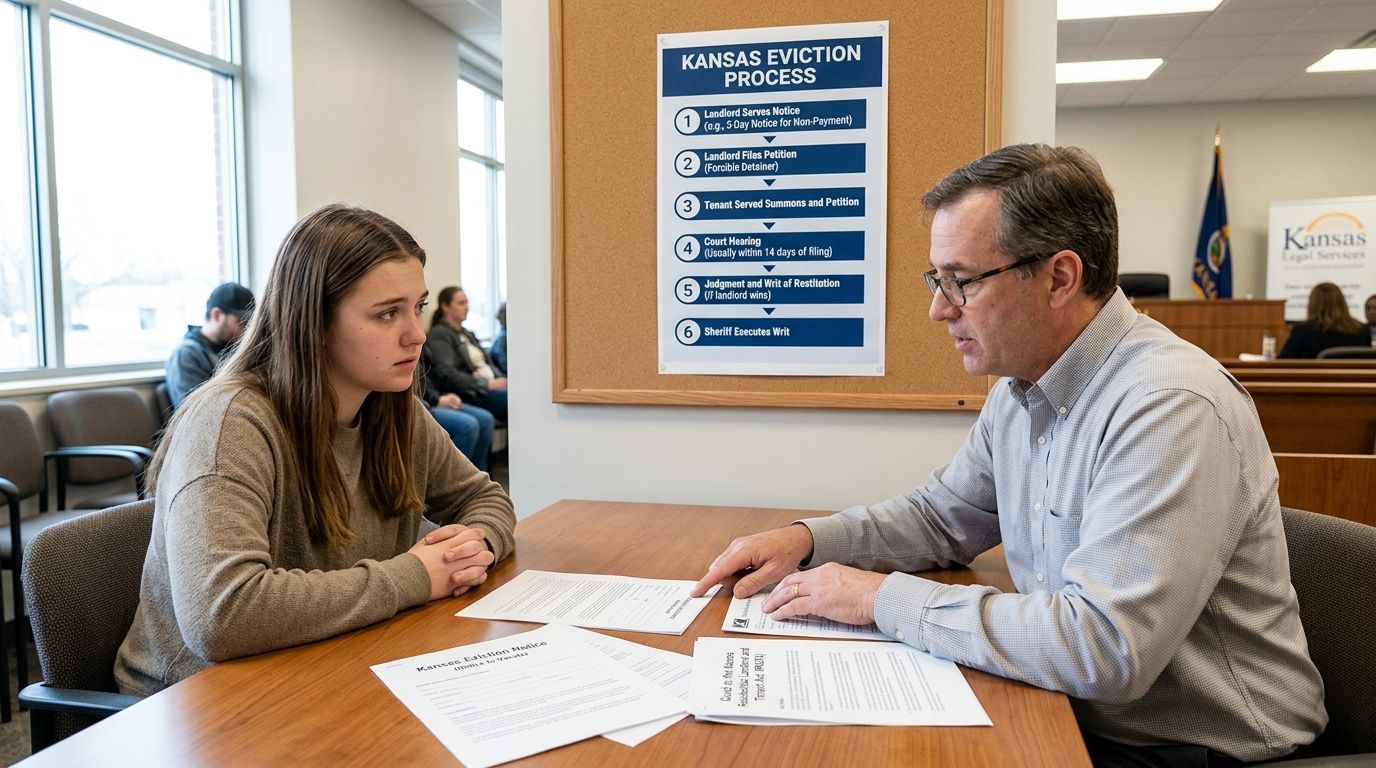
Understanding Kansas eviction laws has become increasingly important as rental disputes continue to shape the housing landscape across the U.S. According to data from the Eviction Lab at Princeton University, millions of eviction cases are filed nationwide every year, highlighting how critical it is for both landlords and tenants to understand the legal process before conflicts escalate.
In Kansas, the eviction process follows a structured legal path that includes notices, court hearings, and enforcement procedures. While the system is designed to move relatively quickly, even small procedural mistakes, such as serving the wrong notice or missing a filing requirement, can delay the case or lead to dismissal. That’s why understanding the process matters just as much as having valid grounds for eviction.
This guide breaks down the full scope of Kansas eviction laws in 2026, including timelines, tenant rights, landlord obligations, court procedures, and practical strategies for staying compliant throughout the eviction process.
Also See: Michigan Eviction Laws: The Process & Timeline
What Are Kansas Eviction Laws and Who Do They Apply To?
The Kansas eviction laws form the legal background that governs how landlords can remove tenants and regain possession of rental property. These rules are primarily outlined in the Kansas Residential Landlord and Tenant Act (KRLTA) and the state’s Forcible Detainer statutes. Together, they define what landlords can do, and just as importantly, what they cannot do, when a tenancy breaks down.
Similarly, these laws apply broadly to residential landlord-tenant relationships, including private landlords, property managers, and tenants renting apartments, houses, or similar dwellings. However, certain living arrangements, like transient occupancy in hotels or some institutional housing, may fall outside the typical scope. At its core, the system ensures that eviction is not a matter of personal discretion but a structured legal process that must pass through the courts.
What Are the Legal Grounds for Eviction Under Kansas Eviction Laws?
According to the Kansas eviction laws, landlords cannot remove a tenant without a legally recognized reason. The law requires that every eviction be tied to a valid ground and supported with evidence before the process can move forward.
Here are the most common legal grounds:
- Nonpayment of Rent: When a tenant fails to pay rent as agreed, the landlord can begin the eviction process after serving the required notice. This is the most frequently used ground.
- Violation of Lease Terms: If a tenant breaches the lease, such as by keeping unauthorized occupants, damaging the property, or violating rules, the landlord may pursue eviction. In many cases, the tenant is first given a chance to correct the issue.
- Holdover Tenancy (Staying After Lease Ends): When a tenant remains in the property after the lease expires without permission, the landlord can initiate eviction to regain possession.
- Illegal Activity or Serious Misconduct: Activities such as drug-related offenses or behavior that threatens health and safety can justify eviction, sometimes with shorter notice periods due to the severity of the situation.
- Termination of Periodic Tenancy: For month-to-month leases, landlords may end the tenancy without alleging fault, provided they give proper notice as required under Kansas eviction laws.
Also Read: Louisiana HOA Laws: A Comprehensive Guide
What Notices Must a Landlord Serve Before Filing for Eviction in Kansas?
Before stepping into court, Kansas eviction laws require landlords to formally notify tenants of the issue and give them a chance to respond. This notice stage is not just procedural, it often determines whether the case proceeds at all. Below are the various notices landlords must serve before filing for eviction:
- 3-Day Notice to Pay or Quit (Nonpayment of Rent): Used when rent is overdue. The tenant is given three days to pay the outstanding amount or vacate the property.
- 14-Day Notice to Cure or Quit (Lease Violations): This is applied when a tenant violates the lease. The tenant has 14 days to fix the issue, and if not corrected, the lease may terminate after an additional period.
- 30-Day Notice (Termination of Periodic Tenancy): For month-to-month agreements, landlords typically provide 30 days’ notice to end the tenancy without alleging fault.
- Proper Delivery of Notice: Notices must be delivered in a legally acceptable manner, such as personal delivery or posting, ensuring the tenant is adequately informed.
How Does the Kansas Eviction Court Process Work?
Once notice requirements are met, the legal phase of the Kansas eviction laws framework begins. The process is designed to move efficiently, but only when each step is followed correctly. So, here's a step-by-step process of how the eviction court works.
Step 1: File the Eviction Petition
If the tenant does not comply with the notice, the landlord files a petition for eviction (forcible detainer) in the appropriate court. This document outlines the reason for eviction and the relief being sought.
Also See: Massachusetts Squatter's Rights & Adverse Possession Laws
Step 2: Issuance of Summons
The court issues a summons, which notifies the tenant of the lawsuit and provides a date for the hearing. This ensures the tenant has a fair opportunity to respond.
Step 3: Service of Court Documents
The summons and petition must be formally delivered to the tenant. Proper service is essential, without it, the case cannot proceed under Kansas eviction laws.
Step 4: Court Hearing
Both landlord and tenant appear in court. The landlord presents evidence such as the lease, payment records, and notices served, while the tenant may raise defenses or counterclaims.
Step 5: Judgment
If the court finds in favor of the landlord, it issues a judgment for possession, confirming the landlord’s legal right to reclaim the property. If not, the case may be dismissed or delayed.
Step 6: Writ of Restitution
After judgment, the landlord may request a writ of restitution, which authorizes law enforcement to remove the tenant if they do not leave voluntarily.
Step 7: Enforcement by Sheriff
Only a sheriff or authorized officer can carry out the eviction. Hence, self-help methods, such as changing locksz are not permitted under the Kansas eviction laws.
Also See: Iowa Squatter’s Rights & Adverse Possession Laws: A Complete Guide
How Long Does the Kansas Eviction Process Take From Notice to Removal?
The timeline under Kansas eviction laws is relatively fast compared to many states, but it still depends on how smoothly each stage is handled. The process begins with the required notice period, often 3 days for nonpayment of rent or 14 days to cure a lease violation. This stage alone can resolve the issue if the tenant complies.
If the matter proceeds to court, a hearing is typically scheduled within a short timeframe after filing.
When the case is uncontested, a judgment may be issued quickly. After that, the landlord can request a writ of restitution, and the sheriff schedules the physical removal. In a smooth case, the entire Kansas eviction process can take around 2 to 4 weeks from notice to removal. However, delays, such as improper notice, tenant defenses, or court scheduling, can extend the process to several weeks or longer.
What Are Tenant Rights and Defenses During the Kansas Eviction Process?
When considering the Kansas eviction laws, tenants are not passive participants in the process. They have enforceable rights and legal defenses that can delay, challenge, or even stop an eviction if properly raised in court. The system is designed to ensure that eviction is fair, justified, and carried out according to the law.
Key Tenant Rights During the Process include:
- Right to Proper Notice: Tenants must receive the correct written notice before an eviction case is filed. If the notice is missing, incorrect, or improperly served, the case may be dismissed.
- Right to Remain Until Court Order: A tenant generally has the right to stay in the property until the court issues a judgment and a writ of restitution is enforced. Landlords cannot remove tenants on their own.
- Right to a Court Hearing: Tenants are entitled to appear in court, present their side, and challenge the landlord’s claims. This ensures due process under Kansas eviction laws.
- Protection Against Self-Help Eviction: Actions like changing locks, shutting off utilities, or removing belongings without a court order are illegal. Tenants can take legal action if this occurs.
Also See: Iowa Landlord Tenant Rental Laws & Rights
Common Legal Defenses Tenants Can Raise
- Improper Notice or Procedure: If the landlord failed to follow the correct notice requirements or filing procedures, the court may dismiss the case regardless of the underlying issue.
- Payment of Rent (in Nonpayment Cases): In some situations, tenants can stop the eviction by paying the overdue rent within the notice period or before judgment, depending on the circumstances.
- Landlord’s Failure to Maintain the Property: If the landlord did not meet habitability standards, such as failing to provide essential services, tenants may argue that this contributed to the dispute.
- Retaliation: Eviction may be challenged if it is in response to the tenant exercising legal rights, such as reporting code violations or requesting repairs.
- Discrimination: Evictions based on protected characteristics violate fair housing laws and can be dismissed or challenged in court.
Also See: Illinois Landlord Tenant Rental Laws & Rights
What Tools Can Help Kansas Landlords Manage Evictions and Stay Compliant?
Managing evictions under according to the Kansas eviction laws requires precision, deadlines, documentation, and legal steps must all align. The right tools can make this process far more manageable and reduce the risk of costly errors. Here are tools that'll help you to manage eviction:
- Property Management Platforms: Tools like Platuni, Buildium, and AppFolio help centralize lease agreements, rent records, notices, and communication, making it easier to stay organized and compliant.
- Automated Reminder Systems: These tools track important deadlines, such as notice periods, court dates, and lease renewals, helping landlords avoid missed timelines that could delay the eviction process.
- Digital Documentation and Record Storage: Keeping all records in one place ensures landlords can quickly access proof of notices, payments, and lease terms if a dispute arises in court.
- Tenant Communication Tools: Built-in messaging systems create a clear record of interactions, reducing misunderstandings and providing evidence if needed.
- Maintenance and Inspection Tracking: Documenting property conditions and repairs helps demonstrate compliance with habitability requirements, which can be critical in eviction cases involving disputes
Download the Platuni Property Manager App Today
Frequently Asked Questions About The Kansas Eviction Laws
Can a tenant stop an eviction after the process has started in Kansas?
Yes, in certain situations. A tenant may be able to stop the eviction by fixing the issue, such as paying overdue rent within the notice period or correcting a lease violation. However, once the case progresses to judgment, options become more limited.
What happens if a landlord files an eviction case without proper notice in Kansas?
If the landlord fails to serve the correct notice or does not follow the required procedures, the court may dismiss the case. Typically, proper notice is a foundational requirement under Kansas eviction laws, and skipping this step can delay the entire process.
Can a landlord evict a tenant without going to court in Kansas?
No. The Kansas eviction process requires a court order before a tenant can be legally removed. Self-help actions, such as changing locks or removing belongings, are prohibited and can expose you as the landlord to legal consequences.
Do eviction records affect a tenant’s future rental applications in Kansas?
Yes. An eviction filing or judgment can appear on tenant screening reports, which may make it harder to secure future housing. Even dismissed cases can sometimes show up, depending on how background checks are conducted.
How can landlords reduce the chances of eviction disputes in Kansas?
As a landlord, you can minimize disputes by using clear lease agreements, maintaining open communication, addressing maintenance issues promptly, and keeping accurate records. Many also rely on structured systems or property management tools to stay organized and ensure compliance with Kansas eviction laws.
Stay Informed
Subscribe to the Platuni B2B Newsletter to receive industry insights,
new feature announcements, and exclusive growth reports
Related Posts

AUGUST 3, 2026
Kentucky Security Deposit Laws | Deductions & Rights
This guide explores everything you need to know about Kentucky security deposit laws, including how much landlords can charge...
Learn more
JULY 31, 2026
Incident Report Template | How to Document Property Incidents
This article explains how property managers and landlords can use an incident report template to document incidents properly...
Learn more