
Technology & Automation
AI for Property Valuation: Smarter Pricing Decisions
by Platuni | 15 Apr, 2026 | 8 mins read
Platuni
15 April, 2026
8 mins read
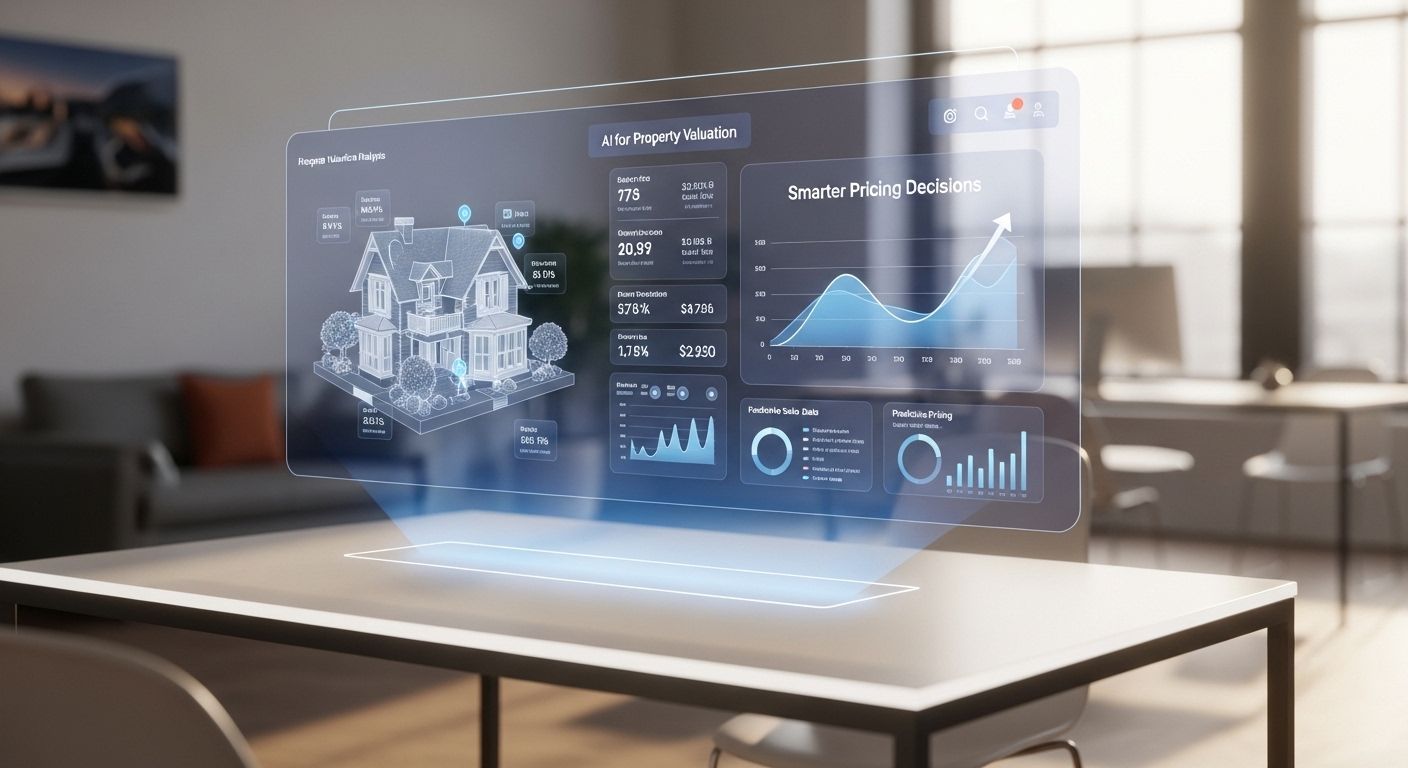
In today’s data-driven real estate market, pricing a property is no longer a matter of intuition alone. Property owners, investors, and managers are increasingly turning to intelligent systems to make more accurate and timely decisions. The growing adoption of ai for property valuation reflects a shift toward precision, efficiency, and predictive insight in an industry that has traditionally relied on manual assessments and comparable sales.
At its core, property valuation determines the financial viability of real estate assets. Whether setting rental rates, listing a property for sale, or evaluating investment performance, valuation directly influences profitability. However, conventional valuation methods often struggle to keep pace with rapidly changing market conditions, fragmented data sources, and evolving tenant preferences.
Artificial intelligence offers a transformative solution. By analyzing vast datasets, identifying patterns, and generating predictive insights, AI enables more accurate and dynamic property valuations. In modern property operations, where efficiency and transparency are paramount, structured platforms like Platuni demonstrate how integrating intelligent tools into management workflows can significantly enhance decision-making and operational consistency.
This article explores how AI is reshaping property valuation, the benefits and lim itations of these technologies, and what property stakeholders need to understand to make smarter pricing decisions.
Traditional Property Valuation Methods
Before examining the role of AI, it is important to understand how property valuation has historically been conducted. Traditional methods typically rely on comparable market analysis, income-based approaches, and cost-based assessments.
Appraisers and real estate professionals evaluate recent sales of similar properties, analyze rental income potential, and estimate replacement costs. While these methods remain foundational, they are inherently limited by the availability and timeliness of data.
Property valuation accuracy depends heavily on data quality, market knowledge, and professional judgment. However, manual processes can introduce inconsistencies, delays, and subjective bias, particularly in markets where property values shift rapidly.
Another challenge lies in scalability. Traditional valuation approaches are time-intensive, making it difficult to assess large property portfolios efficiently. This limitation creates a gap that AI-driven systems are uniquely positioned to fill.
Also Read: Breaking a Lease in Nova Scotia | Tenant Guide
What does AI for Property Valuation Really Mean?
Artificial intelligence in property valuation refers to the use of machine learning algorithms, predictive analytics, and automated valuation models to estimate property values with greater speed and consistency.
These systems analyze extensive datasets that go far beyond traditional comparables. They incorporate variables such as neighborhood development patterns, demographic shifts, economic indicators, and even consumer behavior trends.
According to the National Association of Realtors, technology-driven analytics have significantly improved pricing transparency and reduced information asymmetry in real estate markets.
AI models continuously learn from new data inputs, refining their predictions over time. This adaptability allows property owners to make decisions based on current market realities rather than outdated assumptions.
The Data Advantage: Why AI Improves Pricing Accuracy
One of the most compelling aspects of AI for property valuation is its ability to process and interpret large volumes of data simultaneously. Traditional valuation methods often rely on a limited dataset, whereas AI systems can evaluate thousands of variables in real time.
These variables may include location-specific trends, infrastructure developments, school ratings, employment patterns, and even environmental risks. By synthesizing this information, AI produces valuation estimates that are more comprehensive and context-aware.
According to research by the McKinsey & Company, advanced analytics can significantly improve forecasting accuracy in sectors that rely heavily on data, including real estate.
For property owners, this translates into more precise pricing strategies, reduced vacancy periods, and improved investment performance. Accurate valuations also enhance credibility when dealing with lenders, investors, or potential buyers.
Real-Time Market Responsiveness and Dynamic Pricing
One of the most transformative aspects of AI is its ability to respond to market changes in real time. Unlike traditional appraisals, which provide a snapshot of value at a specific moment, AI-driven systems continuously update their estimates based on new data.
This dynamic capability is particularly valuable in rental markets, where pricing must adapt to demand fluctuations, seasonal trends, and competitive pressures.
For instance, AI tools can identify when demand is increasing in a particular neighborhood and recommend incremental rent adjustments. Conversely, they can signal when pricing needs to be adjusted downward to remain competitive.
When integrated into operational platforms like Platuni, these insights become actionable. Property managers can align pricing decisions with leasing activity, maintenance schedules, and occupancy goals, creating a more cohesive management strategy.
Enhancing Investment Decision-Making
Beyond pricing, AI plays a crucial role in investment analysis. Property valuation is a key factor in determining return on investment, risk exposure, and portfolio performance.
AI systems can simulate various scenarios, helping investors understand how changes in market conditions may affect property values. This predictive capability enables more informed decision-making and reduces uncertainty.
According to the World Economic Forum, AI-driven analytics are transforming industries by enabling organizations to anticipate trends and make proactive decisions.
For real estate investors, this means identifying opportunities earlier, optimizing asset allocation, and managing risk more effectively.
Reducing Human Bias and Increasing Consistency
Human judgment has long been a cornerstone of property valuation, but it can also introduce inconsistencies. Personal experience, limited data access, and subjective interpretation may influence pricing decisions.
AI offers a more standardized approach by relying on data-driven analysis. While it is not entirely free from bias, particularly if trained on biased datasets, it reduces the variability associated with human decision-making.
Consistency is especially important for property managers overseeing multiple units or properties. Uniform valuation standards ensure fairness, transparency, and operational efficiency.
Also Read: Landlord and Tenant Laws in Nova Scotia
Challenges and Limitations of AI in Property Valuation
Despite its advantages, AI is not a perfect solution. One of the primary challenges is data dependency. AI models require high-quality, accurate data to function effectively. Incomplete or outdated data can lead to inaccurate valuations.
Another limitation is the difficulty of capturing qualitative factors. Elements such as architectural uniqueness, neighborhood character, or tenant sentiment are not always easily quantifiable.
Transparency is another concern. Some AI systems operate as “black boxes,” making it difficult for users to understand how specific valuations are generated. This lack of clarity can create challenges in regulatory or financial contexts.
Regulatory and Ethical Considerations
As AI becomes more integrated into property valuation, regulatory and ethical considerations are becoming increasingly important.
The Federal Trade Commission emphasizes the need for transparency, fairness, and accountability in AI systems. In real estate, this includes ensuring that algorithms do not reinforce historical inequalities or create discriminatory pricing patterns.
Data privacy is also a critical concern. Property valuation systems often rely on sensitive information, making secure data handling essential.
The Role of Integrated Platforms in AI Adoption
AI tools are most effective when integrated into comprehensive property management systems. Standalone valuation tools provide insights, but their impact is limited without operational alignment.
Platforms like Platuni demonstrate how integrating AI-driven valuation with leasing, maintenance, and financial tracking creates a unified management environment. This integration allows property managers to act on insights more efficiently and ensures that pricing decisions are supported by real-time data.
By combining analytics with operational workflows, property managers can achieve greater consistency, transparency, and scalability.
The Future of AI in Property Valuation
The future of AI in property valuation is both promising and dynamic. As technology advances, AI models are expected to become more sophisticated, incorporating additional data sources and improving predictive accuracy.
Emerging trends include the integration of smart building data, enhanced geospatial analysis, and greater personalization of valuation insights.
According to the World Economic Forum, AI will continue to play a central role in shaping industries by enabling smarter, data-driven decision-making.
For property stakeholders, staying ahead of these developments will be key to maintaining competitiveness in an increasingly digital marketplace.
Download the Platuni Property Manager App Today
Conclusion
The adoption of ai for property valuation represents a significant shift in how real estate assets are priced and managed. By leveraging data, improving accuracy, and enabling real-time responsiveness, AI provides a powerful tool for making smarter pricing decisions.
However, successful implementation requires more than technology alone. It depends on data quality, ethical considerations, and integration with broader property management systems.
As platforms like Platuni illustrate, combining AI-driven insights with structured operational workflows creates a more efficient and transparent approach to property management. This alignment not only enhances decision-making but also supports long-term success in an increasingly competitive market.
Frequently Asked Questions on AI for Property Valuation
What is AI for property valuation?
AI for property valuation uses machine learning and data analytics to estimate property values based on multiple data sources and market trends.
Is AI more accurate than traditional valuation methods?
AI can improve accuracy by analyzing large datasets, but it is most effective when used alongside professional expertise.
Can AI help with rental pricing decisions?
Yes, AI can analyze demand, occupancy trends, and market data to recommend optimal rental pricing strategies.
Are there risks in using AI for property valuation?
Yes, risks include data quality issues, lack of transparency, and potential bias if algorithms are not properly managed.
Stay Informed
Subscribe to the Platuni B2B Newsletter to receive industry insights,
new feature announcements, and exclusive growth reports
Related Posts

MARCH 30, 2026
How to Save Energy in Your Home | Smart Tips to Cut Bills
This guide explains how to save energy in home using smart, realistic steps that anyone can apply without major renovations...
Learn more
MARCH 2, 2026
How to Streamline a Process | Improve Workflow Efficiency
This comprehensive guide explains how to effectively streamline a process by improving workflow efficiency, aligning compliance, and enhancing operational transparency.
Learn more