
Tenant Relations & Experience
Maintenance Portal vs Email and Text: When Should Landlords Switch?
by Platuni | 21 Sep, 2026 | 10 mins read
Platuni
21 September, 2026
10 mins read
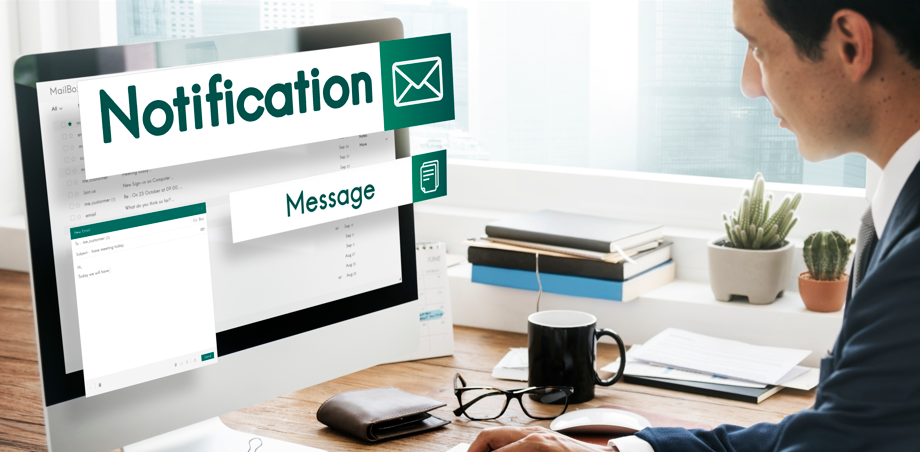
When you have one or two rentals, asking tenants to text or email when something breaks can feel like the simplest maintenance system possible. There is no login, no new software, and almost no learning curve.
The problem starts when the message itself becomes the maintenance record.
A tenant sends a photo in one thread, another reports a repair by email, someone calls about an urgent issue, and a contractor asks for details you now have to piece together manually.
At that point, the question is no longer whether email and text can receive maintenance requests. They can.
The real question is whether they can still help you organize, track, assign, and document those requests reliably as your maintenance workload grows.
Maintenance Portal vs Email and Text: What Is the Real Difference?
Email, text, and maintenance portals can all help tenants report a problem. The difference is what happens after the message is sent.
Email and text are primarily communication tools. A tenant describes the issue, sends a photo if needed, and waits for the landlord to organize the information and decide what happens next.
A maintenance request portal turns that report into a structured maintenance record. Residents can provide issue details and photos in one place, while the request enters an organized system where it can be reviewed and tracked. Platuni describes its maintenance portal as replacing scattered emails, texts, and phone calls with a structured process where residents describe the issue, add photos, select urgency, and submit requests into one organized list.
Buildium's Resident Center similarly allows residents to submit requests with photos and view assignment and status updates through the portal.
So the real comparison is not digital versus digital. It is conversation versus structured request management.
What Email and Text Still Do Well
Email and text are not bad maintenance tools. For a landlord with a small portfolio and relatively few requests, they can still be practical.
Text messages are familiar, fast, and useful when a tenant needs to send a quick update or clarify a simple issue. Email works better for longer explanations, attachments, and conversations that need a written record.
Even property management platforms do not necessarily replace these channels completely. Buildium, for example, combines its resident portal with communication tools, while residents can receive information through channels such as email and text. Platuni similarly uses its resident experience tools to centralize communication while supporting updates beyond the portal.
For a landlord handling only occasional repairs, adding another system may create more complexity than it removes.
The important question is therefore not:
“Should landlords stop texting or emailing tenants?”
It is:
“Should text and email remain the primary system of record for maintenance?”
You can still use them for quick conversations and updates even after adopting a portal. The problem begins when important repair details, photos, assignments, and follow-ups depend entirely on finding the right message thread later.
Where Email and Text Start Breaking Down
Email and text usually do not fail all at once. They become less reliable as the landlord has to do more manual work around each conversation.
Common warning signs include:
- Tenants reporting problems through different channels.
- Requests arriving without the property, unit, photos, or other details you need.
- Important messages becoming buried in long threads.
- No clear way to distinguish new, assigned, in-progress, and completed repairs.
- Vendor instructions being handled separately from the original request.
- Tenants repeatedly asking for updates.
- Difficulty finding the history when the same issue returns.
Recent property maintenance guidance from Buildium describes the same problem: when requests are spread across texts, emails, and voicemails, teams lose the centralized visibility needed to manage repairs efficiently.
Platuni likewise recommends its maintenance portal specifically to replace scattered emails, text messages, and phone calls with structured submissions collected in one organized list. Its documentation notes that this helps prevent requests from being lost or forgotten while creating a record of each issue.
The underlying problem is that a conversation does not automatically become a trackable maintenance task.
As request volume grows, you have to manually remember what was reported, gather missing information, forward details, check progress, and reconstruct the record afterward.
That is usually the first sign that your communication method is starting to become part of the maintenance problem.
What a Maintenance Request Portal Adds
A maintenance request portal adds structure around the tenant's report so the issue can be managed after submission, not just received.
That usually improves five areas:
1. Structured intakeInstead of relying on the tenant to remember every detail, the portal can collect the affected property or unit, a description of the problem, photos, and other relevant information in one place. Platuni's tenant communication tools, for example, allow residents to submit maintenance requests with photos or supporting details through the portal.
2. Centralized request recordsThe maintenance issue becomes a trackable record rather than another message buried in an inbox. Platuni positions its platform around submitting and tracking maintenance requests in one place.
3. Status visibilityResidents do not necessarily have to contact the landlord simply to ask whether something is happening. Buildium's Resident Center lets residents see when a maintenance item has been assigned and follow status updates through completion.
4. Better assignment and coordinationA dedicated system can connect incoming requests to the people responsible for resolving them. Platuni's current plans include maintenance requests, internal tickets, assignments, SLA tracking, and work-order management.
5. A usable historyPhotos, request details, updates, and previous activity remain connected to the maintenance record instead of being scattered across separate conversations. Buildium similarly supports requests with descriptions, photos, videos, and ongoing tracking.
The goal is not to make reporting repairs more complicated. A good portal should make the request easier to organize after the tenant presses submit.
Maintenance Portal vs Email and Text: Head-to-Head Comparison
The best option depends on what you need the channel to do. Email and text are effective for simple conversations, while a maintenance request portal is stronger when the request must remain organized after submission.
| Area | Email / Text | Maintenance Request Portal |
|---|---|---|
| Ease of submission | Familiar and fast | Structured, but may require onboarding |
| Request details | Depends on what the tenant sends | Can prompt for required information |
| Photos | Easy to send but may be buried in threads | Can stay attached to the request |
| Property or unit | May require clarification | Can be captured during submission |
| Priority | Usually interpreted manually | Can be categorized |
| Status tracking | Requires follow-up | Can show request progress |
| Assignment | Often handled separately | Can connect requests to staff or vendors |
| Tenant updates | Flexible but usually manual | Can support structured updates |
| Maintenance history | Spread across messages | Centralized around the request |
| Scaling | Simple at low volume | Better for repeatable operations |
Buildium's Resident Center allows residents to submit descriptions and photos, see assignment, and follow status updates. Platuni similarly provides resident maintenance requests and a dashboard, with maintenance features that include assignments and work-order management.
There is no universal winner. Text may be best for a quick clarification, and email may be enough for a detailed informal message. But when a request must be tracked, assigned, updated, and preserved, a portal has the advantage.
The switching point comes when maintenance is no longer just a conversation between one tenant and one landlord.
So there is no single winner in every situation.
For a quick conversation: text may be easiest.For a detailed informal message: email may be enough.For a request that must be tracked, assigned, updated, and preserved: a portal has the advantage.
The real switching point comes when maintenance is no longer just a conversation between one tenant and one landlord.
7 Signs It Is Time to Switch to a Maintenance Portal
There is no universal rental-unit count that determines when you need a maintenance request portal. A better signal is whether managing maintenance communication has become a recurring job of its own.
Consider switching when:
- Requests arrive through too many channels: Texts, emails, calls, and messaging apps make it harder to maintain one reliable record.
- You repeatedly ask for missing information: Structured intake can reduce requests for unit details, photos, or issue descriptions.
- Tenants frequently ask for status updates: Resident portals can let tenants submit requests and follow assignment or status changes without repeatedly contacting management.
- You worry that a request may be forgotten: If remembering open repairs depends on checking several conversations, the system is becoming a liability.
- Multiple staff members or vendors handle repairs: Centralized systems make it easier to connect requests with assignments and work orders. Platuni currently supports maintenance requests, assignments, and work-order management.
- Repair history is difficult to retrieve: A portal can preserve current and historical requests instead of leaving records scattered across messages.
- Managing the messages takes more effort than coordinating the repair.
That is the clearest switching point.
You probably need a maintenance portal when receiving, organizing, tracking, and following up on requests has become a maintenance problem of its own.
How to Move Tenants to a Maintenance Portal Without Creating Confusion
A maintenance portal only works if residents know where to use it and what happens after submission.
A simple transition can help:
- Choose one official channel for routine maintenance.Tell residents clearly where non-emergency requests should be submitted.
2. Explain the benefit.Focus on what improves for tenants: one place to report the issue, add photos, and track progress. Buildium recommends making portal adoption clear and easy to access.
3. Give simple instructions.For example: open the portal, choose Maintenance, select the affected unit, describe the problem, add useful photos, and choose the appropriate urgency. Platuni currently uses this type of structured submission.
4. Communicate emergency procedures separately.Do not assume every urgent situation should follow the same online process. Platuni allows property teams to display emergency procedures, response expectations, and maintenance hours during submission.
5. Redirect routine requests consistently.If a tenant texts a normal repair request after the switch, guide them back to the official portal instead of creating a second tracking process.
6. Keep useful communication channels available.The portal can become the system of record without eliminating email or text for clarification or updates.
The goal is not to make maintenance less personal. It is to give every repair one reliable starting point.
When Should You Make the Switch?
Email and text can work well when maintenance volume is low and every request is easy to follow. The switching point comes when managing the conversations becomes harder than managing the repairs.
A maintenance portal gives each request a structured starting point and keeps it visible as work progresses. Platuni's current portal lets residents submit issues with unit details, descriptions, photos, and urgency before the request enters a centralized maintenance dashboard.
Switch when maintenance communication needs to become a system, not just a conversation.
Stay Informed
Subscribe to the Platuni B2B Newsletter to receive industry insights,
new feature announcements, and exclusive growth reports
Related Posts

SEPTEMBER 18, 2026
Residence Life & Dorm Software: What Campus Housing Systems Need to Do
What university housing offices and PBSA operators need from software that a generic property management tool was never built to handle.
Learn more
AUGUST 3, 2026
Indiana Security Deposit Laws | Deductions & Rights
In the page, we’ll explore Indiana security deposit laws, including deposit limits, holding requirements, and lawful deductions...
Learn more